No. PNG69
Maisin
Papua New Guinea · Northern · Oceania · Sahul
Function not recorded
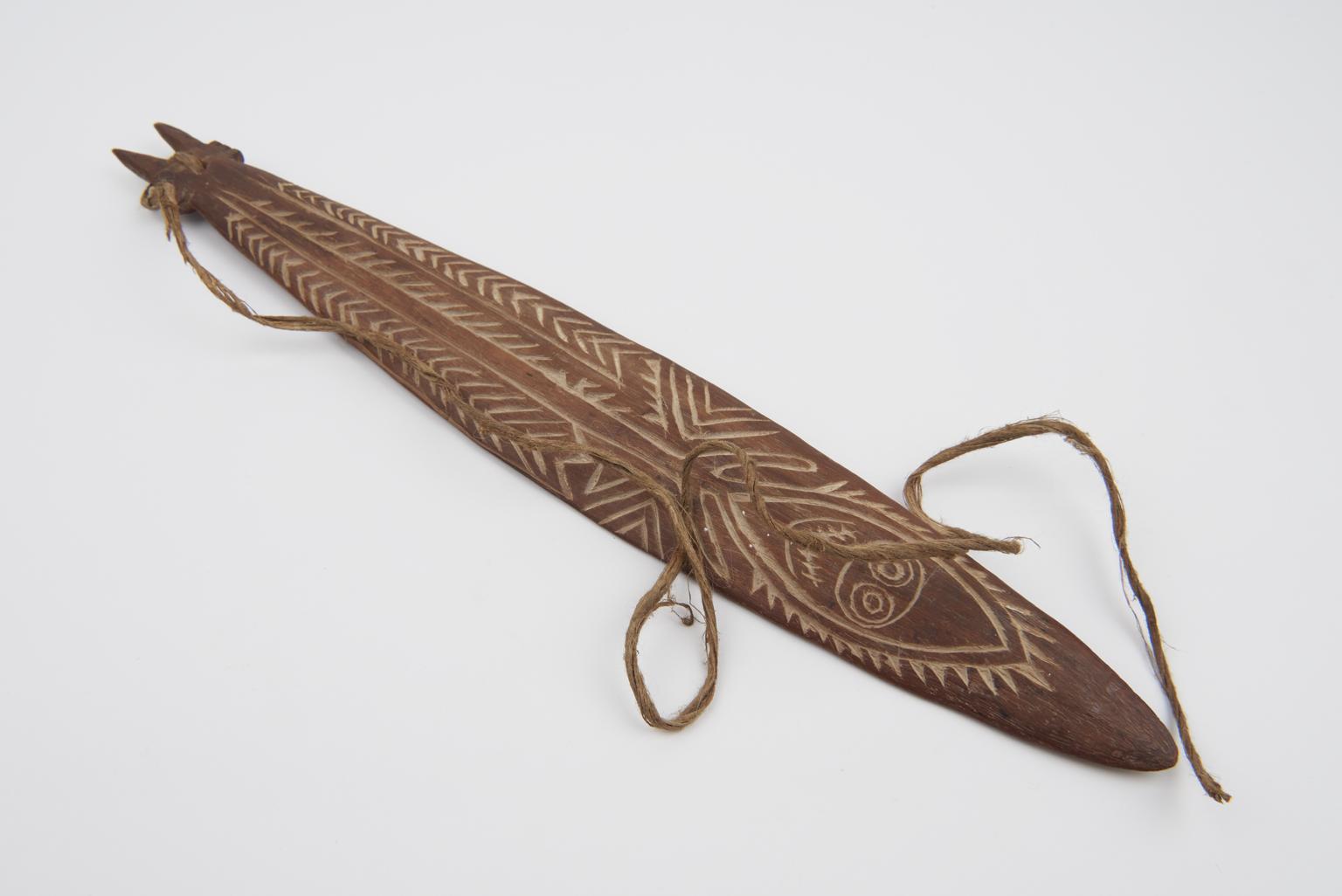
Maisin elders say their ancestors came up out of the ground about seven generations before the 1980s, at a place on the western edge of the Musa Basin; their villages now line the southern shore of Collingwood Bay. The dead were thought to live in the mountains behind those villages and to come back often, to help their kin or to punish them. Every Maisin boy once went through a short initiation into his father's clan. The bullroarer was known on this coast of tapa makers: Maisin women's finely designed tapa bark cloth is famous throughout Papua New Guinea, and most girls still have their faces tattooed at puberty.
Particulars
- Function
- Not recorded.
Source
K. A. Gourlay, Sound-Producing Instruments in Traditional Society: A Study of Esoteric Instruments and Their Role in Male-Female Relations (New Guinea Research Bulletin 60; Canberra and Port Moresby, 1975), Table 1, entry 69; John Barker, 'Maisin', Encyclopedia of World Cultures, vol. 2 Oceania (1991), via Encyclopedia.com (origin, afterlife, initiation, tapa, tattooing)