No. HAYS1986-012
Binumarien roarer without flutes
Papua New Guinea · Eastern Family language region · Oceania · Sahul
Restricted
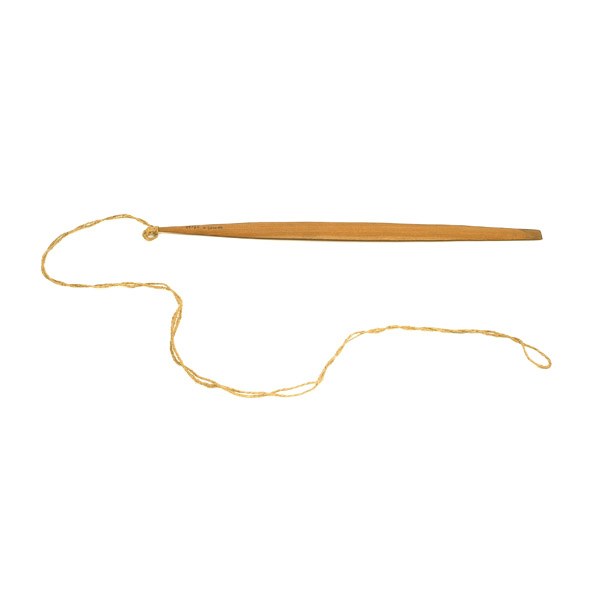
Source term: bullroarer
No Binumarien term recorded by Hays.
The Binumarien break the regional pattern. Their Eastern Family neighbours — Gadsup, Agarabi, Auyana, Tairora — put novices of ten to sixteen through nose-bleeding, tongue-bleeding, penis-cutting and cane-swallowing, and formally revealed both flutes and bullroarers to them. The Binumarien initiated with the bullroarer and no sacred flute at all.
Here both sacred flutes and bullroarers (except possibly in Binumarien) were revealed formally at the initiation of 10-16 year-old pumara, kumara, or ummara
Hays 1986:444 (Anthropos 81)
Particulars
- Object
- A bullroarer recorded in Binumarien initiation, with no sacred flutes alongside it; no size, form or local name is recorded.
- Function
- Used in initiation.
Source
Terence E. Hays, 'Sacred Flutes, Fertility, and Growth in the Papua New Guinea Highlands,' Anthropos 81 (1986), pp. 436, 444