No. GOODENOUGH1952-001
Opiya boys' passage to men's dress
Papua New Guinea · Menyamya, Korlte River valley, Morobe Province (Anga highlands) · Oceania · Sahul
Restricted
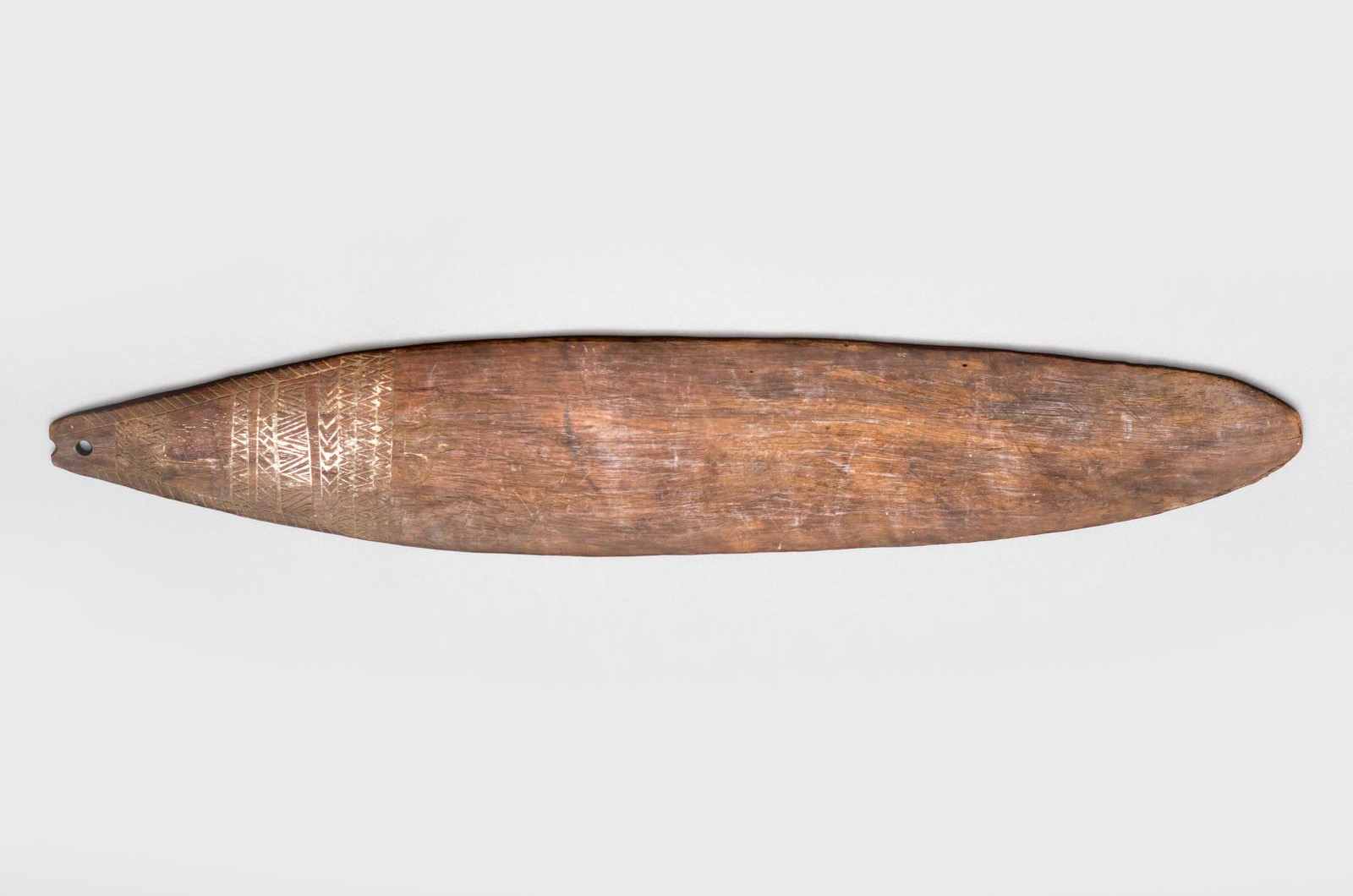
Source term: bull-roarers
Bullroarers sounded as Opiya boys of about eight went through their initiation. Their nasal septum was pierced, and afterwards each boy put on the dress of a grown man: a pair of cassowary thigh bones hung at the waist and a bandolier of many strands of black and yellow beads slung over the left shoulder. Through the pierced septum went a short yellow reed with the black spine of a cassowary feather set in each end, curving back toward the cheekbone. The Opiya lived high on the ridges above the Korlte River, in scattered hamlets of men of one lineage with their wives and children; men shaved their heads but for a woolly tuft on the crown, from which hung a narrow barkcloth cape. Their dead were seated on racks in special smoke houses.
To the accompaniment of bull-roarers, boys go through an initiation ceremony when about eight years of age.
Ward H. Goodenough, "Ethnological Reconnaissance in New Guinea," University Museum Bulletin 17, no. 1 (1952), p. 34
Particulars
- Object
- Bullroarers sounded at boys' initiation; form and material not recorded.
- Function
- Sounded to accompany the initiation of boys at about eight years of age, when the nasal septum was pierced; after it the boys assumed the dress of adult men.
Source
Ward H. Goodenough, "Ethnological Reconnaissance in New Guinea," University Museum Bulletin 17, no. 1 (September 1952), pp. 30-34