No. PNG14
Kwoma
Papua New Guinea · East Sepik · Oceania · Sahul
Restricted
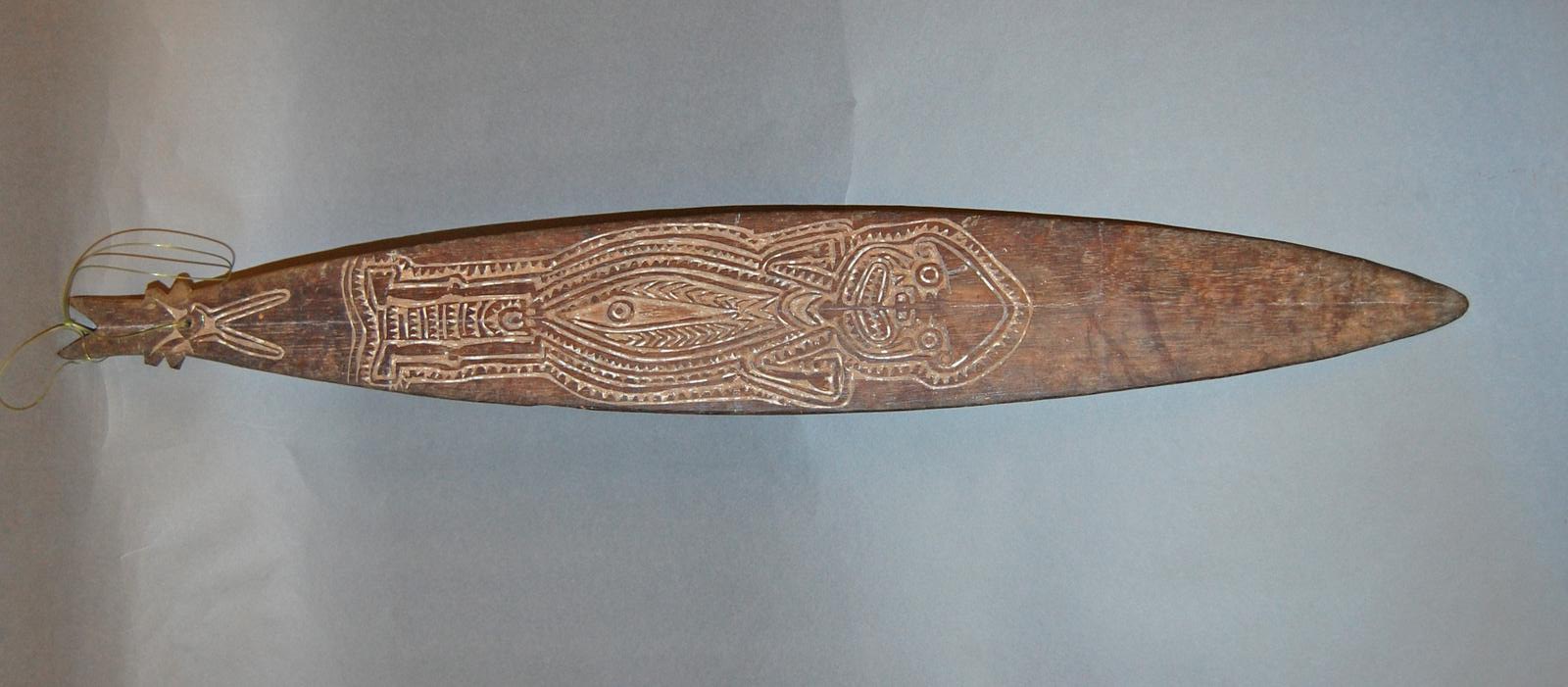
Among the Kwoma of the Washkuk Hills, north of the upper Sepik, the ritual year turns on the yam harvest: a yam is a supernaturally powerful food that cannot be eaten until the clan spirits responsible for its growth have been honored. After the harvest the men mount three ceremonies — yena, mindja, and nowkwi — displaying painted and carved sculptures of the clan spirits and dancing to song cycles of each clan's history, while the women dance and sing in the choruses outside the men's houses. The nowkwi opened with the men marching in from the forest to flutes and bullroarers; the women and uninitiated, forewarned to keep their distance, were told the din was Nankwi herself — the fiercest spirit in a largely female pantheon — arriving at the men's house. Inside, at yena initiations, a boy was danced around the altar through a deafening cacophony of bullroarers, flutes and gongs, then told to look up and see that the spirits' sounds were made by men. At the climax of a Kwoma initiation, each boy, warned never to tell the women, had a baked yam pressed into his hand while gongs, flutes, bullroarers and voices roared.
In the case of the nowkwi ceremony, this procession is to the accompaniment of flutes and bullroarers. The din is heard by the women and noninitiates... They think, or at least have been told to think, that the noises are made by Nankwi (the female deity who presides over nowkwi) as she makes her way to the men's house.
David Howes, Sensual Relations (2003), pp. 143-144
Particulars
- Function
- Sounded with flutes in the procession opening the nowkwi yam-harvest ceremony; women and noninitiates were told the din was the deity Nankwi approaching the men's house.
Source
David Howes, Sensual Relations (Ann Arbor, 2003), pp. 140–145; K. A. Gourlay, Sound-Producing Instruments in Traditional Society: A Study of Esoteric Instruments and Their Role in Male-Female Relations, New Guinea Research Bulletin 60 (Canberra, 1975), Table 1, entry 14, and p. 53