No. PNG22
Banaro
Papua New Guinea · East Sepik · Oceania · Sahul
Restricted
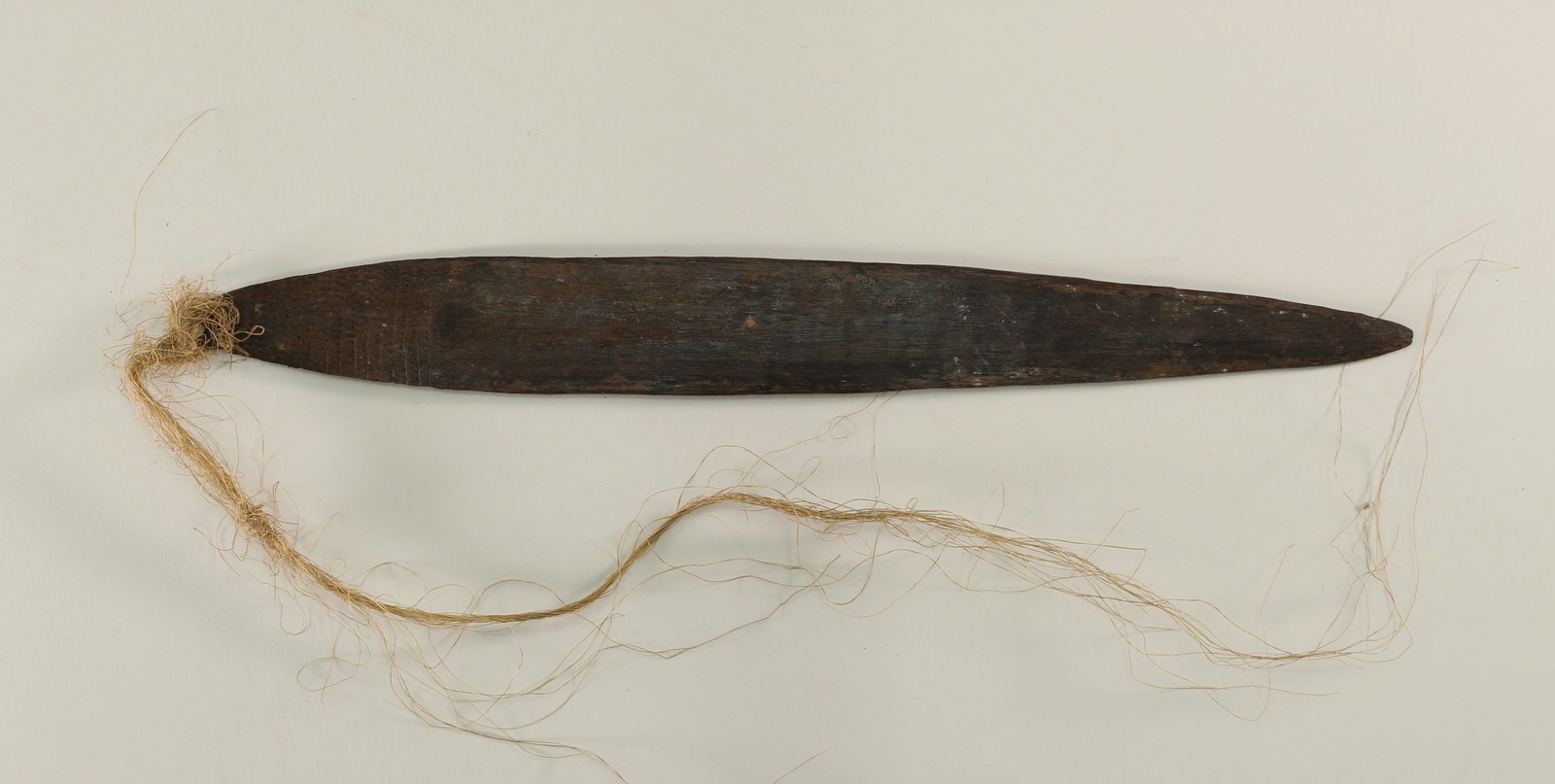
Among the Banaro of the middle Keram River, in the East Sepik of Papua New Guinea, the most important supernaturals are the ghosts of the ancestors and the mischievous goblins. Each hamlet keeps one communal structure recorded in the ethnographic literature as the "goblin hall," and boys and girls alike pass through initiation, the girls marrying shortly afterward. Gourlay's 1975 survey of esoteric New Guinea instruments lists the Banaro among the peoples holding both the bullroarer and the sacred flute, the instruments by which such spirits are conventionally given a voice in the Sepik.
Particulars
- Function
- Not recorded.
Source
K. A. Gourlay, Sound-Producing Instruments in Traditional Society: A Study of Esoteric Instruments and Their Role in Male-Female Relations (New Guinea Research Bulletin 60; Canberra and Port Moresby, 1975), Table 1, entry 22; "Banaro," Encyclopedia of World Cultures, citing Thurnwald 1916, Banaro Society (AAA Memoirs 3:4)