No. PNG163
Laks
Papua New Guinea · New Ireland · Oceania · Sahul
Restricted
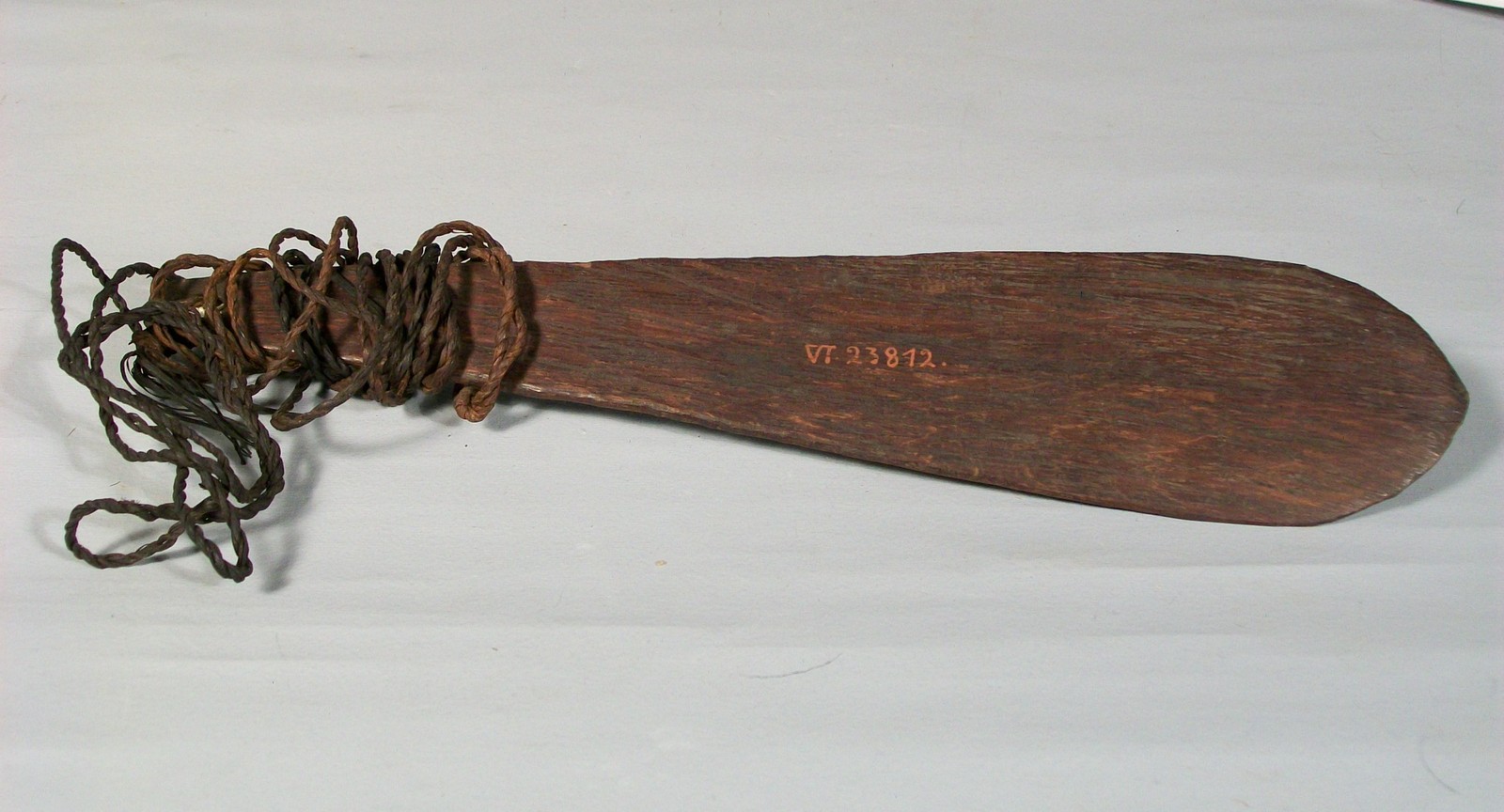
talun
talun = Lak (Siar) word for the bullroarer; triun (also taraiu) = the men's secret ground at the edge of a settlement, forbidden to women and children; tubuan / duk-duk = masked spirit figures of the men's secret cult.
Among the Lak of southern New Ireland the bullroarer is the talun, named by Albert among the secret ceremonies of the men's cult that also keeps the great tubuan and duk-duk spirit masks. Its world is the triun, the men's-society ground at the edge of every settlement, closed to women and children; only males initiated into the cult in their early teens may enter and take part. The instrument thus belongs to the restricted sphere of men's secret society activity rather than to open or domestic life.
Men also practice secret ceremonies associated with tubuan and duk-duk masks, as well as other ceremonies revolving around bullroarers (talun).
Steven M. Albert, "Lak," Encyclopedia of World Cultures, Vol. 2: Oceania (1991), "Ceremonies" section (via encyclopedia.com).
Source
Steven M. Albert, "Lak," in Encyclopedia of World Cultures, Vol. 2: Oceania, ed. Terence E. Hays (Boston: G.K. Hall, 1991); Paul Wolffram, Langoron (PhD thesis, Victoria University of Wellington, 2007)