No. PNG31
Barag burned with its cult house
Papua New Guinea · Madang · Oceania · Sahul
Restricted
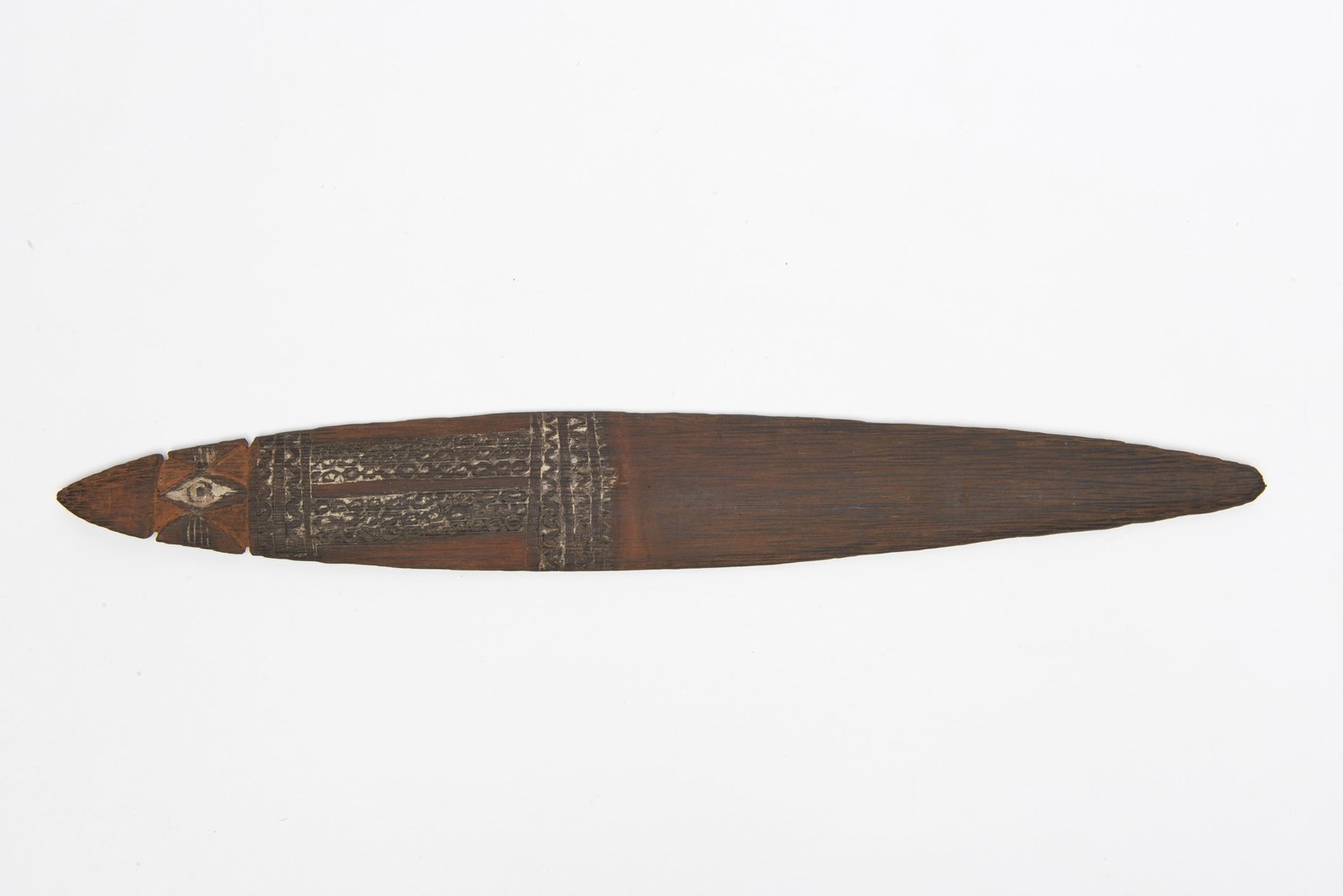
Swung in the dark, the bullroarer was one of the secret voices of Karkar's men — sound that Kulbob, the island's creator-hero, was said to have carried along the coast when he handed down his people, their dances, and their men's cult, Barag. Barag's sacred objects were kept from every woman's eyes. Then, in 1921, the Takia villages of the volcanic island's south coast turned Christian all at once: they staged one last Barag, carried the hidden things into the open, and burned them along with the cult house.
Particulars
- Function
- Used in initiation or subject to restrictions between the sexes.
Source
K. A. Gourlay, Sound-Producing Instruments in Traditional Society: A Study of Esoteric Instruments and Their Role in Male-Female Relations (New Guinea Research Bulletin 60; Canberra and Port Moresby, 1975), p. 3 and Table 1, p. 6, entry 31