No. WIRZ1951-001Oceania
Roarers of the swallowing house
Papua New Guinea · Jentschemangua (Yensemangwa), middle Sepik River, East Sepik Province · Oceania
Sacred / spirit
Source term: Schwirrer
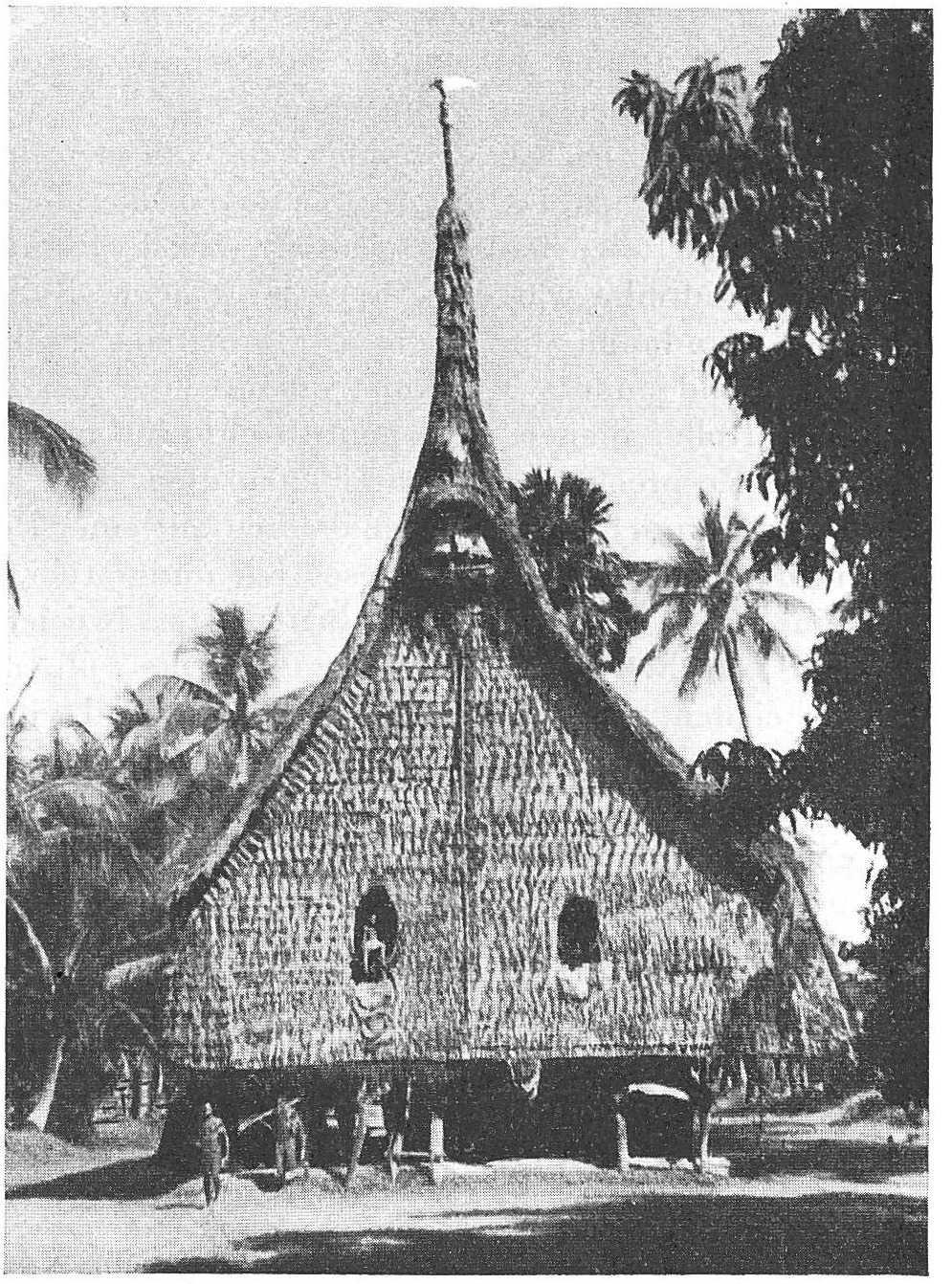
At Jentschemangua on the middle Sepik the great cult house was a monster. Its saddle roof swept almost to the ground, its two gables ran up into tall spires topped with birds, probably cranes, and a small human figure, and each gable end bore a huge grimacing face with gaping jaws. The novices once sat inside it, swallowed, it was said, by the beast. When Paul Wirz came collecting early in 1950 the house was a rest house open to strangers, yet nothing in it could be bought: the ancient figure-stool, the old plaited mask, the giant carved men guarding the palms in front were all "strong from the ground". Its three slit-drums had names, Kumbragawidimba, Rabiyanaguan and Mandangu, and with the sacred flutes and the bullroarers they had once carried the house's rites. By then the drums only called the men to meetings.
Sie spielten, wie auch die heiligen Flöten, Schwirrer und andere Musikinstrumente, bei den kultischen Riten eine bedeutende Rolle.
They played, like the sacred flutes, bullroarers and other musical instruments, an important part in the cult rites.
Paul Wirz, Meine Sepikfahrt (1951), p. 134
Particulars
- Object
- Bullroarers of the Jentschemangua cult house, named with the sacred flutes and three slit-drums; their form is not described.
- Function
- With the sacred flutes and the cult house's three named slit-drums, bullroarers played an important part in the cult rites; by 1950 the drums only called the men to meetings.