No. PNG46
Sio
Papua New Guinea · Morobe · Oceania · Sahul
Restricted
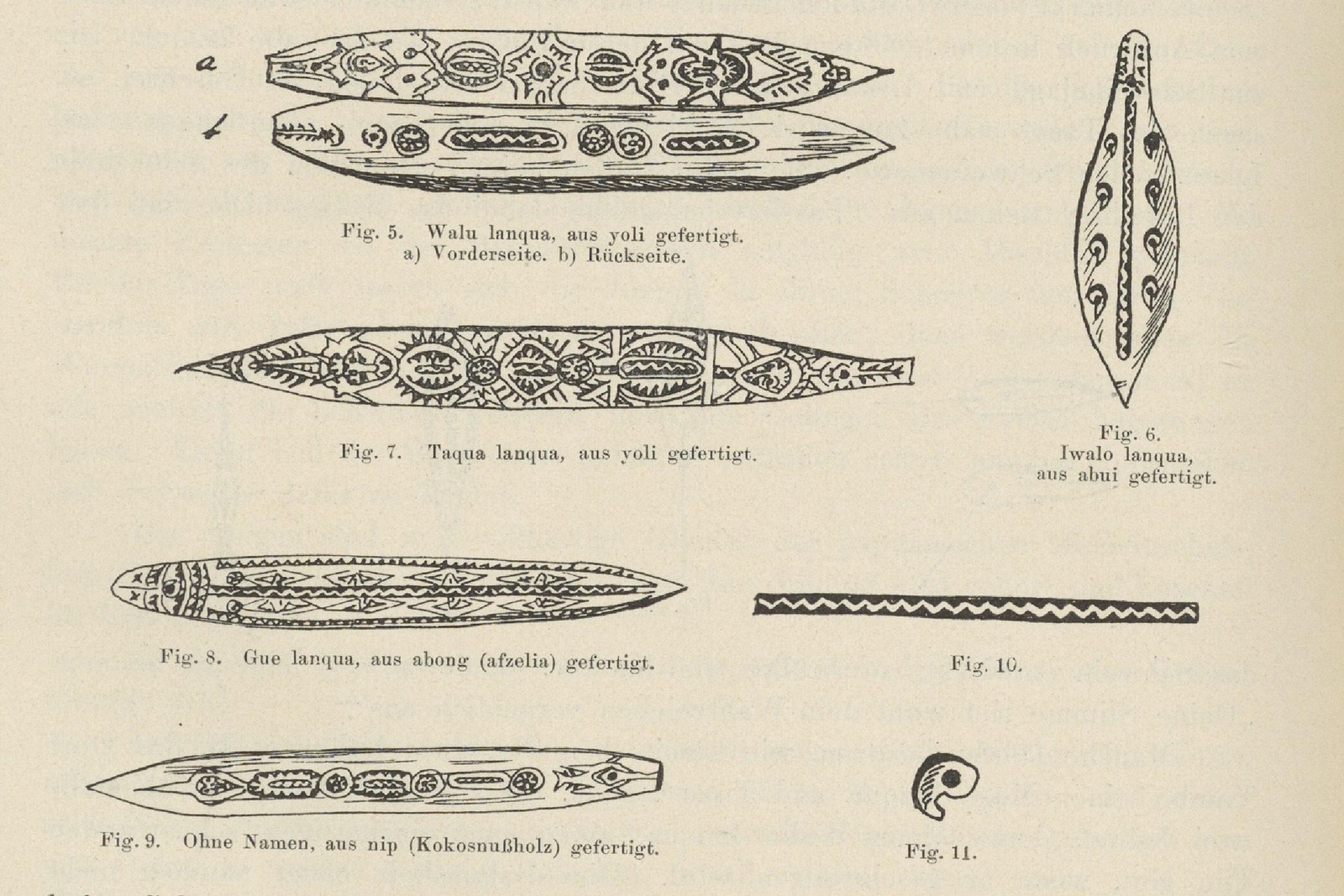
Among the Sio, an Austronesian-speaking people of the Huon coast in Morobe Province, the bullroarer was heard alongside wooden hand drums and conch trumpets, but it alone belonged to initiation or to the rules that kept the sexes apart. For two or three centuries before the Pacific War the Sio lived on a small offshore island; the major ceremonies, including male initiation, came with the rainy season of the northwest monsoon. In those rites a youth's maternal uncle had the leading role, instructing the boys in what were called simply "the laws." Initiation of this kind lapsed during the 1920s, the community having converted collectively to Lutheranism in 1919.
Ancestral ghosts who served as patron deities of the men's clubhouses and forest-dwelling spirits figured prominently in traditional beliefs.
Harding, "Sio," Encyclopedia of World Cultures, Vol. 2: Oceania
Particulars
- Function
- Used in initiation or subject to restrictions between the sexes.
Source
K. A. Gourlay, Sound-Producing Instruments in Traditional Society: A Study of Esoteric Instruments and Their Role in Male-Female Relations, New Guinea Research Bulletin 60 (Canberra, 1975), p. 3 and Table 1, p. 6, entry 46; Thomas G. Harding, "Sio," in Encyclopedia of World Cultures, vol. 2: Oceania (Boston, 1991)