No. PNG73
Utuwala
Papua New Guinea · Milne Bay · Oceania · Sahul
Function not recorded
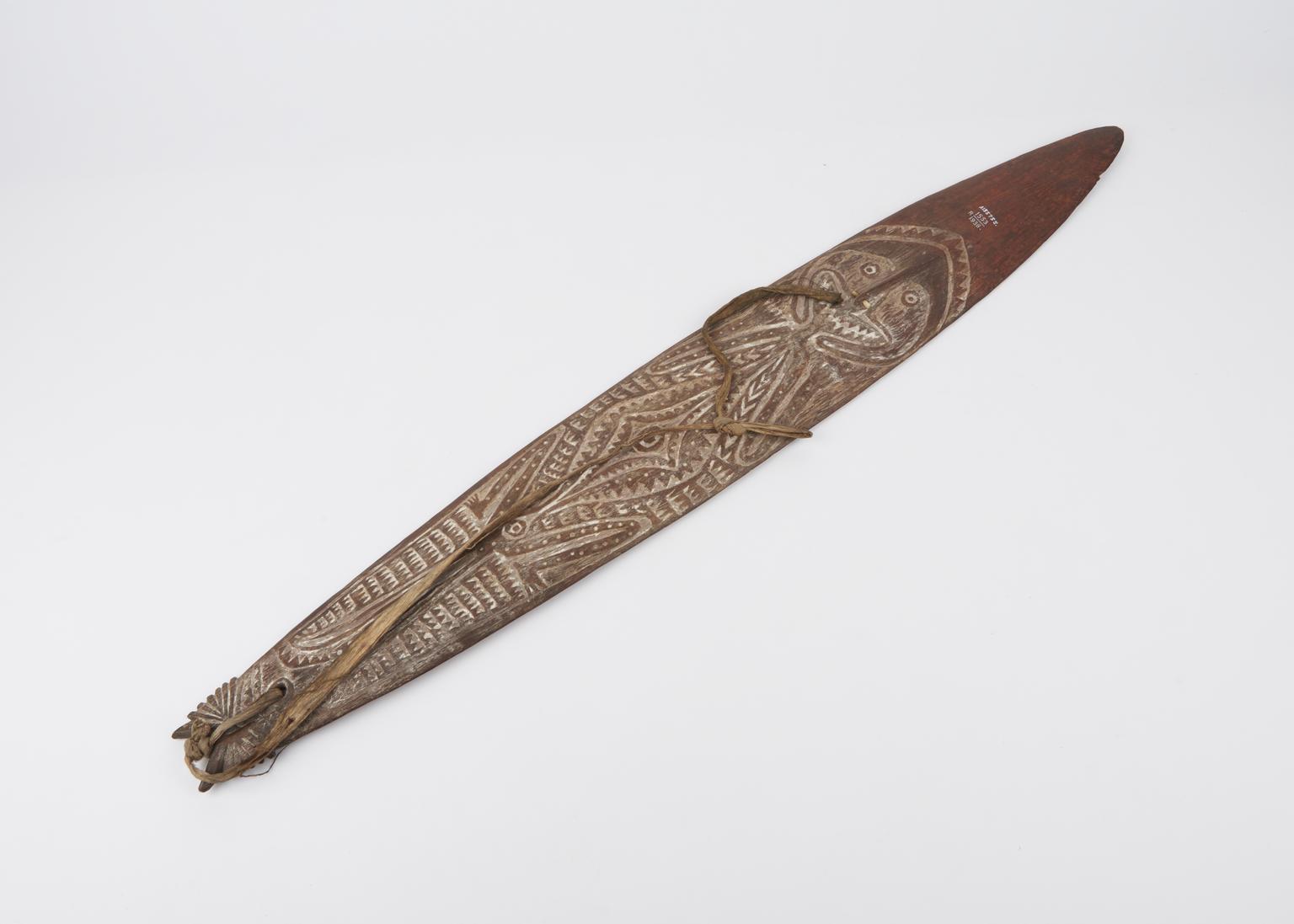
Utuwala is one of the rare places in eastern Papua where the bullroarer is found at all, and it kept a sacred flute besides. K. A. Gourlay called this stretch of the Central and Milne Bay districts the "Eastern Papua area of significant absence," where bullroarer, sacred flute and slit-gong turn up in only a small minority of places. What Utuwala did with its pair went unrecorded.
Nowhere, however, are their uses of sufficient importance in the esoteric field to undermine the general tendency.
Gourlay 1975, Sound-Producing Instruments in Traditional Society (New Guinea Research Bulletin No. 60), p. 16
Particulars
- Function
- Not recorded.
Source
K. A. Gourlay, Sound-Producing Instruments in Traditional Society: A Study of Esoteric Instruments and Their Role in Male-Female Relations (New Guinea Research Bulletin 60; Canberra and Port Moresby, 1975), Table 1, p. 7, entry 73, and p. 16