No. PNG65
Binandere
Papua New Guinea · Northern · Oceania · Sahul
Restricted
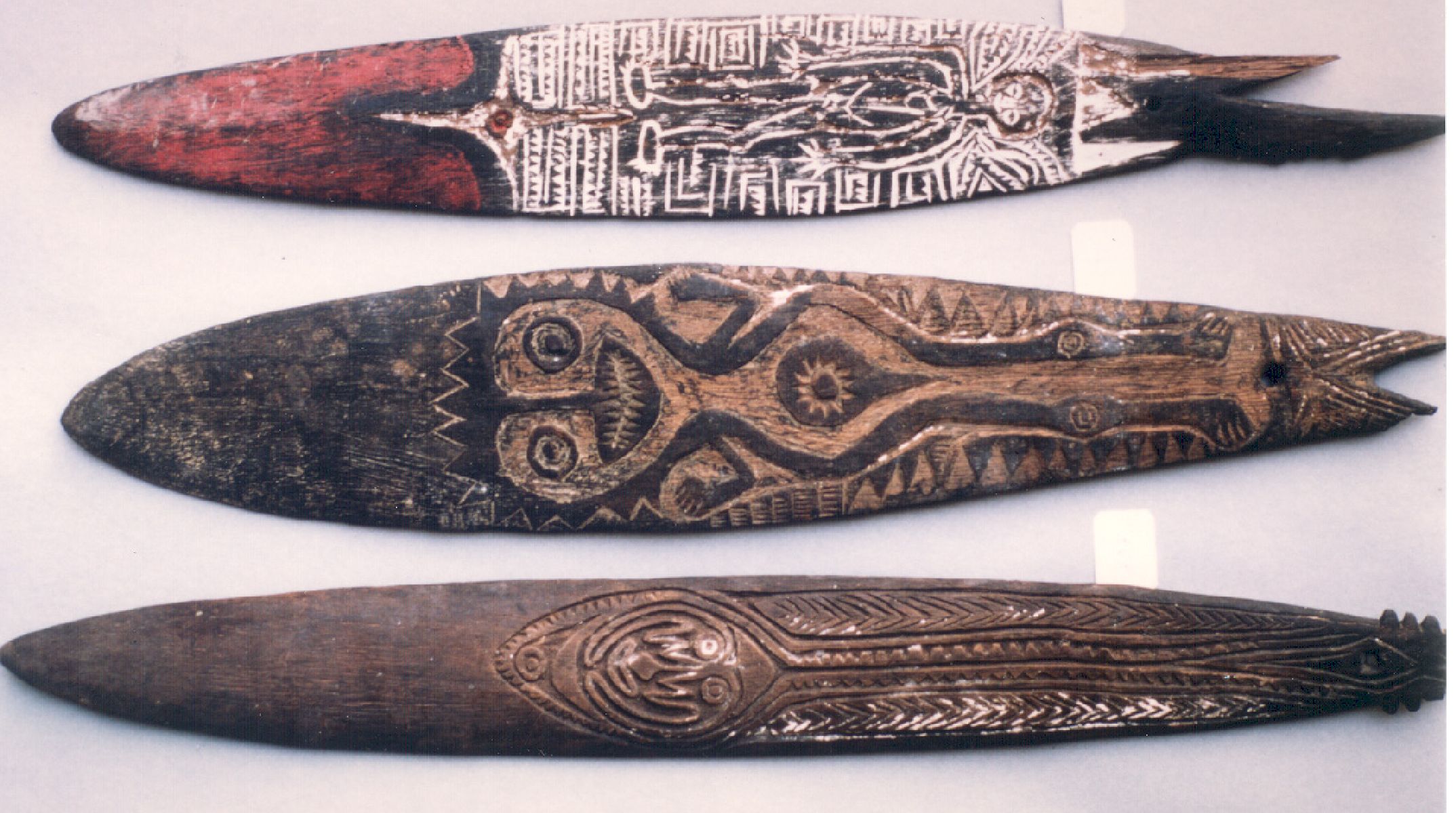
Among the Binandere-speaking peoples of the Northern District of Papua—now Oro Province—the bullroarer belonged to the opening and most terrifying phase of a boy's initiation. F. E. Williams, government anthropologist of Papua, who did fieldwork among the Orokaiva tribes in the 1920s, recorded a three-stage rite whose first stage was called the "terror," or the "ordeal." In it, initiated men of the clan disguised themselves as malevolent spirits, the embahi, and chased the novices around the village while their families begged the spirits not to eat their sons. It was during this stage of panic that the boys were first shown the bullroarers and the sacred flutes. Only afterward came seclusion in the men's house, the oro, where they were taught the secrets of those instruments along with weaponry, clan history, and the otuhu virtues of the warrior.
Source
K. A. Gourlay, Sound-Producing Instruments in Traditional Society (New Guinea Research Bulletin 60, 1975), Table 1, entry 65; Women in Transition, "Chapter Six: Orokaiva," p. 125 (drawing on Williams 1930:180–209 and Reay 1953:114–15)