No. PNG87
Waima
Papua New Guinea · Central · Oceania · Sahul
Restricted
beriwa
beriwa: spirits and non-human agencies, and also the bull-roarer.
Etymology. Among the Roro-speaking tribes beriwa is the word for spirits and non-human agencies, not necessarily those of the dead, some of them malicious beings who were never human. Seligman records that the same word is used for the bull-roarer, a sense he thought borrowed from the neighbouring Nara, or Pokao, to the east, who swing the bull-roarer to make their crops grow.
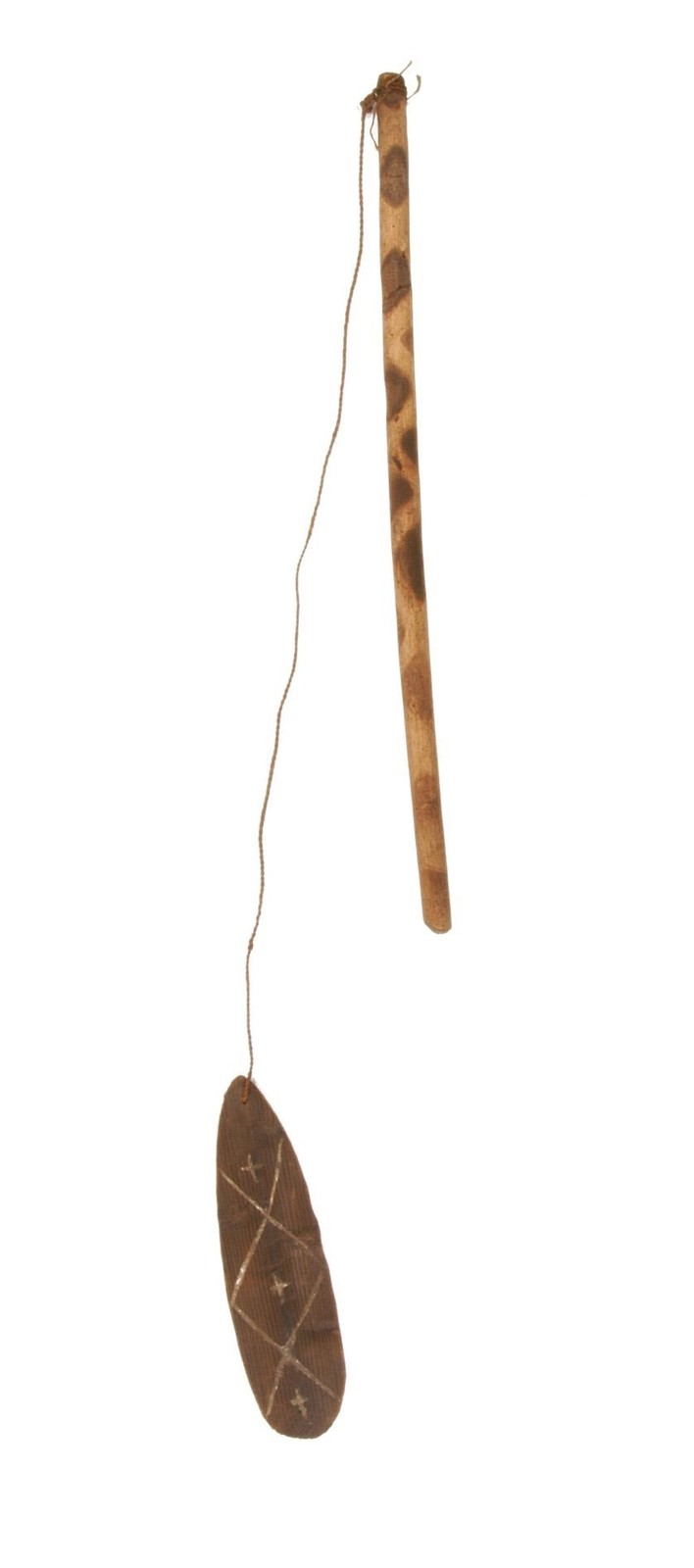
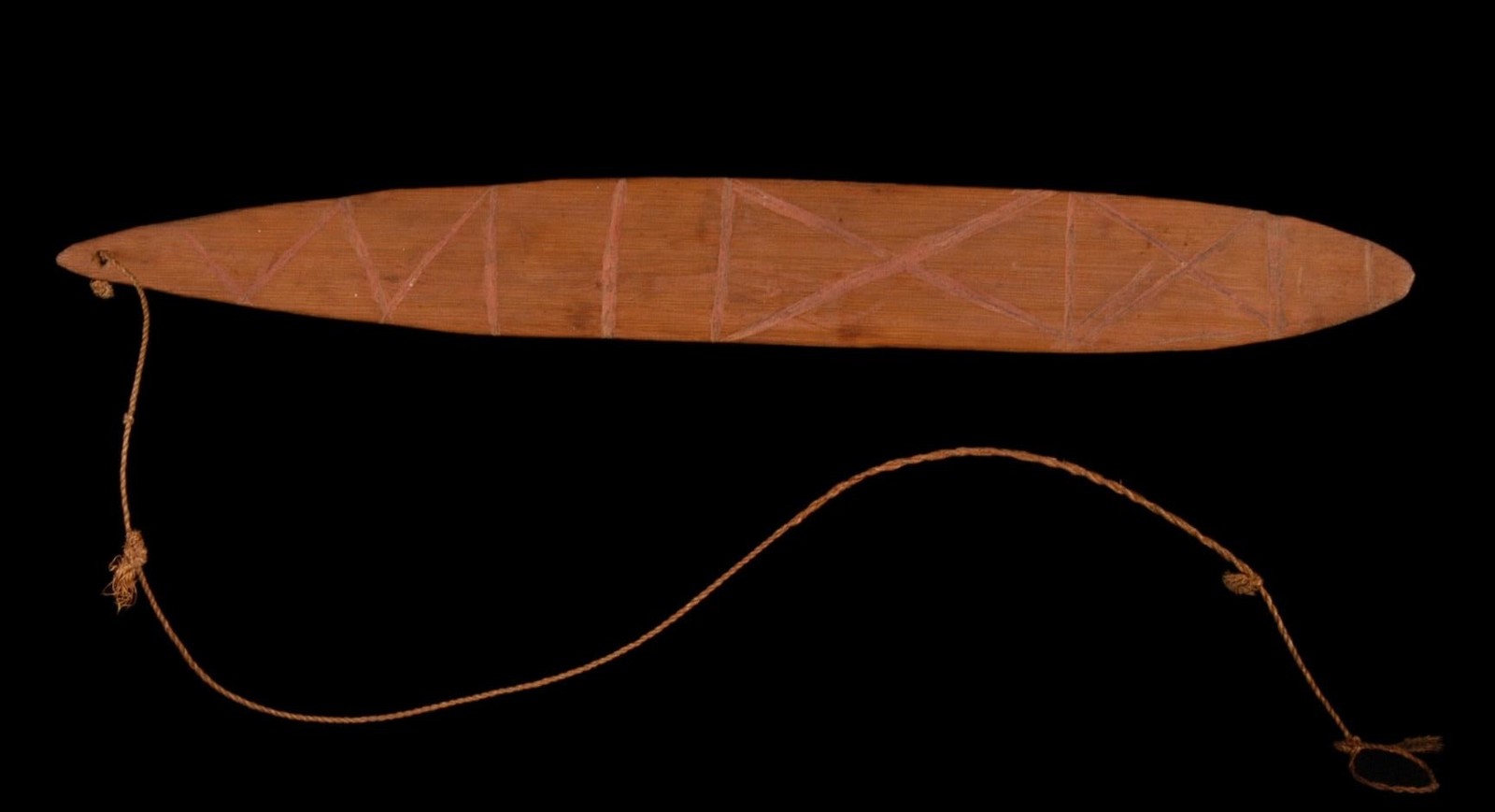
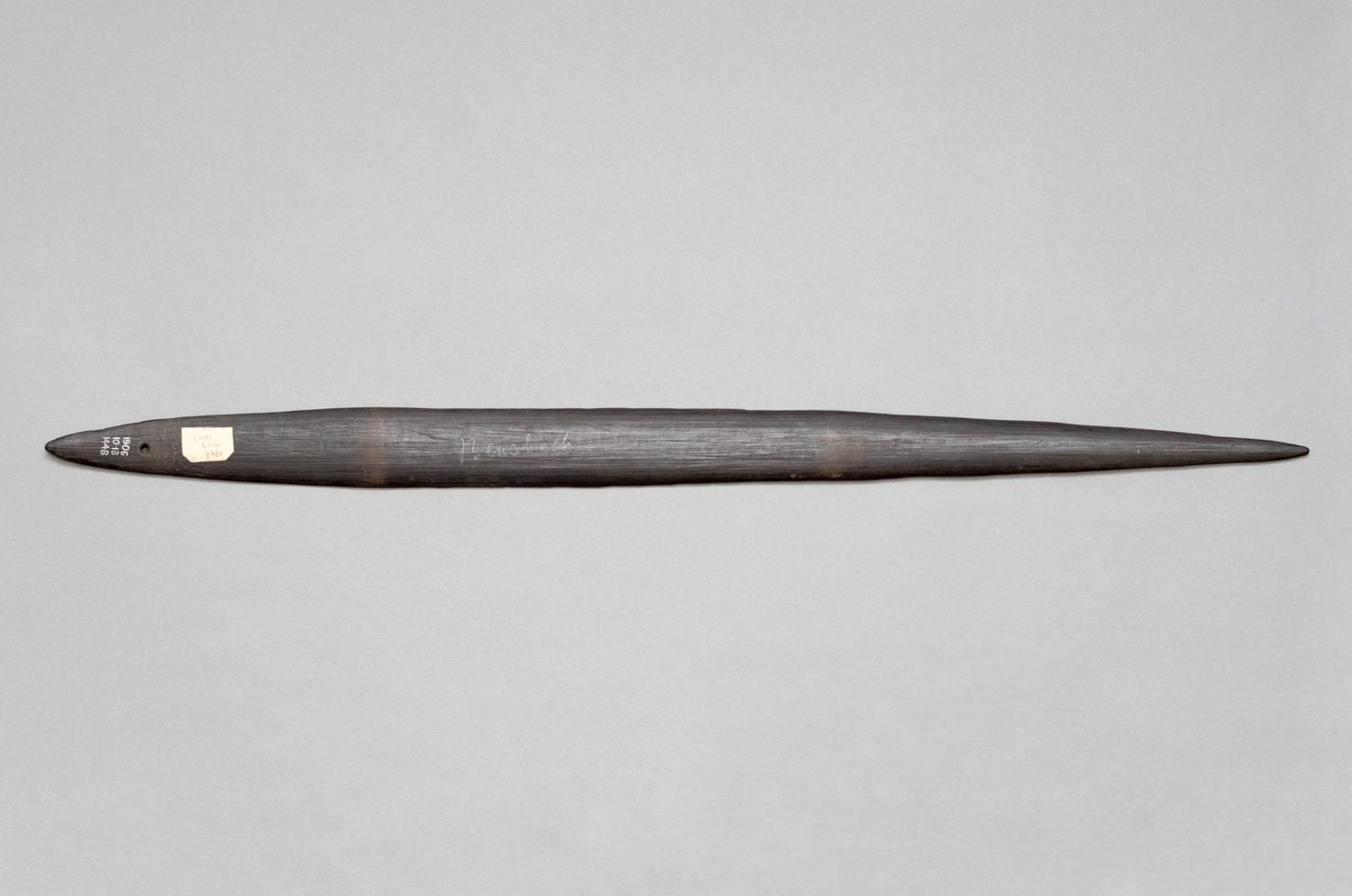
By night the kaivakuku swung bull-roarers through Waima. These were the taboo-masters of this coastal village west of Port Moresby: masked men whose huge body-length costumes hid them completely, who by day walked on the sides of their feet to disguise their gait, and who alone could lay the most dreaded ban on garden food. Cross that taboo and they raided the offender's house, killing his pigs and dogs until a gift bought them off. C. G. Seligman recorded the custom, borrowed from the Elema of the Papuan Gulf, in the early 1900s. Two Roro rhombes from this shore reached Paris through Georges Devereux's mission and have been in the Musée du quai Branly since 1933: a fire-blackened blade incised with three white-filled crosses, and a small slat engraved in red that the museum catalogues as a child's toy.
The office is hereditary, but at the present time the custom is decaying in Waima. Dr Strong was told in 1906 that there were but five kaivakuku in Waima, whereas formerly there were twenty.
C. G. Seligman, The Melanesians of British New Guinea (1910), p. 300
Particulars
- Object
- Bullroarer in use, with sacred flutes also present. Two Roro rhombes from this shore are in the Musée du quai Branly – Jacques Chirac, both from Georges Devereux's mission and acquired in 1933: object 9647 (71.1933.88.49.1-2), 112 cm overall, a fire-blackened blade incised with three crosses filled with white earth, on a fire-decorated stick; and object 9649 (71.1933.88.50.1-2), a 21 cm slat on a 63 cm stick, engraved with geometric designs filled with red earth and catalogued as a child's toy.
- Function
- Swung at night by the masked kaivakuku taboo-experts while enforcing the most dreaded taboo on vegetable food; chiefs and elders decreed the ban, the kaivakuku executed and punished.
Source
C. G. Seligman, The Melanesians of British New Guinea (1910), pp. 299–300, 304; K. A. Gourlay, Sound-Producing Instruments in Traditional Society (New Guinea Research Bulletin 60; Canberra and Port Moresby, 1975), Table 1, p. 7, entry 87; Musée du quai Branly – Jacques Chirac, objects 9647 and 9649 (inventory 71.1933.88.49.1-2 and 71.1933.88.50.1-2; Roro (îles) < Bereina < Yule; Georges Devereux mission, acquired 1933)