No. FRIEDERICI1913-001Oceania
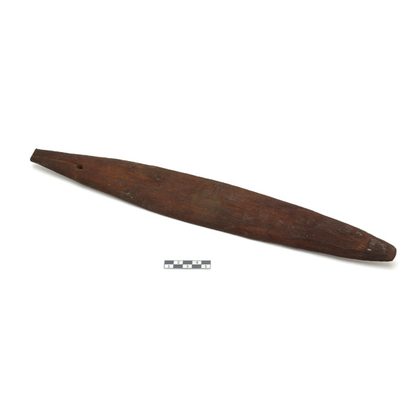
Tabar teter, the wild dog in the dark
Papua New Guinea · Tabar Islands (Simberi, Tatau, Big Tabar), off north-east New Ireland, New Ireland Province · former German New Guinea (Neu-Mecklenburg) · Oceania · Sahul
Sacred / spirit
- Spirit voice
- Death and rebirth
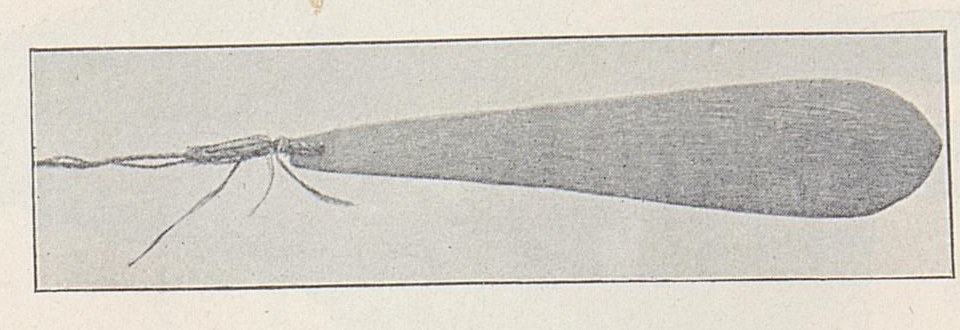
kăpúnịmŭtzĭmbụrị (kapunimutzimburi); teter (Tatau)
Source term: Schwirrholz; teter bull-roarers
kăpúnịmŭtzĭmbụrị (kapunimutzimburi): the bullroarer at Simberi and Marei, Tabar Islands. Friederici compared it with Barriai tibura (west New Britain) and Florida buro (Solomon Islands).
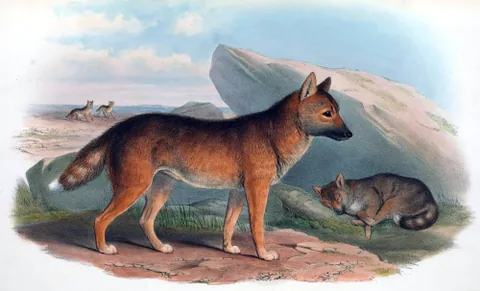
On the second night after the clan leader Pamas died on Tatau, in January 1984, the village square lay in total darkness. Young men had spent the afternoon shaving dry bamboo stems into teter bullroarers and tying coconut husk to bamboo shafts for fire spears. In silence the fire spears flew up from behind the dead man's house and rained onto its roof; then men burst out of the malagan ritual ground whirling the bullroarers, running beneath the falling fire and on into the dark. Their sound was the wild dog of the bush chasing the dead man's spirit, and when it stopped, the spirit was killed. Then the lamps were lit. The chase is part of Madas, the malagan of the night, which "contained the terrors of incest": its songs sing of incest, and its old initiations were said to have made a brother and sister commit incest under a mat in front of the malagan men, then speared the two to the ground. On Simberi and Marei the bullroarer was called kăpúnịmŭtzĭmbụrị, a name ending in a sound heard far along the island chain: tibura among the Barriai of west New Britain, buro on Florida in the Solomons.
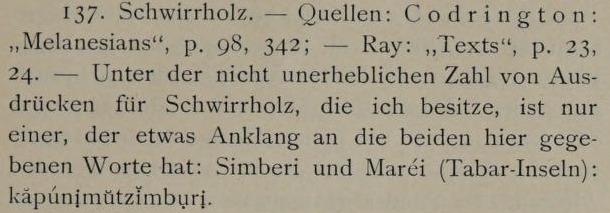
Unter der nicht unerheblichen Zahl von Ausdrücken für Schwirrholz, die ich besitze, ist nur einer, der etwas Anklang an die beiden hier gegebenen Worte hat: Simberi und Maréi (Tabar-Inseln): kăpúnịmŭtzĭmbụrị.
Of the not inconsiderable number of words for the bullroarer that I have, only one has any echo of the two given here: Simberi and Marei (Tabar Islands): kapunimutzimburi.
Georg Friederici, Untersuchungen über eine melanesische Wanderstraße (1913), p. 133
2 more plates

Particulars
- Object
- Bullroarer made from a dry bamboo stem shaved thin.
- Function
- Part of Madas malagan mortuary rites: on the night before burial, men whirl teter while running beneath thrown fire spears, the sound being the wild dog of the bush chasing the dead man's spirit; when the sound stops the spirit is (in make-believe) killed.
Discussed in one essay
 The Hound in the Dark
Sources
- Georg Friederici, Wissenschaftliche Ergebnisse einer amtlichen Forschungsreise nach dem Bismarck-Archipel im Jahre 1908. III. Untersuchungen über eine melanesische Wanderstraße, Mitteilungen aus den Deutschen Schutzgebieten, Ergänzungsheft 7 (Berlin: Mittler, 1913), p. 133 no. 137, comparative table p. 68 entry 137; comparative Florida citations: R. H. Codrington, The Melanesians, pp. 98, 342, and S. H. Ray, “Texts,” pp. 23–24 View
- Michael J. Gunn, Malagan Ritual Art on Tabar, New Ireland, Papua New Guinea (PhD thesis, University of Otago, 1992), pp. 22, 26–27, 135 View
Nearby in the atlas
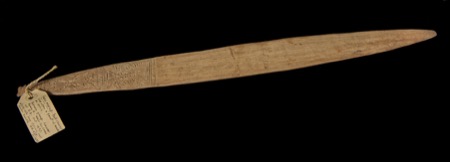 Luana murup of the Lower RamuPapua New Guinea · Melanesia, Papua New Guinea · Sacred / spirit
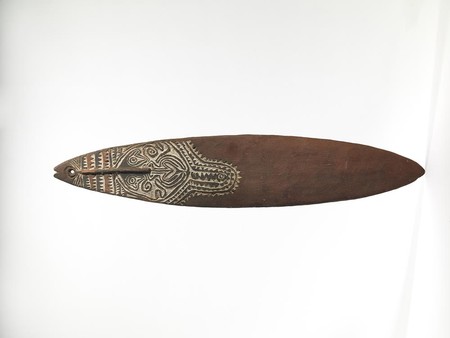 Kairu (Koriki) "imunu-viki" bullroarer, Purari DeltaPapua New Guinea · Gulf Province / Purari Delta / Naman District / Kairu · Sacred / spirit
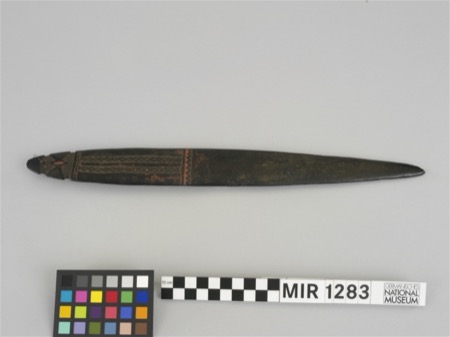 Livitu soul-passing bullroarerPapua New Guinea · New Ireland, New Ireland Province · Sacred / spirit
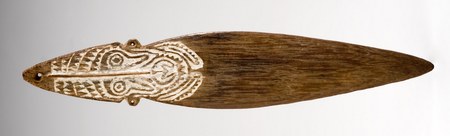 Kaimari Island Purari spirit-voice bullroarerPapua New Guinea · Kaimari Island / Port Romilly / Gulf Province · Sacred / spirit
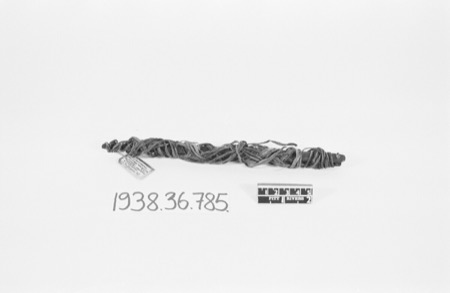 Anga trio still bound togetherPapua New Guinea · Papua New Guinea / Morobe Province · Sacred / spirit
 Bola Bakovi tuvura bullroarerPapua New Guinea · Willaumez / Talasea Peninsula / West New Britain / New Pommern · Sacred / spirit