No. PNG64
Bia-Waria
Papua New Guinea · Morobe · Oceania · Sahul
Restricted
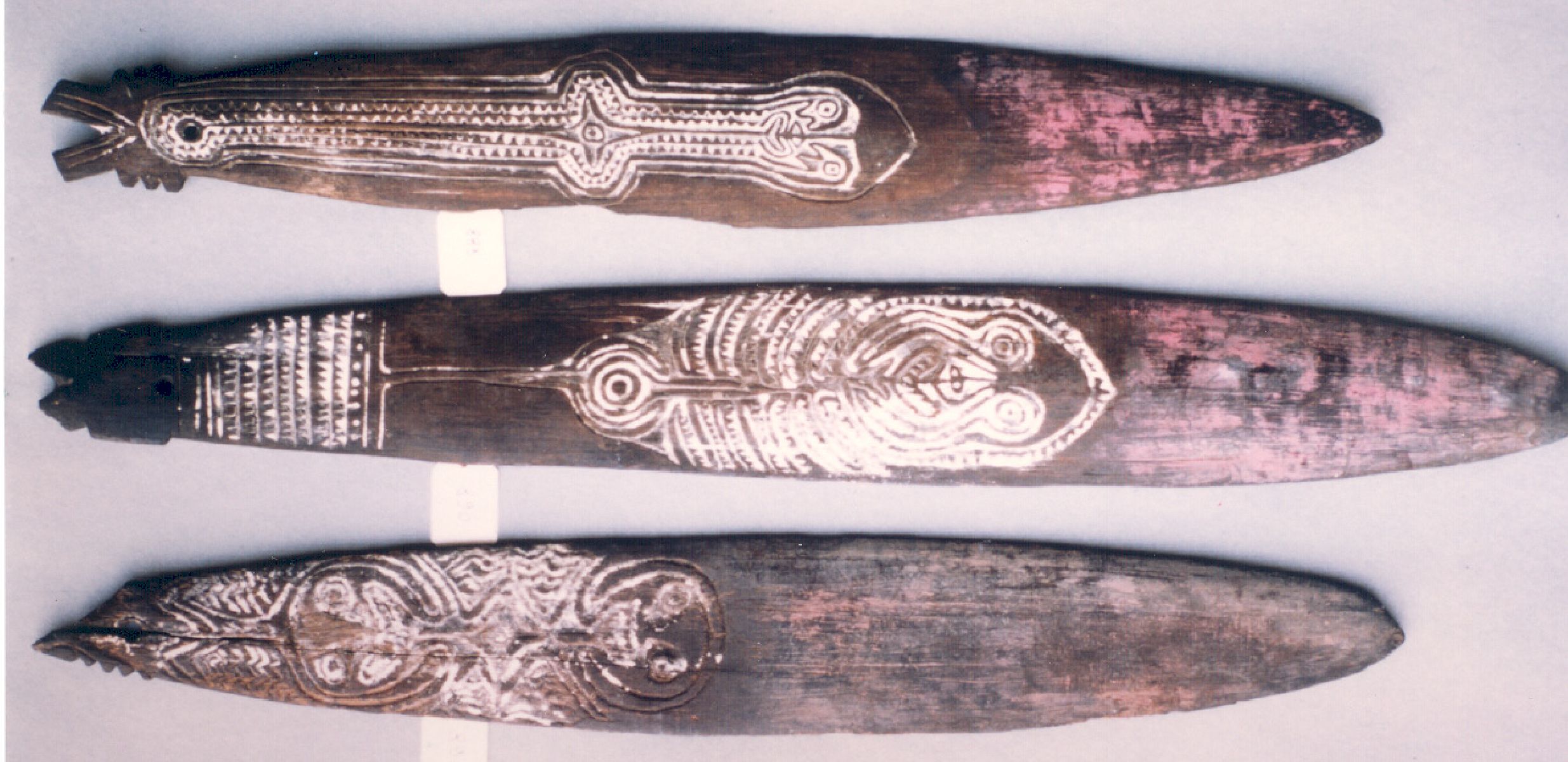
The "Bia-Waria" of K.A. Gourlay's 1975 survey are the people of the upper Waria valley in Morobe whose language, Guhu-Samane, was also recorded under the name Bia. Gourlay's table marks the valley as a place where the bullroarer and the sacred flute were both sounded; among these people both belonged to poro, the men's cult that governed initiation, marriage, war and peace, in which the bullroarer was a hardwood paddle whirled on a long cord to raise a wail meant to frighten the women and children of the distant village.
drive fear and horror into the young women and children
Richert, 'How the Guhu-Samane Cult of Poro Affects Translation,' The Bible Translator 16 (1965), p. 81
Particulars
- Function
- Bia-Waria/Guhu-Samane Waria poro bull-roarer used in initiation; held in mystical custody by poro mothers, then whirled by a priest to frighten young women and children.
Source
K. A. Gourlay, Sound-Producing Instruments in Traditional Society: A Study of Esoteric Instruments and Their Role in Male-Female Relations (New Guinea Research Bulletin 60; Canberra and Port Moresby, 1975), Table 1, entry 64, citing Official Handbook of the Territory of New Guinea (1937), p. 391; Ernest Richert, 'How the Guhu-Samane Cult of Poro Affects Translation' (1965), pp. 81 and 85