No. POUWER2010-002
Iwaka river-digging spirit voices
Indonesia · Iwaka, Mimika regency, Central Papua (Kamoro coast hinterland) · Oceania · New Guinea
Restricted
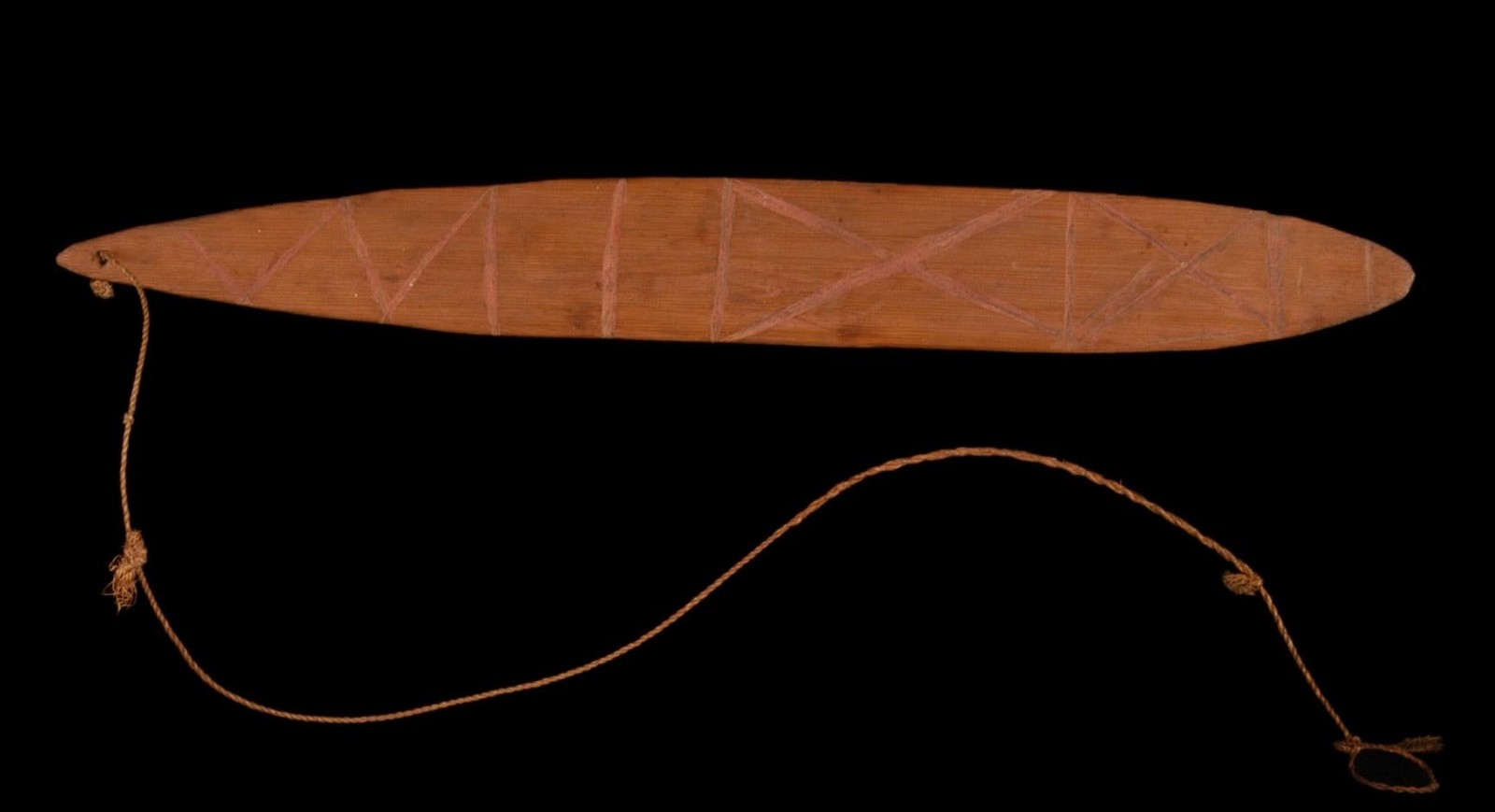
Source term: bullroarers
Te Kata: "mud secret", the men's ritual. Poraoko: "digging stick", its first phase. koapoka: initiates of marriageable age. miroko: the python that dug the Iwaka River. taparu: descent group.
On 15 September 1952 at Iwaka, young men of marriageable age lay beside long platforms screened with foliage, each gripping a makeshift digging-stick. Old ants' nests hung inside the screens so that outsiders would think the initiates were being attacked by ants. Then the sticks struck the ground in one rhythm, drummers chanted, and rattles, flutes and bullroarers sounded as the voices of spirits. The Kamoro of Iwaka and Temare were re-enacting their ancestors, who dug the straight channel of the Kamora River; at the end, water poured from a container filled the river they had made. This was Poraoko, the first phase of Te Kata, the men's mud secret, which also honours miroko, the python whose wriggling carved the winding bends of the Iwaka River.
The sounds of rattles, bullroarers and flutes, impersonating spirits, were also heard.
Jan Pouwer, Gender, Ritual and Social Formation in West Papua (2010), p. 264.
Particulars
- Object
- Bullroarers; their form is not described.
- Function
- Sounded with rattles and flutes as the voices of spirits during Poraoko, the digging-stick phase of the men's Te Kata ("mud secret") ritual, while young initiates (koapoka) beat the ground in unison to re-enact the ancestors digging the Kamora River.