No. PNG21
Chambri
Papua New Guinea · East Sepik · Oceania · Sahul
Restricted
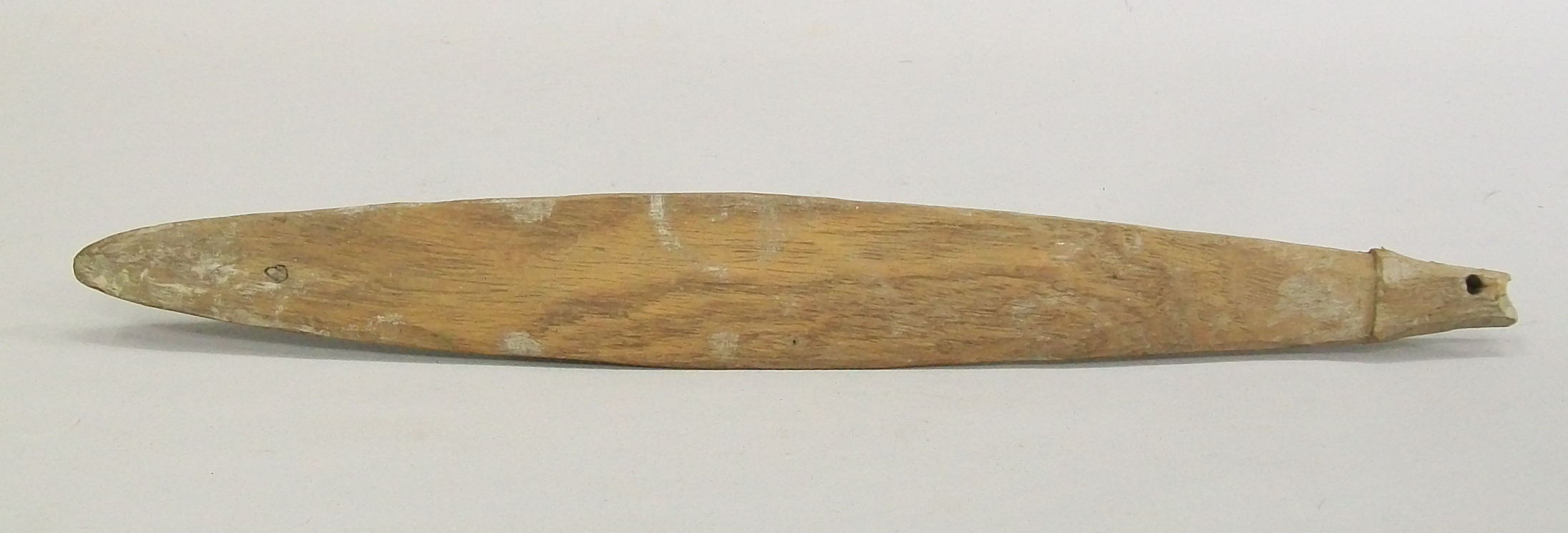
Among the Chambri of the Chambri Lakes, south of the Sepik, the men's spirit house holds slit-gongs, flutes and bullroarers, kept hidden from women and the uninitiated — and the bullroarer is the voice of the ancestral crocodile that eats the initiates' backs. Boys are initiated by scarification, hundreds of incisions cut across the shoulders and back, painted afterwards with tree sap so they heal into the admired keloid ridges; the wounding is said to release the mother's blood that had gone into making them. The scarifiers work in pairs drawn from the initiation moiety opposite the boy's own, because each moiety's ancestral crocodile is understood to be responsible for eating the backs, and only if the two moieties are cut in equal numbers will the crocodiles settle back to a peaceful sleep. While the cutting goes on, two scarifiers stay outside in the enclosure whirling bullroarers that contain the crocodile spirits, and inside the men's house representatives of both moieties sit facing each other and play the sacred ancestral flutes. The boy's mother's brother makes the first cut and then leaves at once, because he cannot watch his nephew bleed without weeping, and to weep aloud would tell his wives and sisters that something was wrong. A widely told Sepik story holds that women once owned the secret flutes and the men took them away. These are also the people Margaret Mead studied in 1933 under the name Tchambuli, reporting that the women did the fishing and trading and ran the practical life of the village while the men occupied themselves with art and ceremony.
Between the fence and water stand men dressed as ancestral crocodiles, the eaters of male backs. Each initiate must crawl between the legs of the opposite moiety's crocodile in order to enter the water.
Deborah B. Gewertz, "The Father Who Bore Me: The Role of Tsambunwuro during Chambri Initiation Ceremonies," in Gilbert H. Herdt (ed.), Rituals of Manhood: Male Initiation in Papua New Guinea (1982), p. 298
Particulars
- Object
- Both the bullroarer and the slit-gong are in use here.
- Function
- Whirled outside the men's house during scarification; the roarers hold the spirits of the initiate-eating crocodiles.
Source
Deborah B. Gewertz, "The Father Who Bore Me: The Role of Tsambunwuro during Chambri Initiation Ceremonies," in Gilbert H. Herdt (ed.), Rituals of Manhood: Male Initiation in Papua New Guinea (1982), pp. 292-293, 298; K. A. Gourlay, Sound-Producing Instruments in Traditional Society (1975), Table 1, entry 21