No. CARROLL2024-010
Wim wɑgrɑ
Papua New Guinea · Wim village, Pahoturi River country, South Fly District, Western Province · Oceania · Sahul
Function not recorded
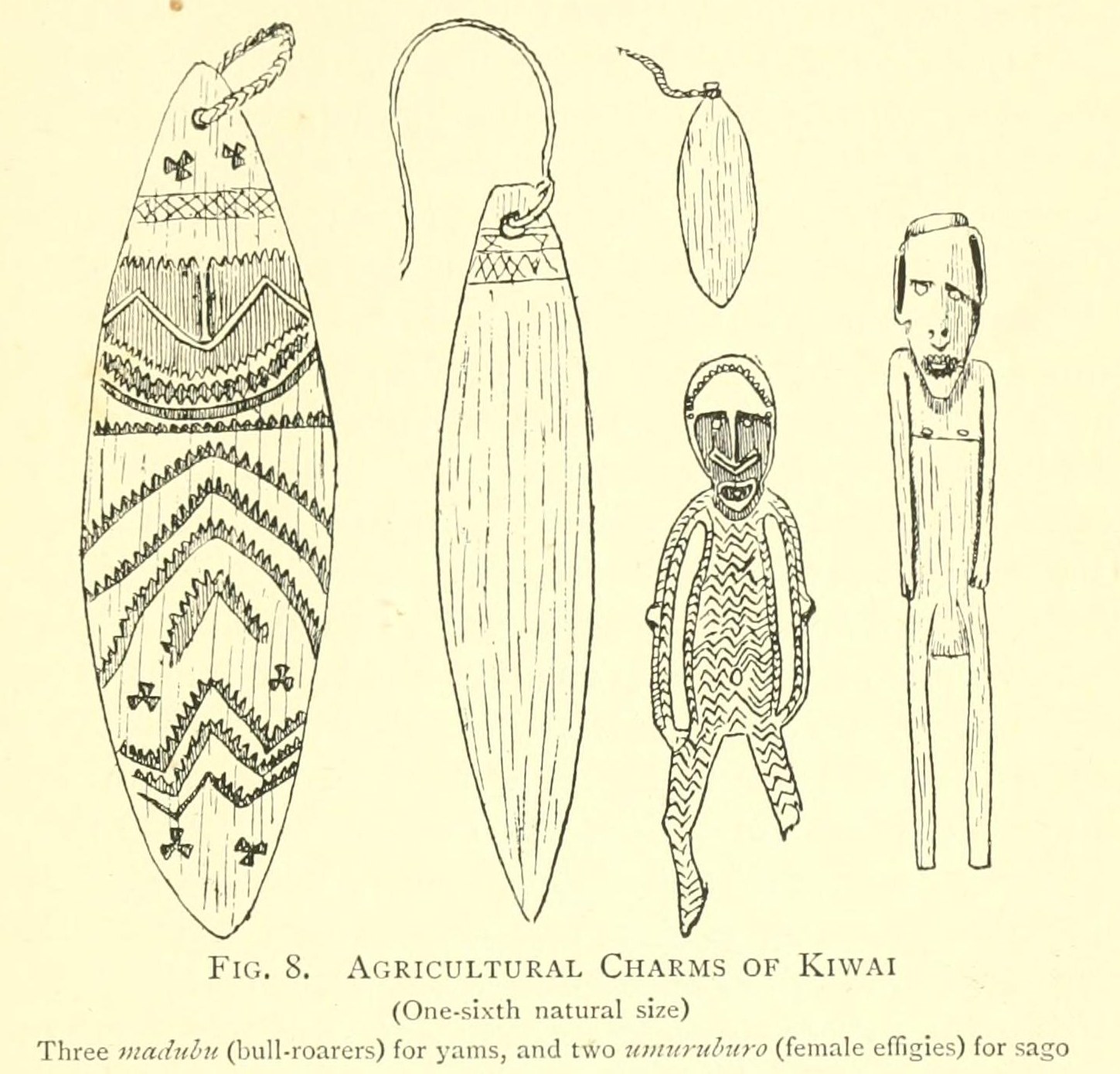
wɑgrɑ
Source term: bullroarer: wɑgrɑ
wɑgrɑ: bullroarer (Yamfinder, Kawam, Wim, Kate L. Lindsey field data; phonetic transcription)
At Wim, in the Pahoturi River country of south-western Papua New Guinea, Kawam speakers call the bullroarer wɑgrɑ. It is one word carried across a language border. Their Ende-speaking neighbours say waglla, and east of them the Bine, whose language belongs to another family altogether, say wagra. Yet at Kinkin, Taeme speakers of the same small Pahoturi family call it mələs.
Particulars
- Object
- A bullroarer, called wɑgrɑ; its form is not recorded.
- Function
- Not recorded.
Sources
- Matthew J. Carroll, Wolfgang Barth, Nicholas Evans et al., Yamfinder: The Southern New Guinea Lexical Database (University of Melbourne), concept 'bullroarer' View
- CLDF dataset derived from Carroll et al., "Yamfinder: The Southern New Guinea Lexical Database", Lexibank release v1.0 (2024) View
- Kate L. Lindsey, Ghost Elements in Ende Phonology (PhD dissertation, Stanford University, 2019), p. 229 View · archived