No. PNG25
Manam Island (incl. Dugulaba)
Papua New Guinea · Madang · Oceania · Sahul
Restricted
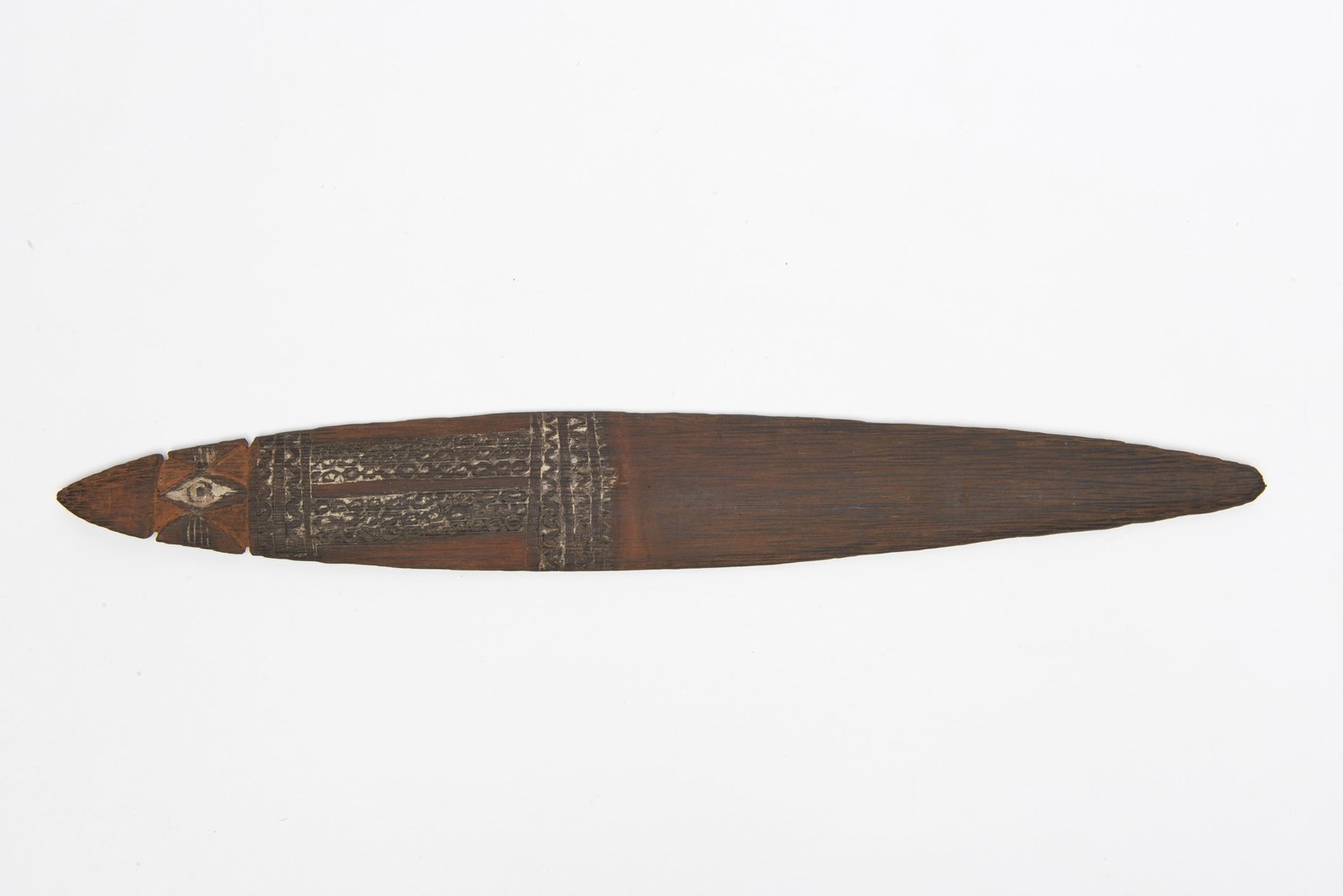
On Manam, a volcanic island off the Madang coast, the eruptions are the work of Zaria, an ill-tempered female spirit who lives in the crater and is the source of its fire; her powers of fertility and destruction were what the men of the island sought to control through magic, while the smaller crater belonged to her male consort, Yabu. The men's cult here turned on paired bamboo flutes, kept secret from women and played from the haus tambaran that women may not enter, and on the garamut slit-gongs that sounded alongside them. The flutes belonged to the tanepoa, the island's chiefly elite, and to their feasts and competitive pig exchanges (buleka). Camilla Wedgwood, who studied the lives of women and children here in 1932-34, and later Nancy Lutkehaus, whose dissertation was titled 'The Flutes of the Tanepoa,' recorded this world of flutes, gongs, and male secrecy. The bullroarer that K. A. Gourlay's 1975 survey of esoteric New Guinea instruments assigns to Manam sits within that men's complex, though it is the flutes the ethnography foregrounds.
un système complexe de domination masculine symbolisée par les flûtes sacrées et les maisons des hommes
a complex system of masculine domination symbolized by the sacred flutes and the men's houses
Juillerat, review of N. C. Lutkehaus, Zaria's Fire, L'Homme 37(141), 1997
Particulars
- Function
- Not recorded.
Sources
- K. A. Gourlay, Sound-Producing Instruments in Traditional Society: A Study of Esoteric Instruments and Their Role in Male-Female Relations, New Guinea Research Bulletin 60 (Canberra and Port Moresby, 1975), Table 1, entry 25 View
- Juillerat, review of N. C. Lutkehaus, Zaria’s Fire, L’Homme 37(141) (1997)