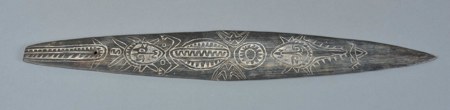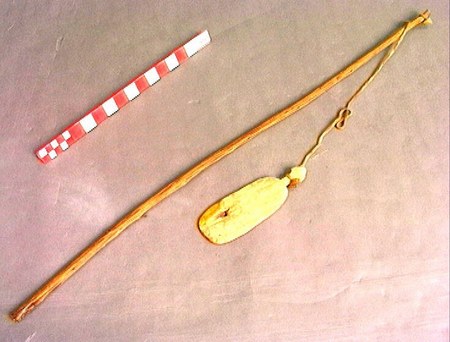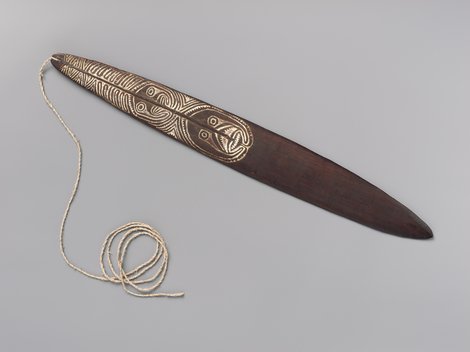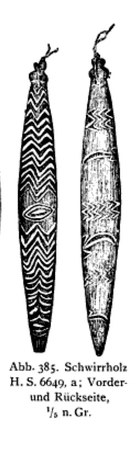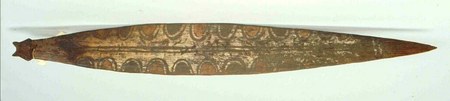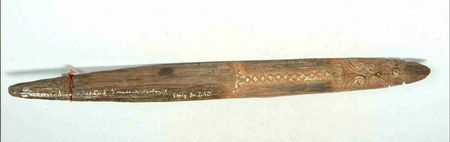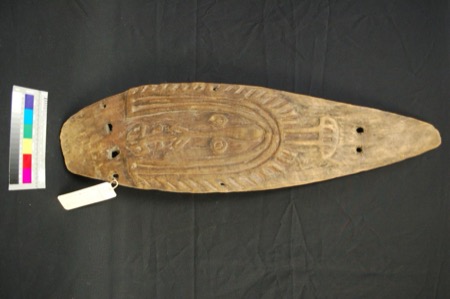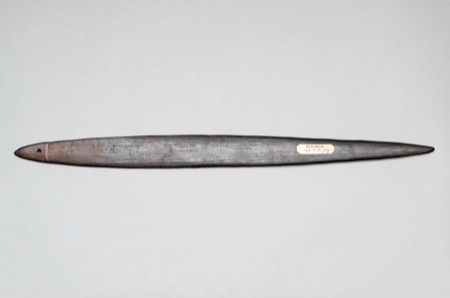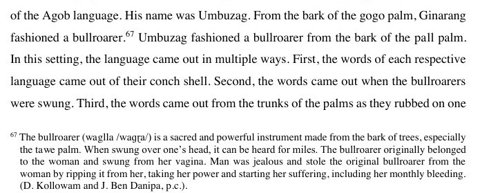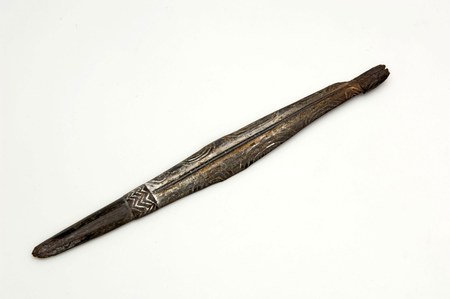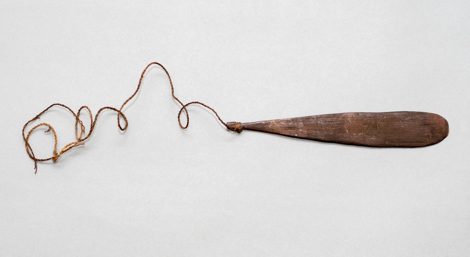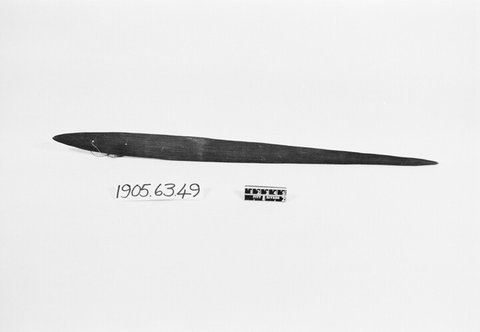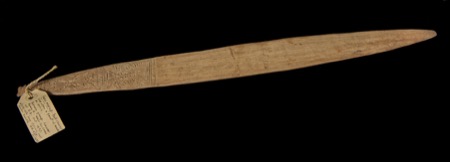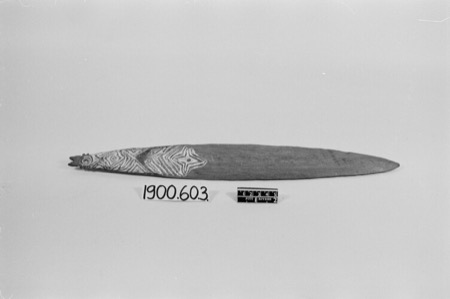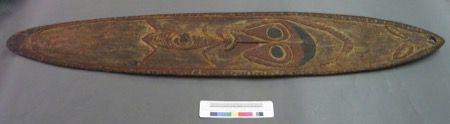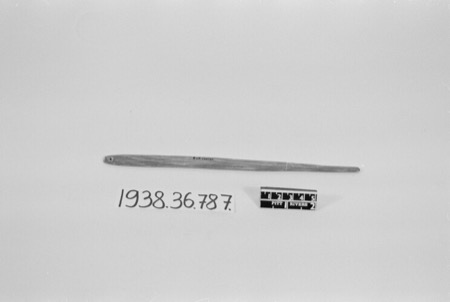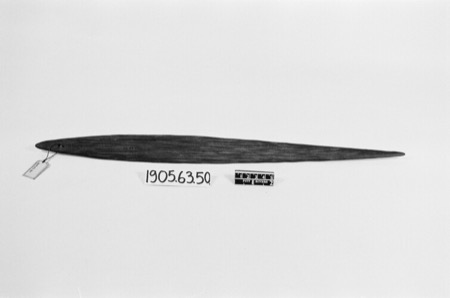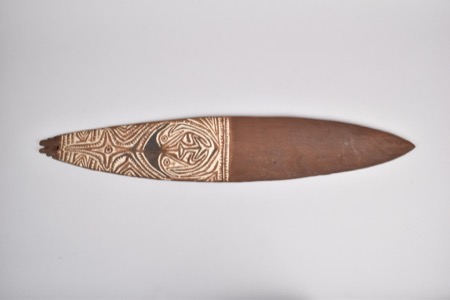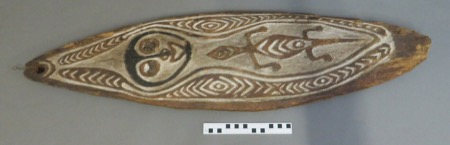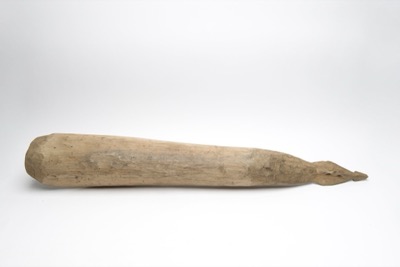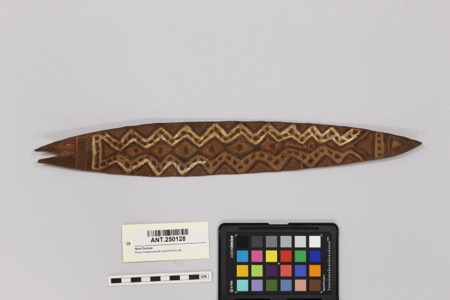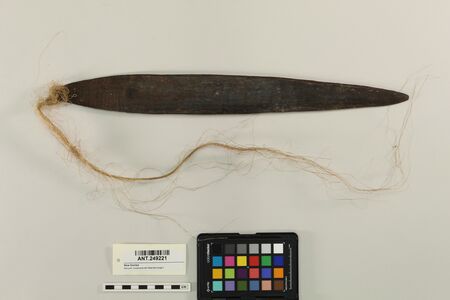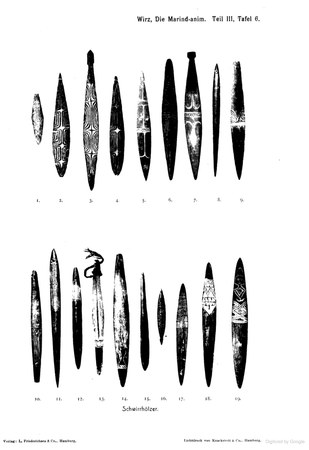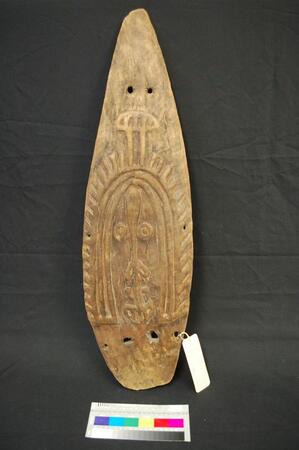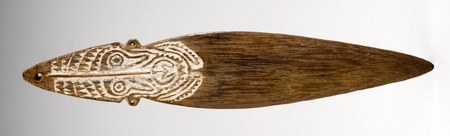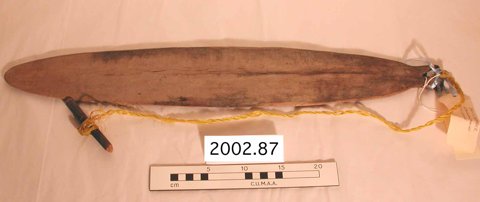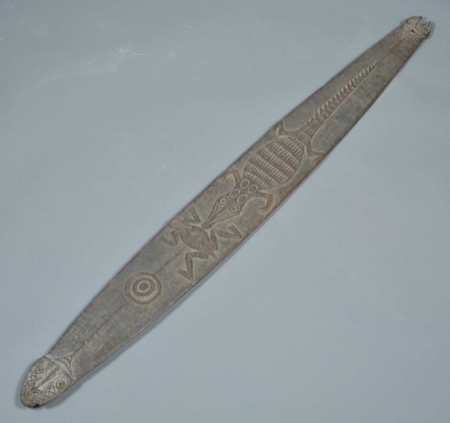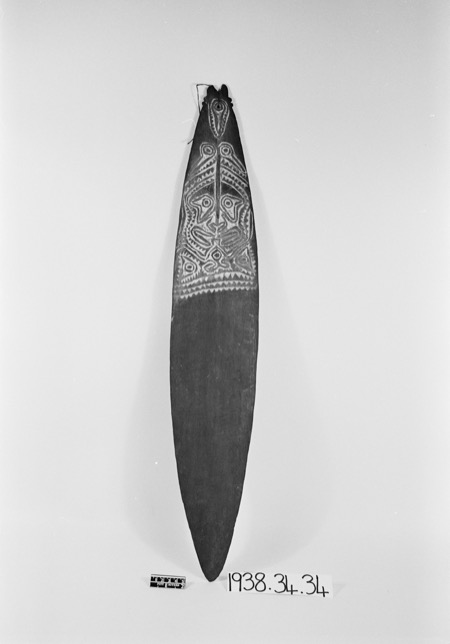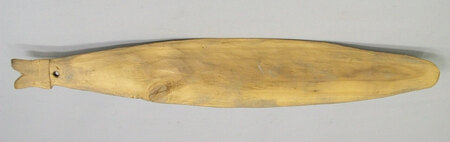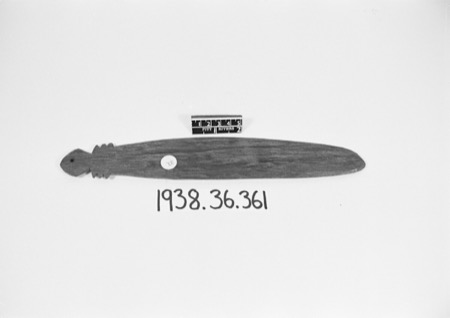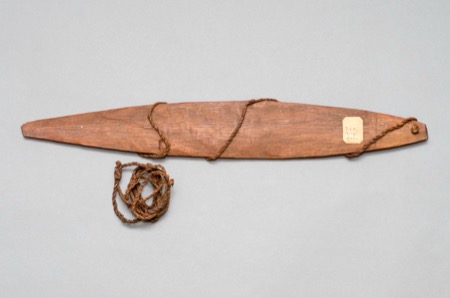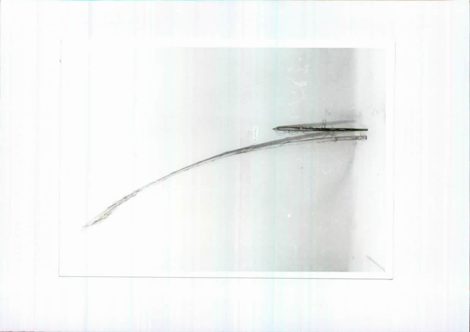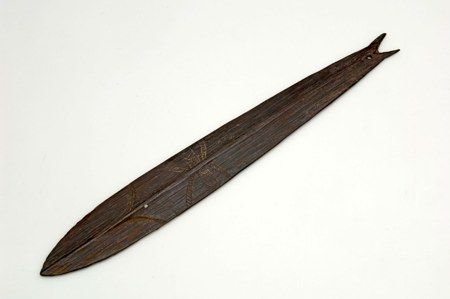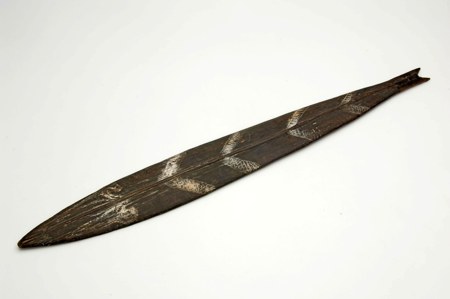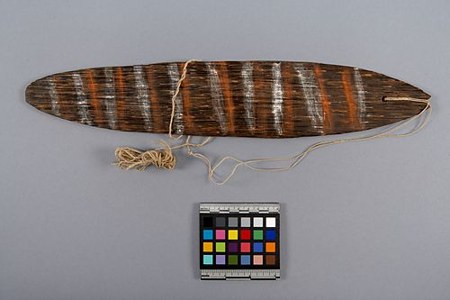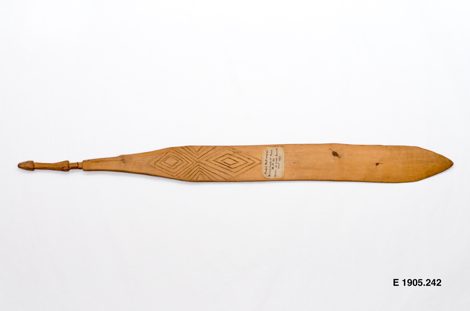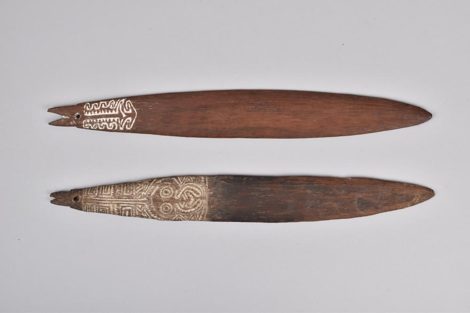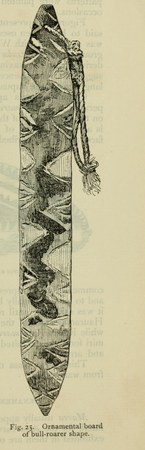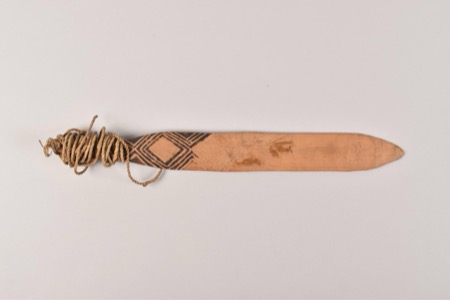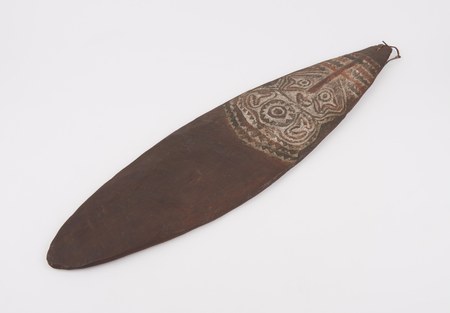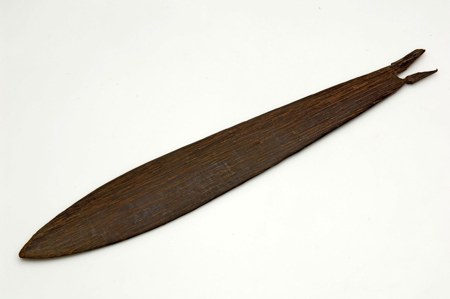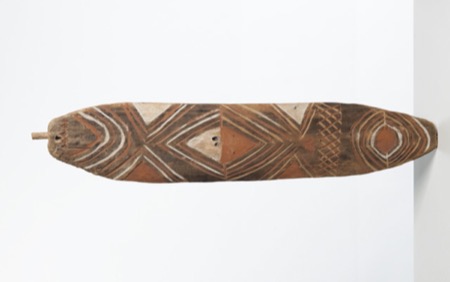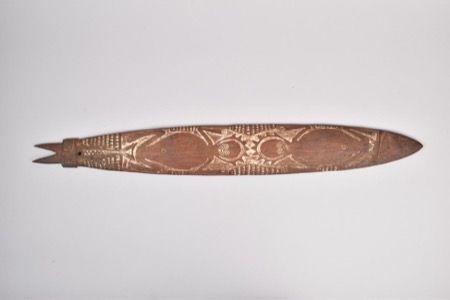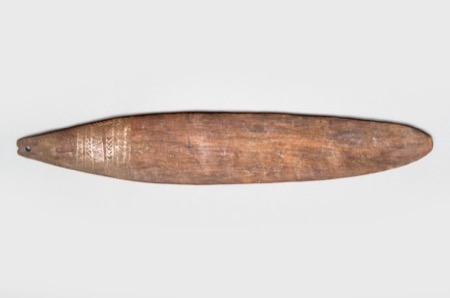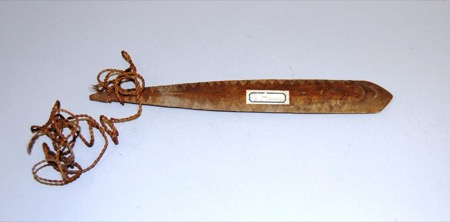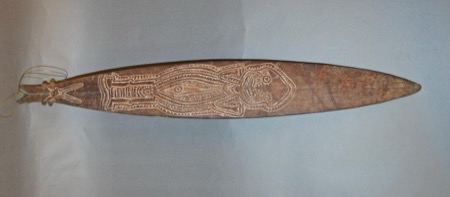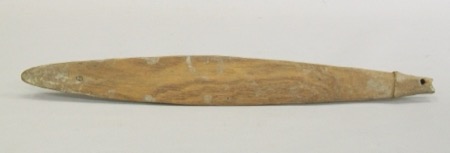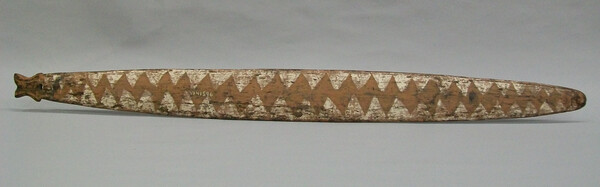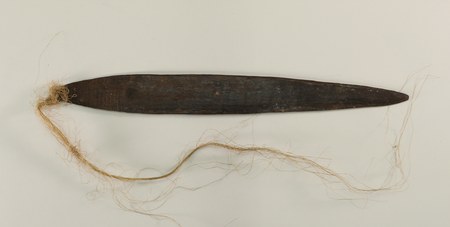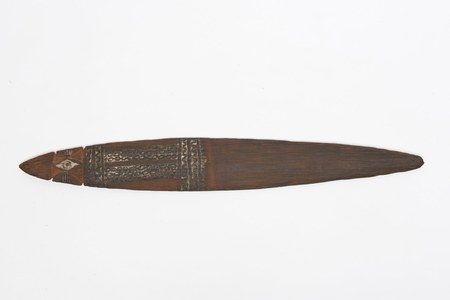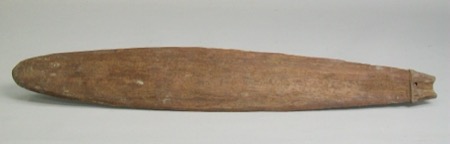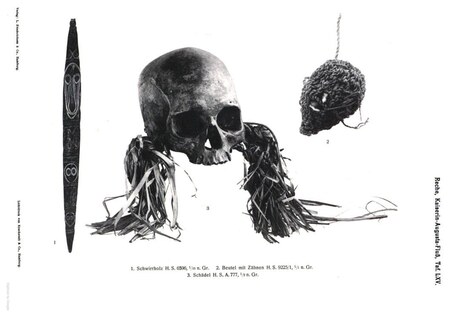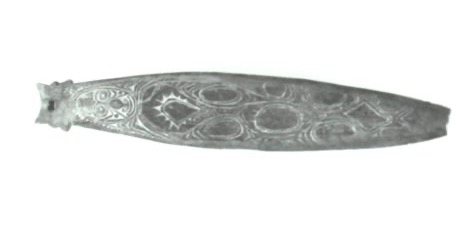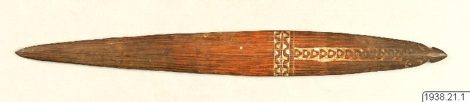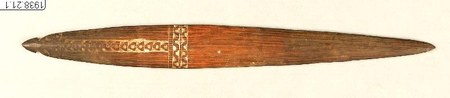
A voice comes from the forest or the closed end of a ceremonial house. It belongs to an old man remembered by name, a giant who swallows boys, or ancestors returning to eat sacred pork. Across New Guinea, from the Mimika coast and the Digul country to the Sepik, Huon Gulf and eastern highlands, bullroarers make unseen beings present. People hear the voice before they see the blade. The knowledge of how to make it sound, and the right to keep and reveal it, turn this small object into an institution. 1, 12, 13, 14
A particular ancestor, a particular voice
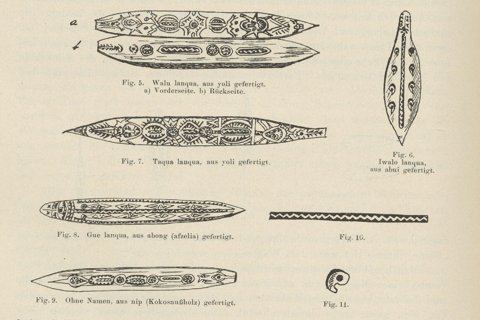
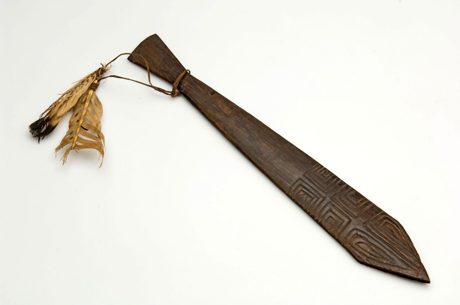
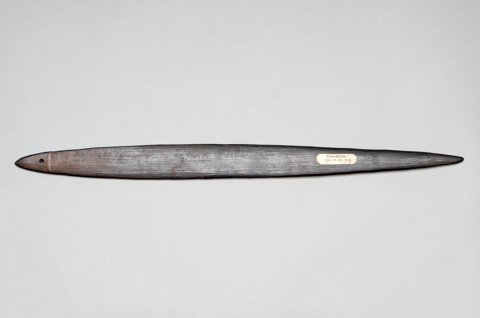
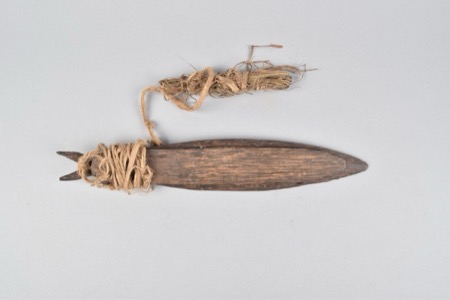
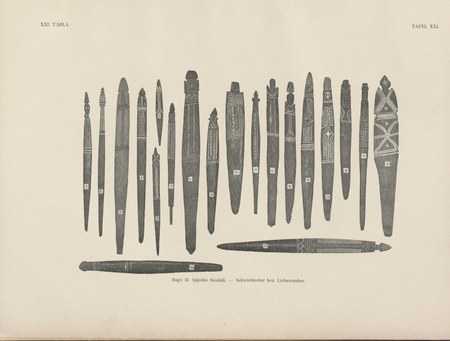
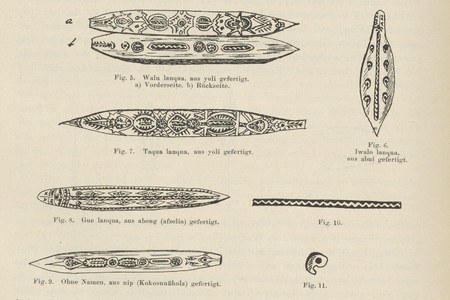
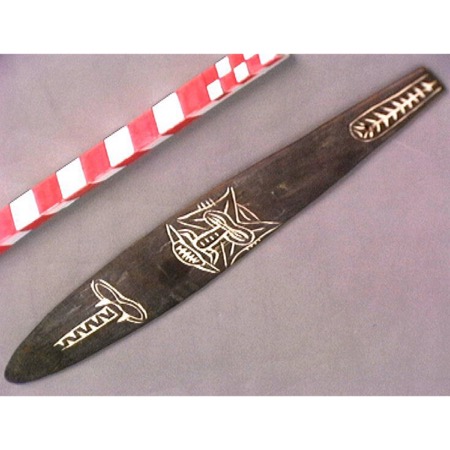
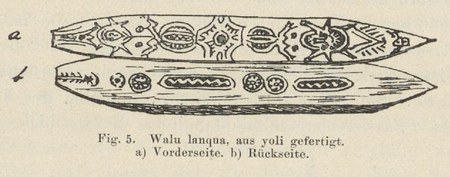
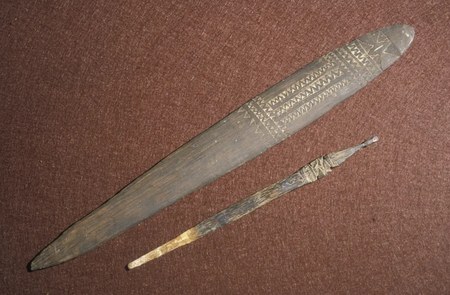
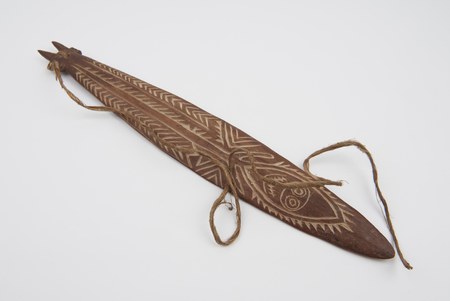
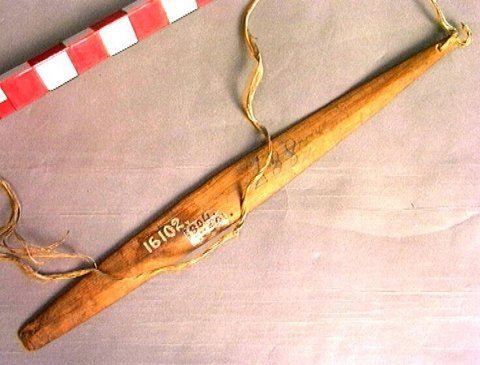
The sound often belongs to someone. Among the Bukaua of the Huon Gulf, a ruling blade bears a dead man’s name with lanqua, “the Old One.” Gumba’s has two humps for his prominent hipbones. At Uwaung, Wabo’s hangs obliquely from its cord so that it rasps: Wabo had a mutilated nose and spoke indistinctly. Small, higher-voiced instruments speak for the ruling ancestors’ wives, auwi lanqua. These are distinct from the lesser serving blades. Wood preserves a household of voices, with recognizable people inside it. 1
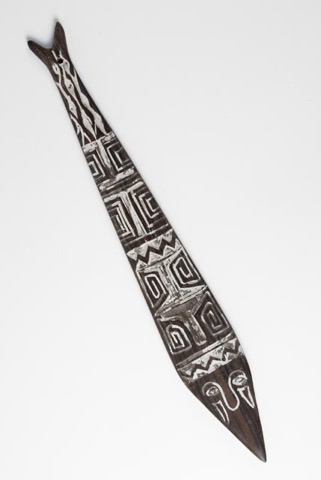
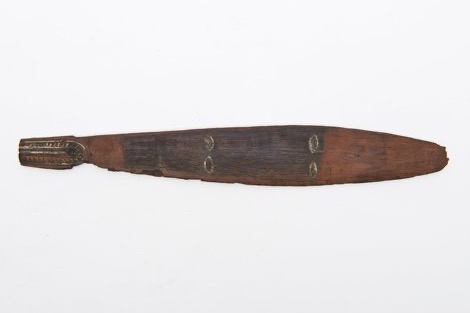
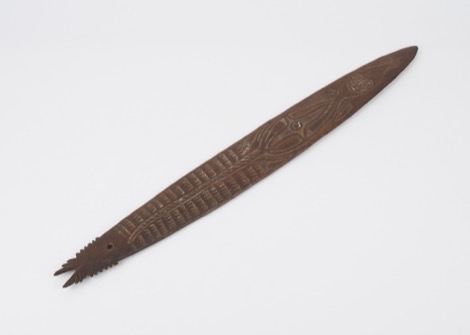
On the Mimika coast, the Kamoro payu or mirapoway represent the voices of the honoured dead. In the Kaware ceremonial house they hang from the roof with hunting lances, paired dog images, sago bowls and paddles. Ancestral sound belongs among the equipment of a remembered life. In the eastern highlands, Gadsup bullroarers and flutes bring the grandparents back, while the Agarabi declare the roar to be the ancestors’ voice. A blade’s authority begins with the person or being whom its audience hears. 13, 5
Sound gives the ceremonial house a body
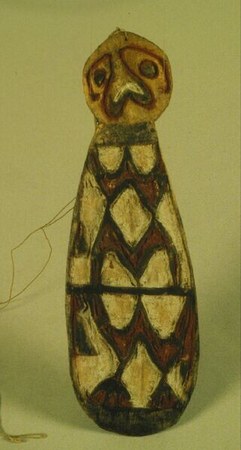
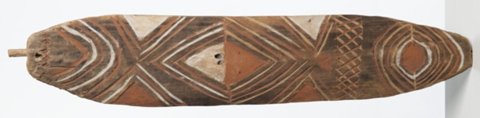
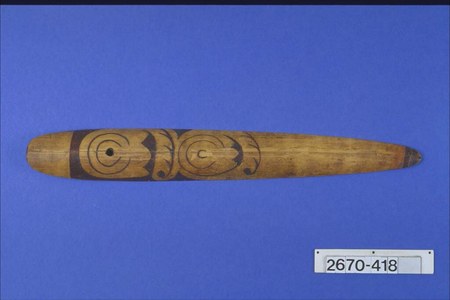
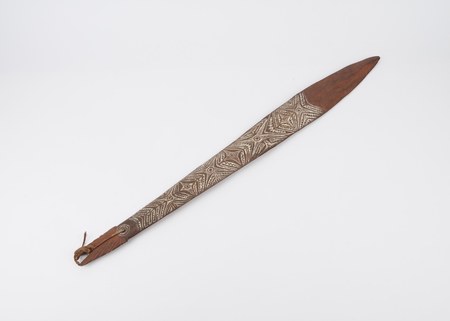
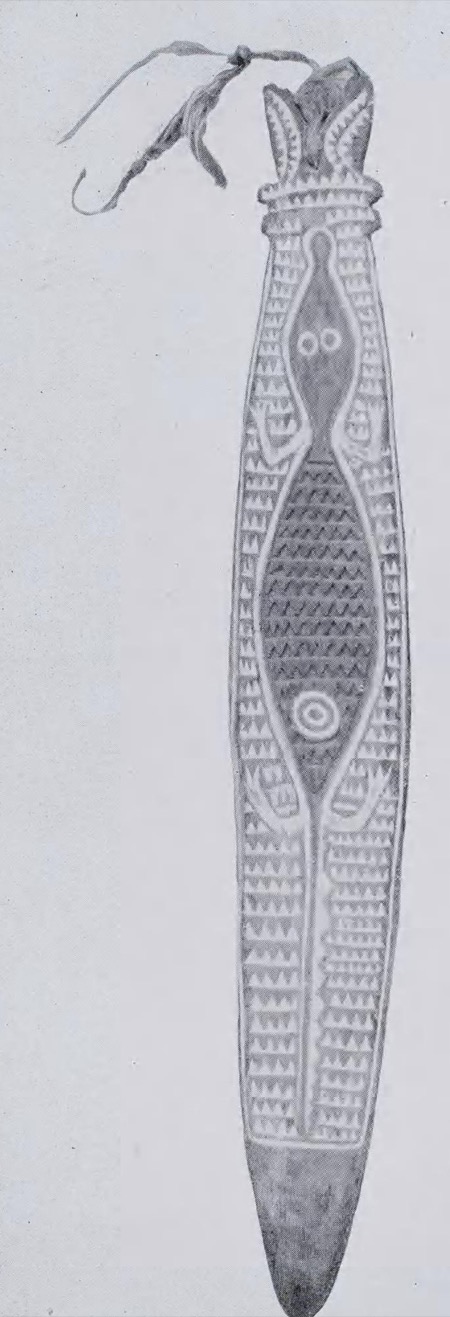
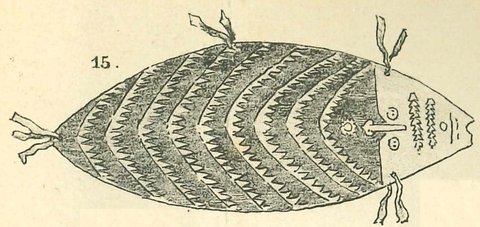
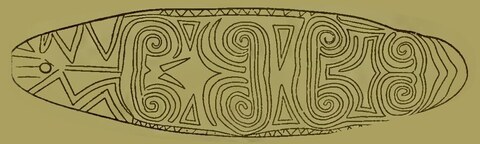
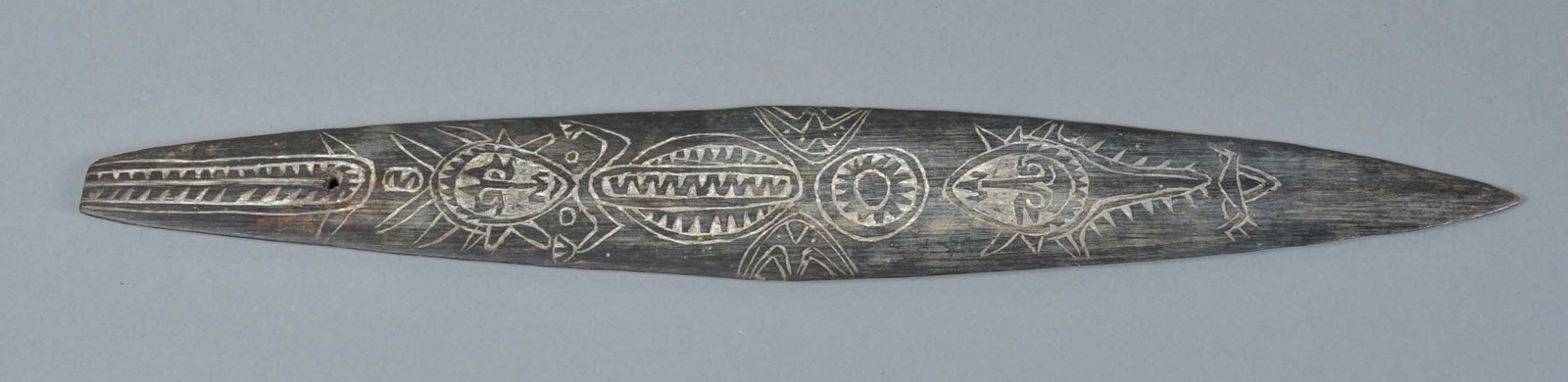
In the Purari delta, the ravi houses the kaiamunu, an enormous cane-and-wicker being kept at its rear. The bullroarer gives it a voice; imunu viki means “crying imunu,” and at an important man’s funeral the same sound becomes a spirit’s lament. At Kairu, forty-four instruments lay beneath the ceremonial house. On the Sepik at Mindimbit, a carved bullroarer was stored inside the belly of a woven crocodile. The sounding blade belongs with the house and the creature: the visible body and the hidden voice make the being present together. 2, 3, 19
Namau (Purari Delta), Baroi River · Koriki, Kairu (Purari Delta) · Iatmul / Mindimbit
Sound also controls movement around such places. In the Asmat Emak Cem rites, secluded boys live for months in a ceremonial house. If one falls ill and must return to the living quarters, men precede him swinging bian, and the women run and hide. Among the Armati inland from Sarmi, a piece of bark whirled on a cord warns women and children that spirits are near. A costly carved board is unnecessary for the sound to mark where an audience may go. 13, 20
The moment the hidden being is shown
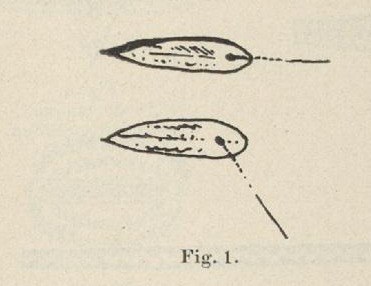
Initiation makes the passage from hearing to knowing explicit. At the Hunjara ceremony witnessed near Kokoda in 1911, hooded candidates waited while about thirty wowow roared. Men named the dead and begged them not to kill their children. Then the hoods came off and the instruments were shown. Girls and women were among the candidates. At the end, handles and ornaments were burned, while blades and strings went into secret storage: revelation gave these initiates knowledge without making the voice ordinary. 4
The Marind giant Sosom arrives with the southeast monsoon; the instrument and the being share his name. In a public farewell to the old rites at Wendu in 1952, boys crouched beneath a platform as Sosom approached amid pipes and swung bullroarers. The platform shook and a black tail descended. Fathers and uncles pulled the boys out to meet him; finally his decorations were removed, revealing an ordinary man. On the Huon Gulf, boys likewise pass through a swallowing being and return changed, their circumcision explained as its bite. Voice, ordeal and disclosure form a sequence an initiate must experience. 12, 16, 1
Knowledge arrives through the body
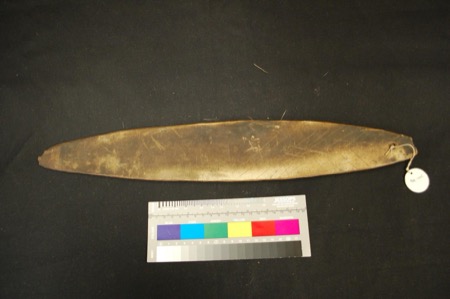
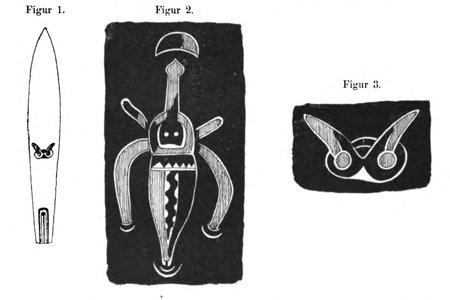
Among the Menya and Wojokeso, showing the bullroarer accompanies piercing a boy’s nasal septum. The body and its knowledge change together. Among the Yei-nan of the Upper Maro, kupör blades are rubbed with kunai-grass and lime to sharpen their squeaking voice. Novices are told that the instrument will enter beneath the tongue; its later extraction identifies powers they may exercise. The founding story gives each ancestral yevale its own kupör and country, delivered by Orei’s canoe. Holding the blade means entering an order of people, places and inherited authority. 5, 18
In the Muyu pig rites, Kamberap turns himself into a pig and prescribes the mulin and sacred flute. At Yibi, the growl belongs to grandfather and grandmother spirits who return for the sacred pork; at Kawangtet it belongs to Konki, enacted by a mud-covered initiator. A separate disclosure stages a joke with teeth: men sit talking in a circle until one searches through leaves and shouts that he sees a snake. Everyone jumps up. He takes the bullroarer and begins whirling it, then the flutes are shown. A sudden alarm opens the lesson. 14
The first owners
Origin stories repeatedly place the guarded instrument first with women. In the Bukaua telling a woman discovers a whirring chip and brings it to her husband; the men agree to kill her to keep the secret and give him another wife. The Keraki account gives the moiank first to Kambel’s wife Yuma, from whom he takes it. At Rouku, the Komnzo tell of birds sent to steal the wooden ŋofoŋofo from a wife’s belly; her blood marks their plumage. These are distinct stories about the same consequential change: the power heard from the men’s enclosure once belonged elsewhere. 1, 17, 11
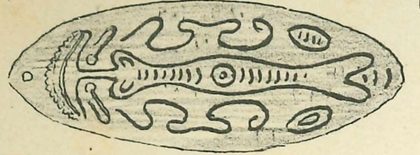
The Gambadi story names the wife Engu. Pregnant with the thowatti, she tells Tiv’r that the faint sound he hears is his dogs in the bush. He sends the little bird Serekute to take it while she bends over sweeping. The theft brings her first menstrual blood; Tiv’r claims the instrument for men, finds a suitable swinging fibre and shows it to his son. In the Mandobo Kaeti myth, by contrast, a failed cast lodges a blade in a woman’s groin, and a hornbill pulls it out. The Wakeriop telling separately names the blade tenotkok and its sounding voice Murinop, belonging to Kowamup, the first human-pig. Local names and bodies give the recurrent transfer its own stakes. 17, 15
Gambadi (Torou, Gambadi and Yetakuma tribes), Kwavaru / Kau · Mandobo (Wakeriop)
The garden hears it too
The ancestral voice works on what feeds the living. At Iasa, Kiwai novices meet the madubu behind a tabooed fence and learn to use it; its whirling is expected to secure yams, sweet potatoes and bananas. A Fly-mouth instrument bears the name Buruvia-maramu, “the mother of the yams.” Yabim men twirl the balum while naming the dead so that taro flourishes. In the upper Bian Marind rites, Ezam and Uzum, husband and wife, have their voices in the blades, and ritual semen is carried home to drink or apply to houses, plants and bodies. An inherited sound joins human growth to the provision of a community. 6, 7, 12
Kiwai · Aimei village / northeastern Kiwai (Gibaio dialect) · Bukawa / Yabim · Boven-Bian Marind (Ezam-Oezoem cult)
Custody turns a voice into an office
A Bukaua ruling blade’s name also serves as its community’s war cry. At Karama on the Gulf of Papua, twelve named instruments belong to bukari clans, but the chief does not swing his own. A paired mai-karu clan keeps it and sounds it when summoned. An offender answers with pigs; gifts between chief and worker close the dispute. The same sound musters labour for a house or fence. At Siboma, bolomana names both the instrument and the sanctions ritual, with an enclosure called dagalawa and four ranked groups of blades. Custody makes the roar a power someone can call upon. 1, 8, 9
Bukaua (Bukawa), Huon Gulf · Karama (Elema group 7) · Numbami (Siboma)
Plants, clans and smaller voices
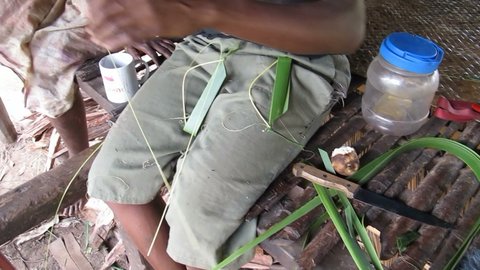
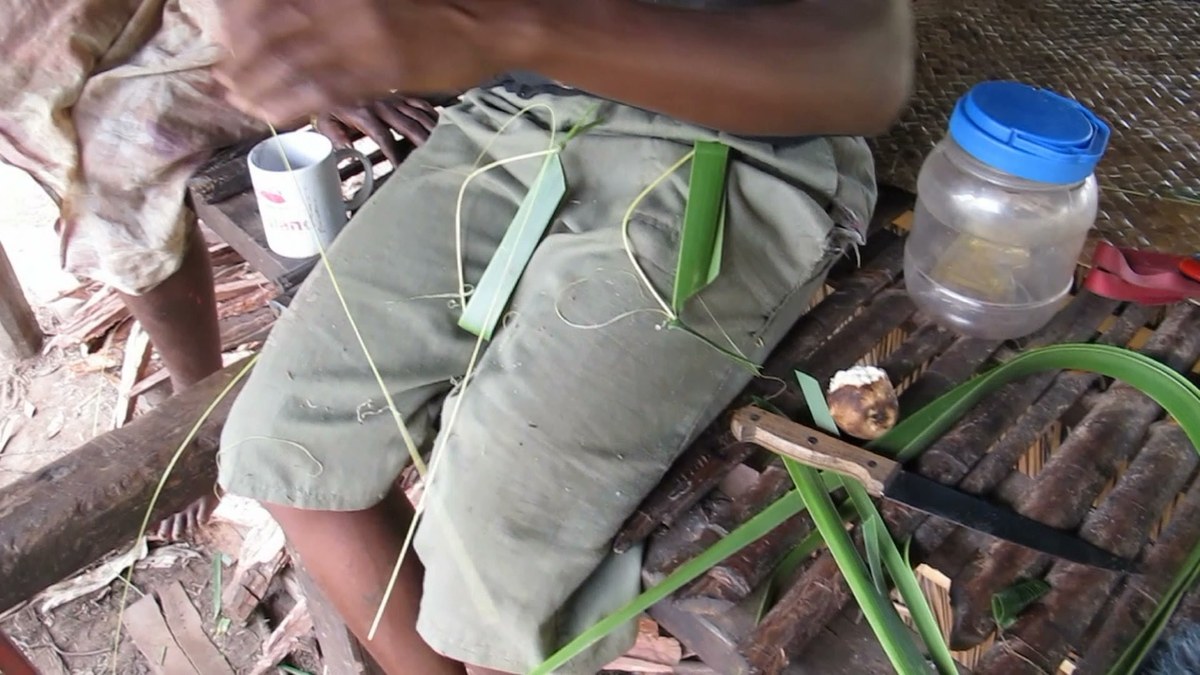
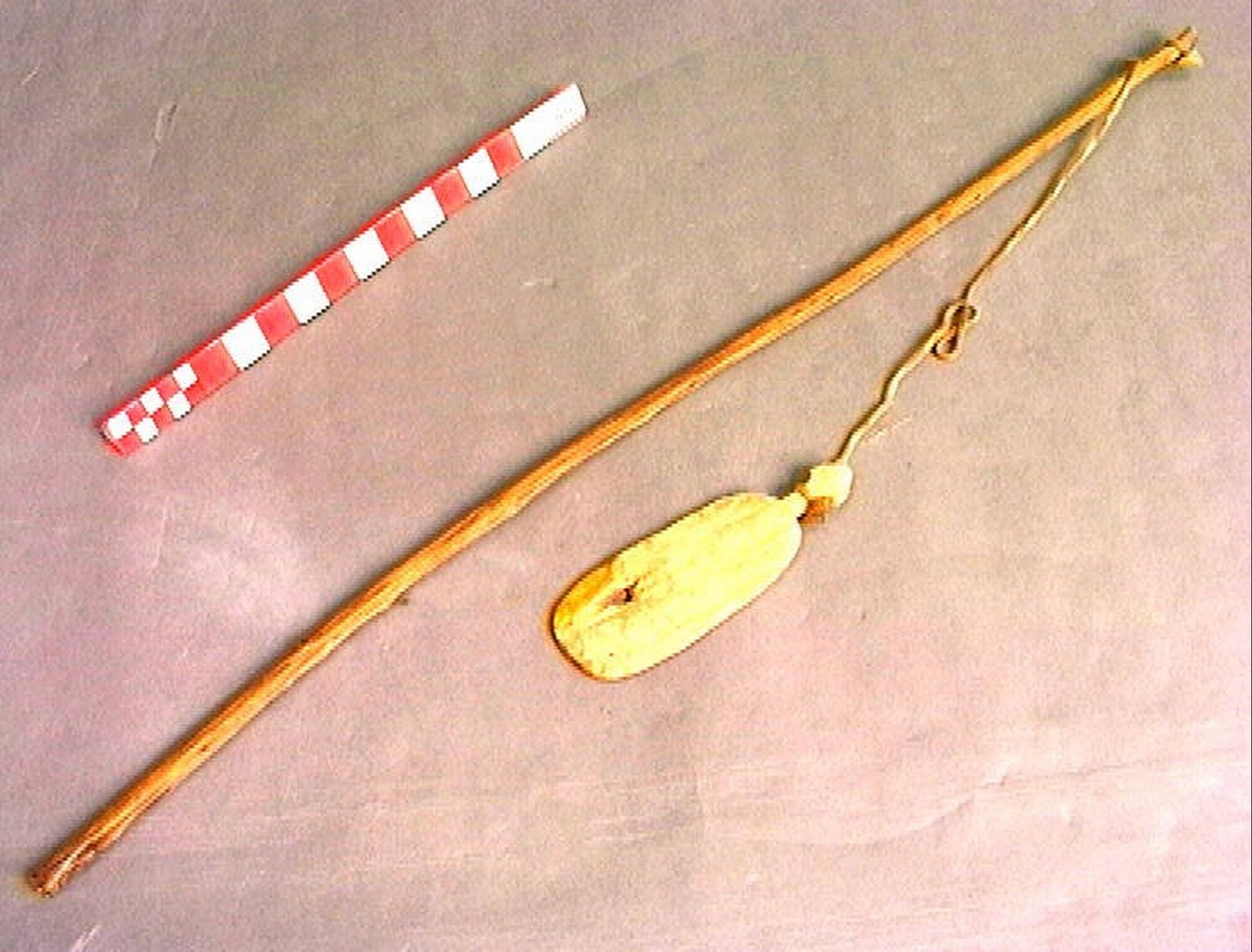
Making also carries local knowledge. At Bimadbn, Nen speakers name particular bullroarers for the Seregu clan, the Kiembturer people and other owners; palm supplies a blade and particular figs its string. At Rouku, Nakre Abia demonstrates the coconut-leaf frfr, a children’s toy with a name distinct from the sacred wooden ŋofoŋofo. Far west in the Dugum Dani highlands, a boy threads vine through a wood chip and swings it as a noise game. The Gende and Kuman also have children’s instruments. Across the island, people make a material speak in moving air; the named beings, revelations, gardens and offices show how much further they can take that shared skill. 10, 11, 21, 5
Nen speakers, Bimadbn · Komnzo speakers (Farem), Rouku · Dugum Dani · Gende · Kuman
Names that carry the tradition
| People | Name | Meaning or use |
|---|---|---|
| Bukaua | balum; lanqua | Spirit, swallowing being and instrument; “the Old One” in an ancestral blade’s name 1 |
| Kamoro | payu / mirapoway | Bullroarers representing the voices of the dead 13 |
| Asmat | bian | Bullroarer sounded in the Emak Cem rites 13 |
| Mandobo (Wakeriop) | tenotkok; Murinop | The blade; its name when sounding as Kowamup’s voice 15 |
| Muyu | mulin / áyerèt | Whirled blade; the sounding voice has distinct local spirit owners 14 |
| Komnzo | frfr; ŋofoŋofo | Distinct leaf toy and sacred wooden instrument 11 |