No. HADDON1920-001
Biagi and Kambisa bui-i
Papua New Guinea · Mount Victoria group and Upper Chirima Valley group, Owen Stanley Range, Northern Division of Papua (now Oro · Central provinces) · Oceania · Sahul
Function not recorded
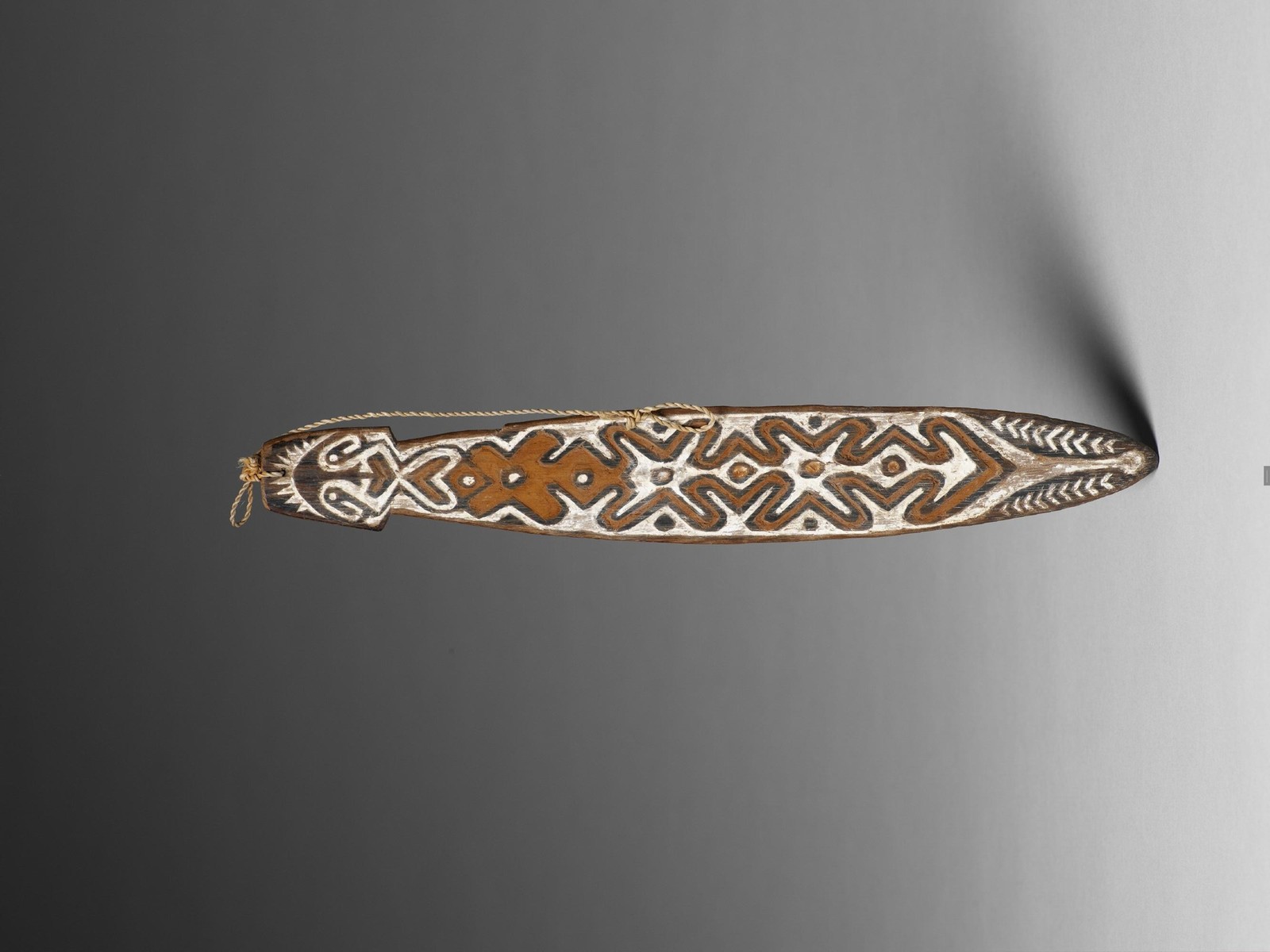
bui-i
Source term: bullroarer
bui-i: the Biagi and Kambisa name for the bullroarer. maiwai: the Biagi feast at which a young homicide is decorated. bui: the Mawai bullroarer, and also their elders.
High on the flanks of Mount Victoria, the Biagi measured a young man by the men he had killed. A youth who had taken a life was shut away for two months in a special house, then brought out at a great feast, the maiwai, to be dressed in the insignia of a homicide; until then he had little hope of winning a girl. These mountain people knew the bullroarer as bui-i, and so did the Kambisa to the north in the upper Chirima valley. Down the Waria the Mawai called theirs bui, and gave the same name to the elders who taught the boys.
The bullroarer, bui-i, occurs, as it also does among the Kambisa of the Upper Chirima Valley Group
A. C. Haddon, "Migrations of Cultures in British New Guinea," JRAI 50 (1920), p. 267
Particulars
- Object
- A bullroarer called bui-i; no physical description recorded.
- Function
- Not recorded.
Source
A. C. Haddon, "Migrations of Cultures in British New Guinea," Journal of the Royal Anthropological Institute 50 (1920), pp. 267–268, 280 (Map V)