No. EXH2026-049
Widaro kamoa, the spirit itself
Papua New Guinea · Moando-Sprachgebiet, NE New Guinea (Madang hinterland) · Oceania
Sacred / spirit
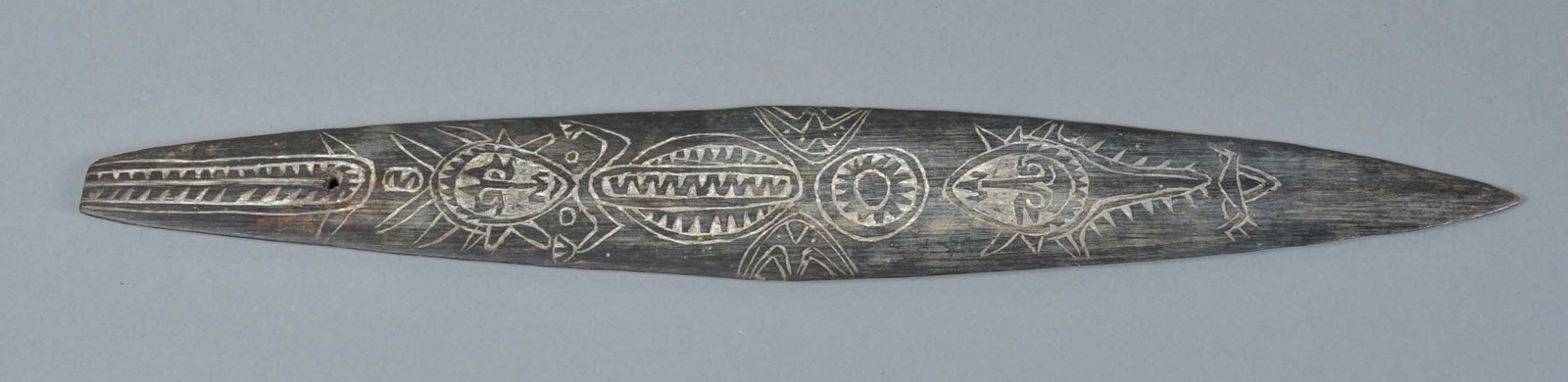
takilat (Mopu, general cult-object term); wuyamb (Widaro, general cult category); kamoa (Widaro, proper name)
Source term: Schwirrhölzer
Mopu takilat: belonging to the cult, cult object (not a proper name). Widaro wuyamb: cult apparatus, including flutes, bullroarers and cult dances; kamoa: proper spirit name, no literal translation supplied.
In Widaro, Kamoa was a bullroarer’s own name. Such names named beings: bullroarers and flutes were the spirits themselves, their sounds the voices of particular spirits. The flutes even came in named couples—Sandami and his wife Maida, Samangau and his wife Agadua. In Mopu, takilat named the bullroarer as a cult object; Widaro’s wider word wuyamb embraced flutes, bullroarers and cult dances. A personal name identified who was speaking within this world of sounding beings.
die Geister selbst sind … die Stimme des betreffenden Geistes
are the spirits themselves … the voice of the particular spirit
Wilhelm Tranel, Anthropos 47 (1952), p. 462
Particulars
- Object
- Bullroarers called takilat in Mopu and kamoa in Widaro.
- Function
- Cult instrument regarded as the spirit itself and sounded as its voice; Widaro’s bullroarer has the proper name kamoa.
Source
Wilhelm Tranel, “Völkerkundliche und sprachliche Aufzeichnungen aus dem moándo-Sprachgebiet in Nordost-Neuguinea,” Anthropos 47 (1952): 447–473, pp. 461–462 and n. 42