No. HAYS1986-010
Waffa flutes and roarer together
Papua New Guinea · Eastern Family language region · Oceania · Sahul
Restricted
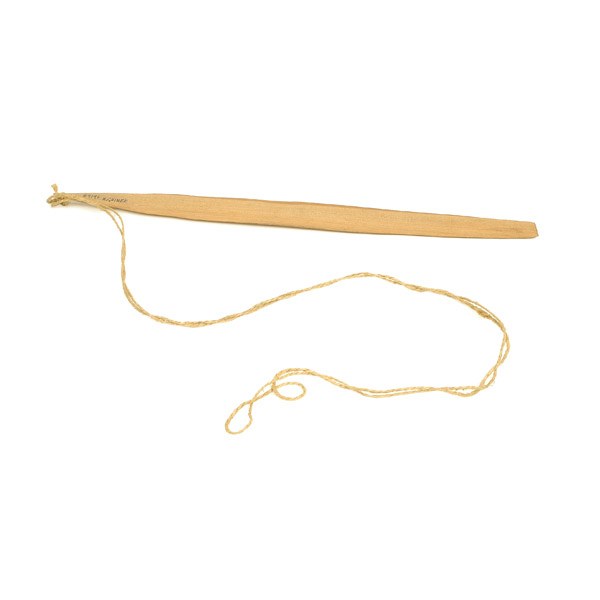
Source term: bullroarer
No Waffa term securely attached to the bullroarer.
Waffa country lies at the eastern end of the belt where two sacred men's instruments overlapped rather than replaced each other: paired transverse flutes and the bullroarer. Across that belt, Hays found, wherever both occurred both were revealed together at initiation, in ceremonies everywhere forbidden for women or children to observe. Of the Waffa instrument itself that is all there is — flutes and bullroarer, in initiation — with no name for it recorded and nothing of its shape.
women and children were almost universally forbidden even to see the object
Hays 1986:439 (Anthropos 81)
Particulars
- Object
- A bullroarer used alongside transverse flutes in Waffa initiation; no size, form or local name is recorded.
Source
Terence E. Hays, 'Sacred Flutes, Fertility, and Growth in the Papua New Guinea Highlands,' Anthropos 81 (1986), pp. 436, 439, 443