No. PNG135
Kafe / Kainantu
Papua New Guinea · Eastern Highlands · Oceania · Sahul
Restricted
Source term: pubunani
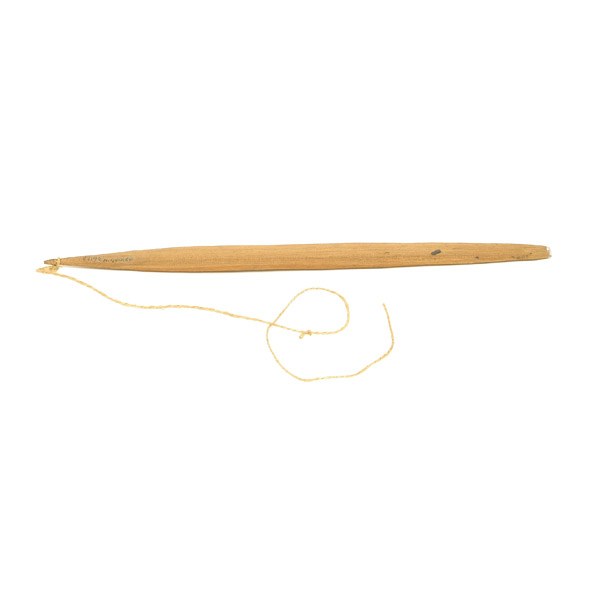
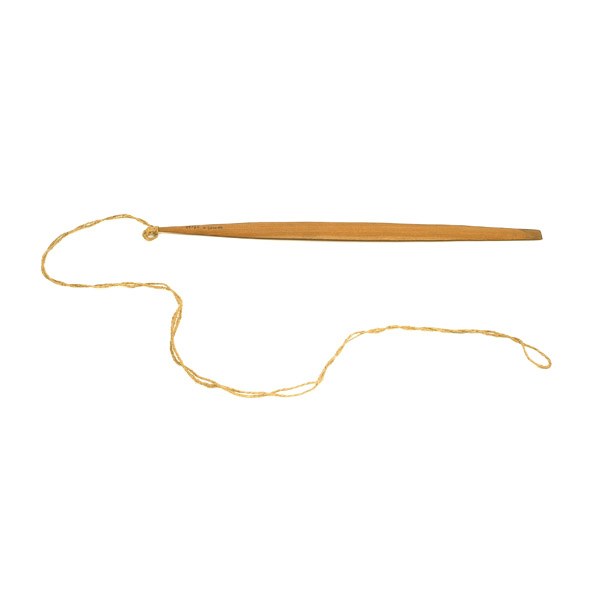
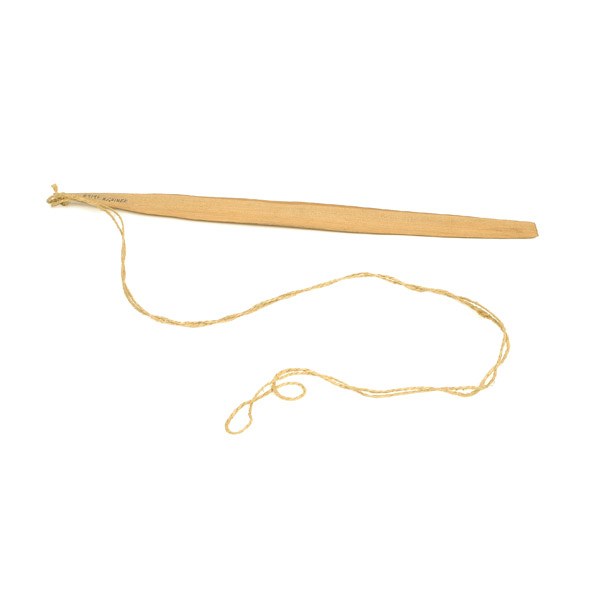
pubunani: the Kamano name for the bullroarer, literally a kind of fungus. guʹnagu gosunamu: 'bullroarer old man', the water-spirit voiced by the roarer at initiation.
In the Kainantu hills of the Eastern Highlands, the people Berndt called the Kamano — 'Kafe' — told how the men's secrets were made. Jugumishanta, the creator's wife, secretly cut the first flute from bamboo and played it in hiding; her husband Morufonu, envious of a sound about which he knew nothing, “set to work and shaped a bullroarer and swung it, listening to the noise it made. Jugumishanta heard it too and was afraid; she stayed in her house, fastening the door.” Men repeat that reversal at every pig festival: moon after moon the flutes sound through the village at night, joined by swung bullroarers as the feast draws near, to make the pigs increase and the crops advance — while the women, who in the beginning owned the flutes, fasten their doors and hand out pig meat to “feed the spirit.” At initiation the novices are led toward the bush shelter where the flutes play and a bullroarer swings behind, and are told its voice is guʹnagu gosunamu, the “bullroarer old man”: a blue, big-mouthed, belly-less spirit that rises from the water to swallow small boys, and vomits them back only when the fathers throw ripe bananas into the water as ransom. Then comes the revelation — the spirit in the water, the fathers tell their bleeding sons, is actually the initiators themselves. The Kamano name for the instrument, pubunani, means a kind of fungus; why, no one could tell Berndt.
Particulars
- Function
- Men's counter-secret to the woman-invented flute: swung to frighten women, sounded with the flutes at pig festivals to increase pigs and crops, and swung at first-stage initiation as the voice of the swallowing water-spirit guʹnagu gosunamu.
Source
R. M. Berndt, Excess and Restraint (University of Chicago Press, 1962), pp. 17, 51, 54, 62, 94–95; K. A. Gourlay, Sound-Producing Instruments in Traditional Society (New Guinea Research Bulletin 60; Canberra, 1975), Table 1, entry 135, and p. 50, citing Glick, in Peter Ryan (ed.), Encyclopaedia of Papua and New Guinea (Melbourne, 1972), pp. 821–822