No. NGUINEA-001
Yupno
Papua New Guinea · Nokopo village, Finisterre Range, Madang Province · Oceania
Restricted
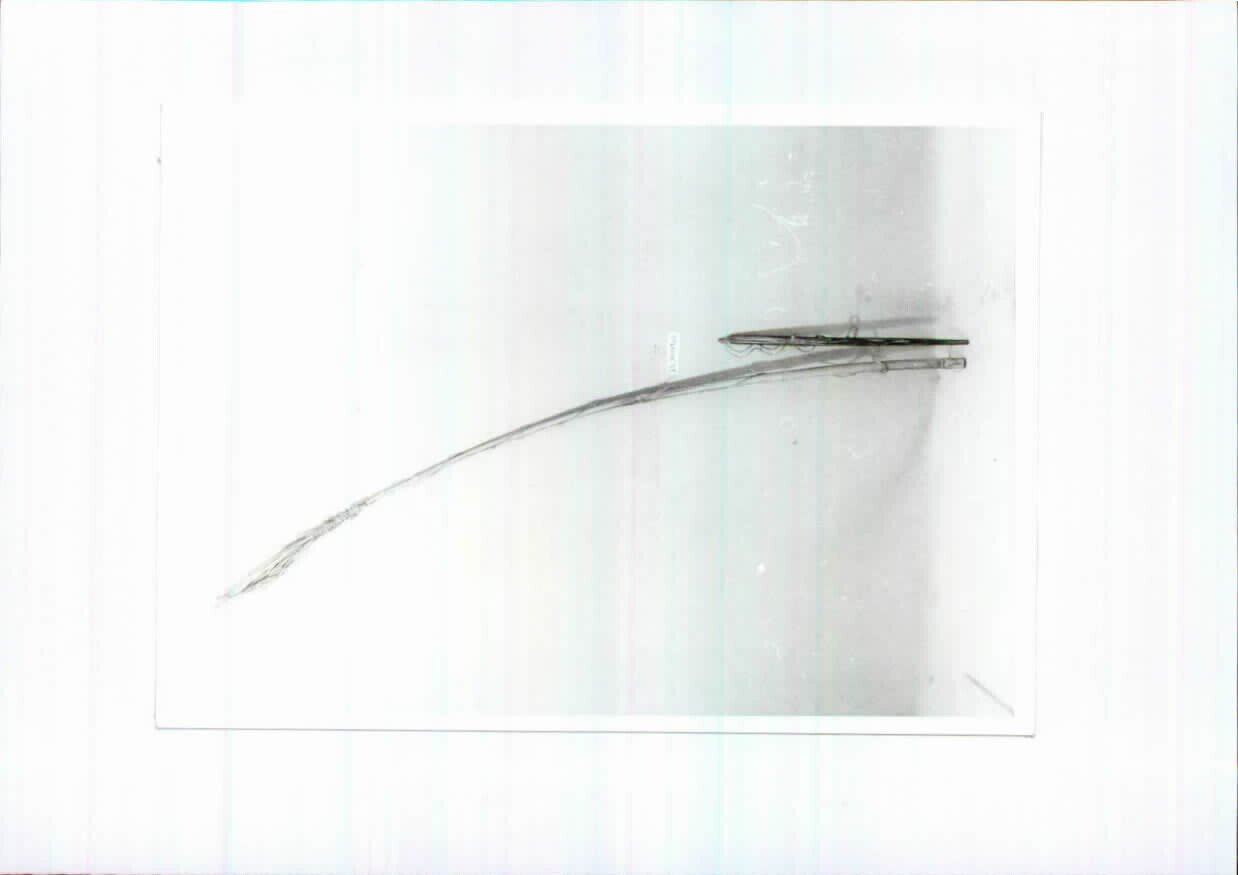
numbung
numbung — the Yupno name recorded for this bullroarer.
For as long as the men's houses stood in the Yupno valleys, a spirit lived in them and cried for food. Its cries terrified the women and children; the men explained that the spirit was hungry and must be fed, and the women brought pigs. The men ate the pigs. The men's houses dissolved after Lutheran missionaries arrived in the 1930s, and the trick is now told with relish, often with the women listening: the cries of the spirit were merely men turning a bullroarer. The Museum der Kulturen Basel holds one such Yupno instrument — numbung, a slat of black-palm (limbum) wood on a 1.6-metre fibre cord with a curved bamboo carrier-stick, collected at Nokopo, high in the Finisterre Range, by the ethnographers Christin Kocher Schmid and Verena Keck before 1988.
Particulars
- Object
- Bull-roarer slat of obip (limbum-palm) wood on a 1.6m fibre cord with a curved bamboo carrier-stick (Museum der Kulturen Basel, acc. Vb 30049).
- Function
- Men's-house secret: the sound was presented to women and children as the cries of a hungry spirit; the pigs women brought to feed it were eaten by the men. The Basel specimen's own use is unrecorded.
Source
Museum der Kulturen Basel, Vb 30049 (Yupno bullroarer, numbung); James Slotta, 'Revelations of the World: Transnationalism and the Politics of Perception in Papua New Guinea,' American Anthropologist 116(3) (2014): 626-642, at p. 632