HERDT1982-001 - ethnographic attestation
Duka’ yungalu, the bird’s call
Papua New Guinea - Eastern Highlands (people and place names pseudonymized) - Oceania - Sahul
Sacred / spirit
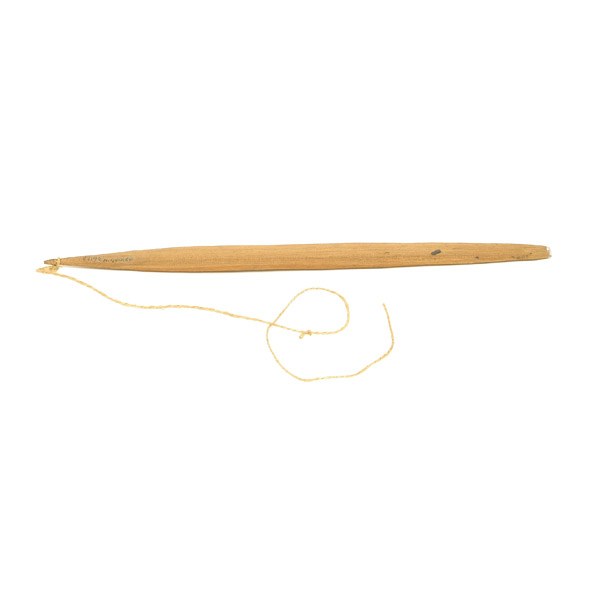
duka’ yungalu
Source term: bull-roarer
duka’ yungalu: ‘bird’s call.’
Sambia are mountain hunters and gardeners on the Highlands fringe — some two thousand people scattered through rainforest valleys, tracing their origins to the Papuan hinterland. Boys leave their mothers at seven to ten for the men's clubhouse, where a decade of graded initiations, nosebleedings and oral inseminations among them, is held to build the maleness men say nature does not supply on its own. At the heart of that cult are paired bamboo flutes, always blown in twos, spoken of as spouses, explained to women and children as the wailing of an old female hamlet spirit. The duka’ yungalu, the ‘bird’s call,’ belongs to the same men's world without the mystique: far less secret than the flutes, its hum credited to a powerful but frankly non-mystical bird.
The bull-roarer (duka’ yungalu, “bird’s call”), by contrast, is far less secret than the flutes and is said to produce a sound akin to a powerful but not mystical, bird
Gilbert H. Herdt, ‘Fetish and Fantasy in Sambia Initiation,’ Rituals of Manhood (1982), p. 58
- Object
- Bullroarer; material and form not recorded.
- Function
- Produced a sound like a powerful but non-mystical bird; a less-secret counterpart to Sambia ritual flutes in the men’s ceremonial complex.
- Source
- Gilbert H. Herdt, 'Fetish and Fantasy in Sambia Initiation,' in G. H. Herdt (ed.), Rituals of Manhood (University of California Press, 1982), pp. 51-53, 55-56, 58-59 and 101 n. 20; Terence E. Hays, 'Sacred Flutes, Fertility, and Growth in the Papua New Guinea Highlands,' Anthropos 81 (1986), p. 439
- Source location
Page references
Herdt 1982 pp. 51-53, 55-56, 58-59 and 101 n. 20 (2021 reprint PDF leaves 95-103, 145); Hays 1986 p. 439
- Source confidence
- low
- Location note
- Broad Eastern Highlands centroid; exact people and place identity deliberately withheld by Herdt.
Regions: Sahul · New Guinea · Melanesia