No. GIRARD1967-001Oceania
Buang roarer among the seed yams
Papua New Guinea · Snake River valley (Mapos), Bulolo District, Morobe Province · Oceania · Sahul
Sacred / spirit
- Snake-linked
- Agriculture / crops
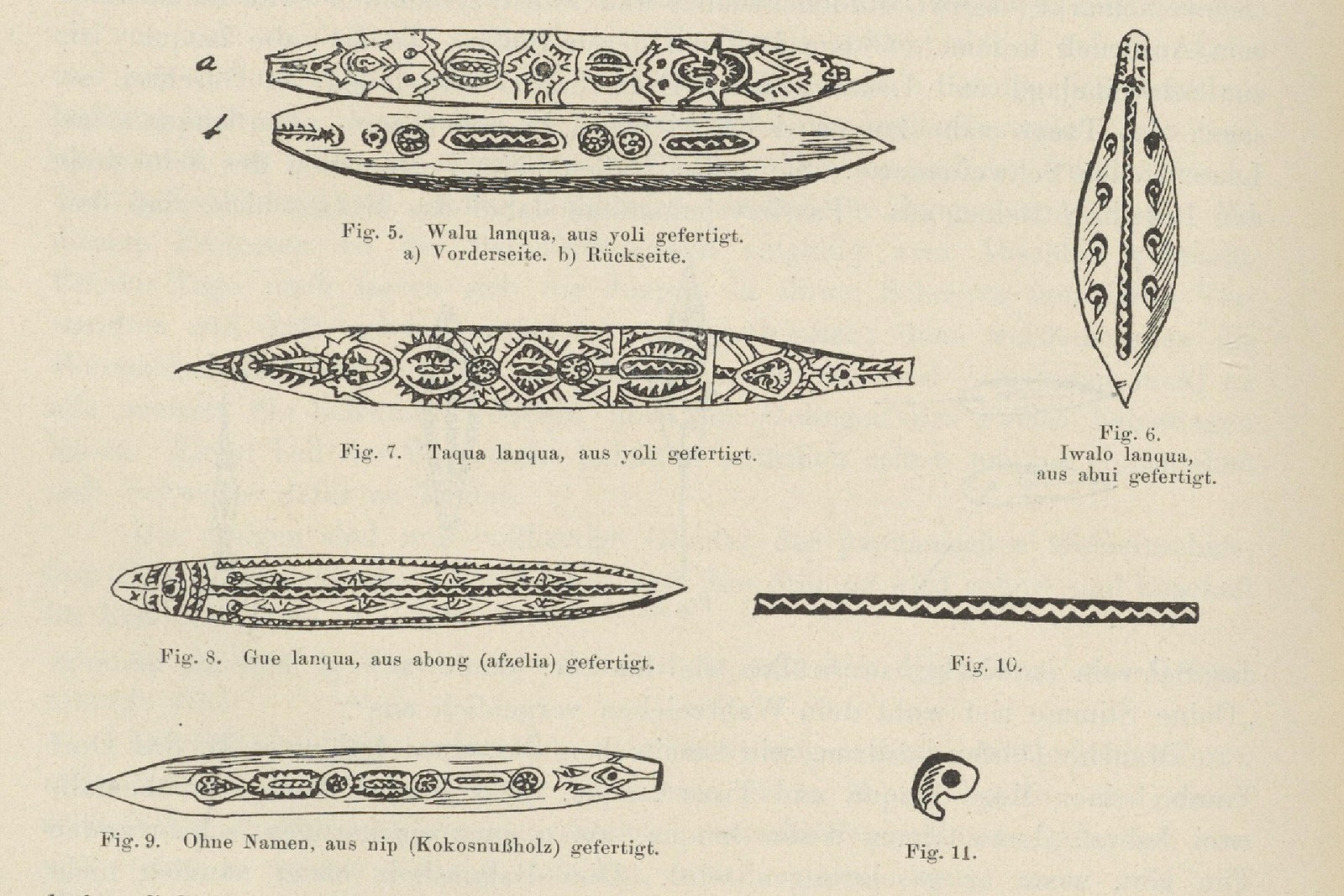
Source term: rhombe
djebang: the men's yam-planting basket, woven for the planting.
At yam planting, Buang men of the Snake valley carry their seed in a djebang, a basket slung from the right shoulder, woven for the occasion and used only by men. In the story of the two ancestral brothers, the younger carried the elder's body to its grave in a djebang. Sometimes a stone the size and shape of a yam lies among the seed, a stone said to have fallen from the sky, there to strengthen it. Some people put a bullroarer there instead: they descend from immigrants from Bulolo, where the bullroarer is used. The old village of Tsagai says the yams, and the rites that make them grow, belonged to its own ancestors, and remembers newcomers from around Bulolo, a few generations back, who could grow only taro and kept very sacred, fearsome rites of manhood in round men's houses. A downstream Buang story remembers a world before agriculture: a girl’s parents gathered snake dung for food because they had nothing else to eat.
De telles pierres, que l'on dit tombées du ciel, sont aussi placées dans les greniers et les hommes les emploient parfois comme appuie-nuque.
Such stones, said to have fallen from the sky, are also placed in the storehouses, and the men sometimes use them as neck-rests.
Girard, "Les gens de l'Igname" (1967), p. 307
Particulars
- Object
- A bullroarer laid among the seed yams in the men's planting basket (djebang).
Discussed in one essay
 The Bullroarer and the Harvest
Source
Françoise Girard, “Les gens de l’Igname. Les Buang de la vallée du Snake, district de Morobé, Nouvelle-Guinée,” Journal d’agriculture tropicale et de botanique appliquée 14(8–9) (1967), pp. 287–338, especially pp. 288 and 307.
Nearby in the atlas
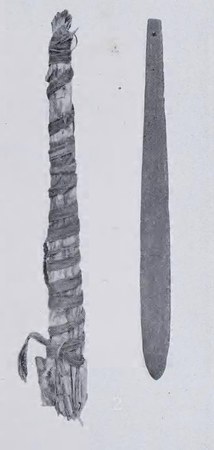 Mekeo tabu-proclamation bull-roarerPapua New Guinea · Central Province / Mekeo District · Sacred / spirit
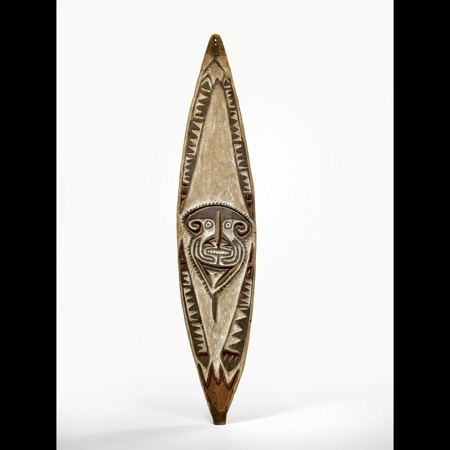 Four-holed Papuan Gulf gope cult boardPapua New Guinea · Gulf Province · Sacred / spirit
 Awaiama and TaupotaPapua New Guinea · Milne Bay · Sacred / spirit
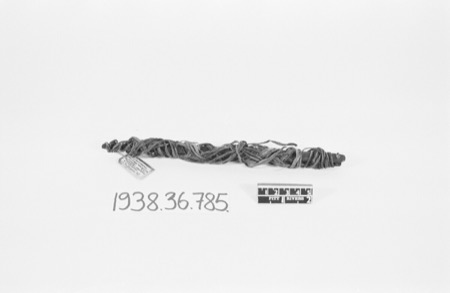 Anga trio still bound togetherPapua New Guinea · Papua New Guinea / Morobe Province · Sacred / spirit
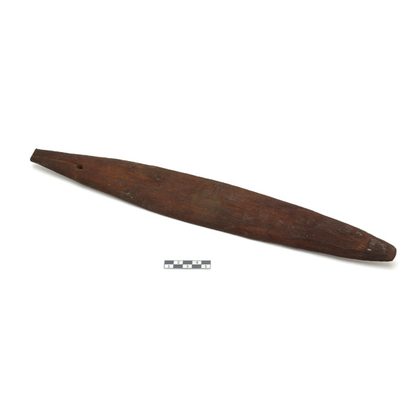 Bola Bakovi tuvura bullroarerPapua New Guinea · Willaumez / Talasea Peninsula / West New Britain / New Pommern · Sacred / spirit
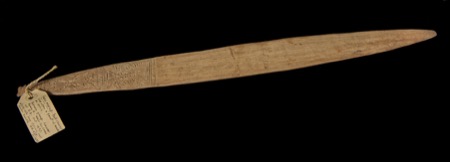 Luana murup of the Lower RamuPapua New Guinea · Melanesia, Papua New Guinea · Sacred / spirit