No. HAYS1986-003
Tairora bullroarer male-spirit declaration
Papua New Guinea · Anga-Eastern Highlands men's cult zone · Oceania · Sahul
Restricted
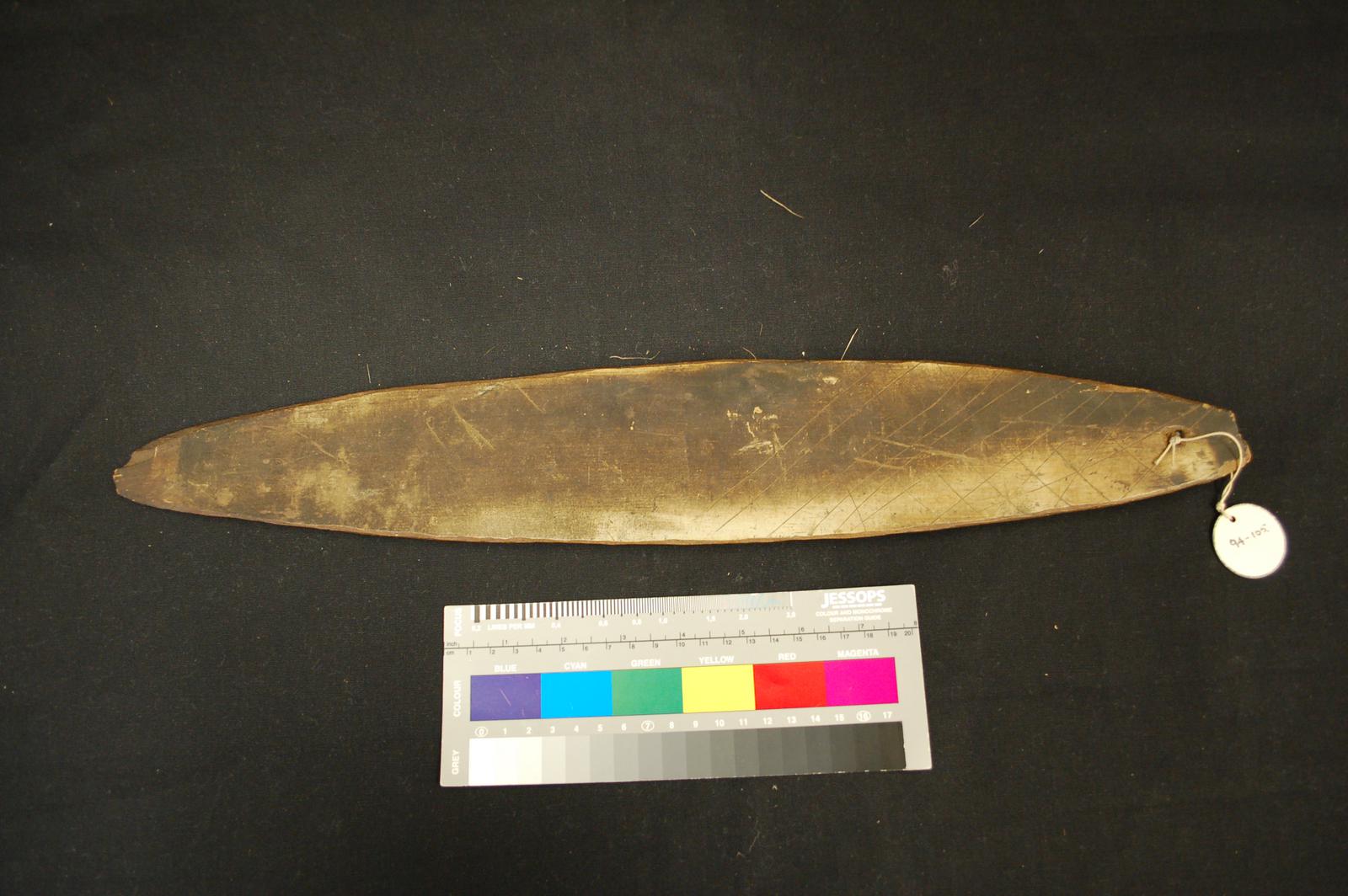
Source term: bullroarer
Among the Tairora of the Eastern Highlands, the sounds of the transverse flutes and the bullroarer were the cries of male spirits. The bullroarer was swung alongside the flutes, and women and children were forbidden even to see the object. The ethnographer Ragnar Johnson, who worked among the Southern Tairora (Ommura) in the 1970s, recorded the iyavati male initiation at night outside the men's house, capturing the spirit cries of bamboo transverse blown and water flutes, bullroarers, and "crying baby" leaves, while inside the house instruction and singing went on. During the rite the initiates were beaten with taroah stinging nettles and wore a pair of pigs' tusks pushed point-upward through a hole in the nasal septum.
Moving north- and westwards into the major sacred flute areas, one finds the Tairora, where both flutes and bullroarers were publicly declared to be male spirits (Johnson 1982: 420)
Hays 1986:440 (Anthropos 81), citing Johnson 1982:420
Particulars
- Function
- Sounded with the sacred flutes at male initiation as spirit voices; women and children were barred from seeing it.