No. VANBAAL1966-001Oceania
Imo pit of the buried dema
Indonesia · Inland Marind country between Domandé and Senégi, Merauke Regency, South Papua · Oceania · New Guinea
Sacred / spirit
Source term: bullroarer (van Baal)
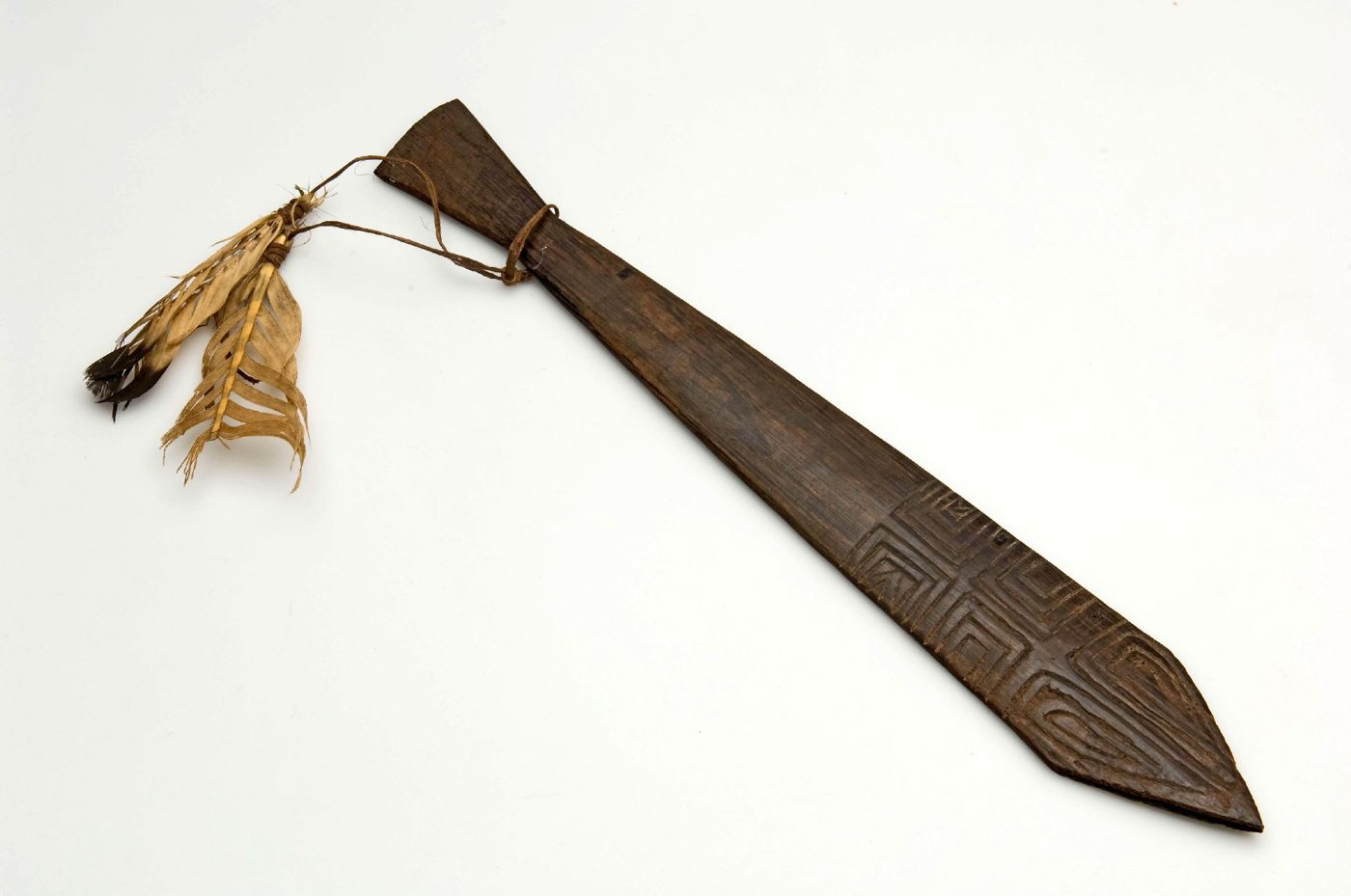
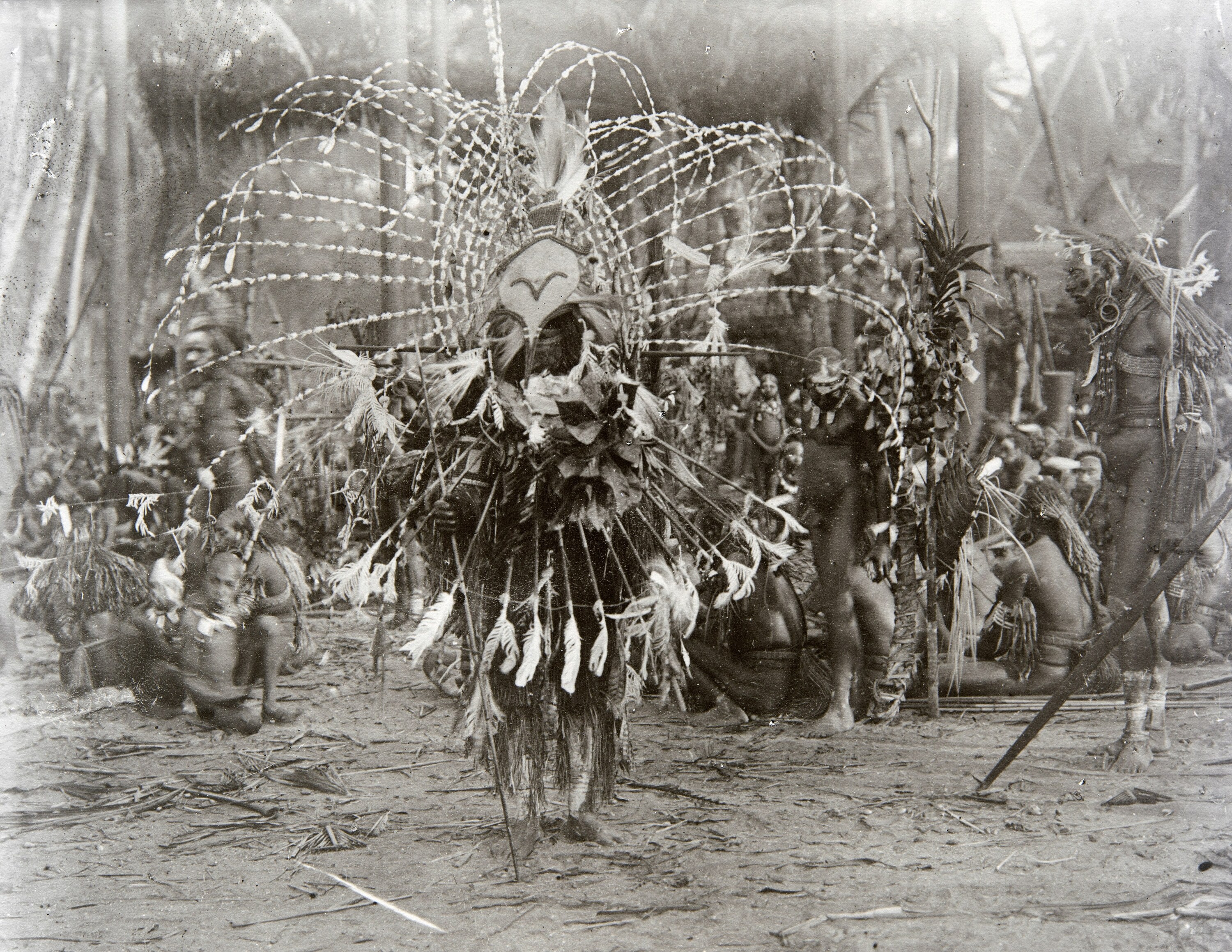
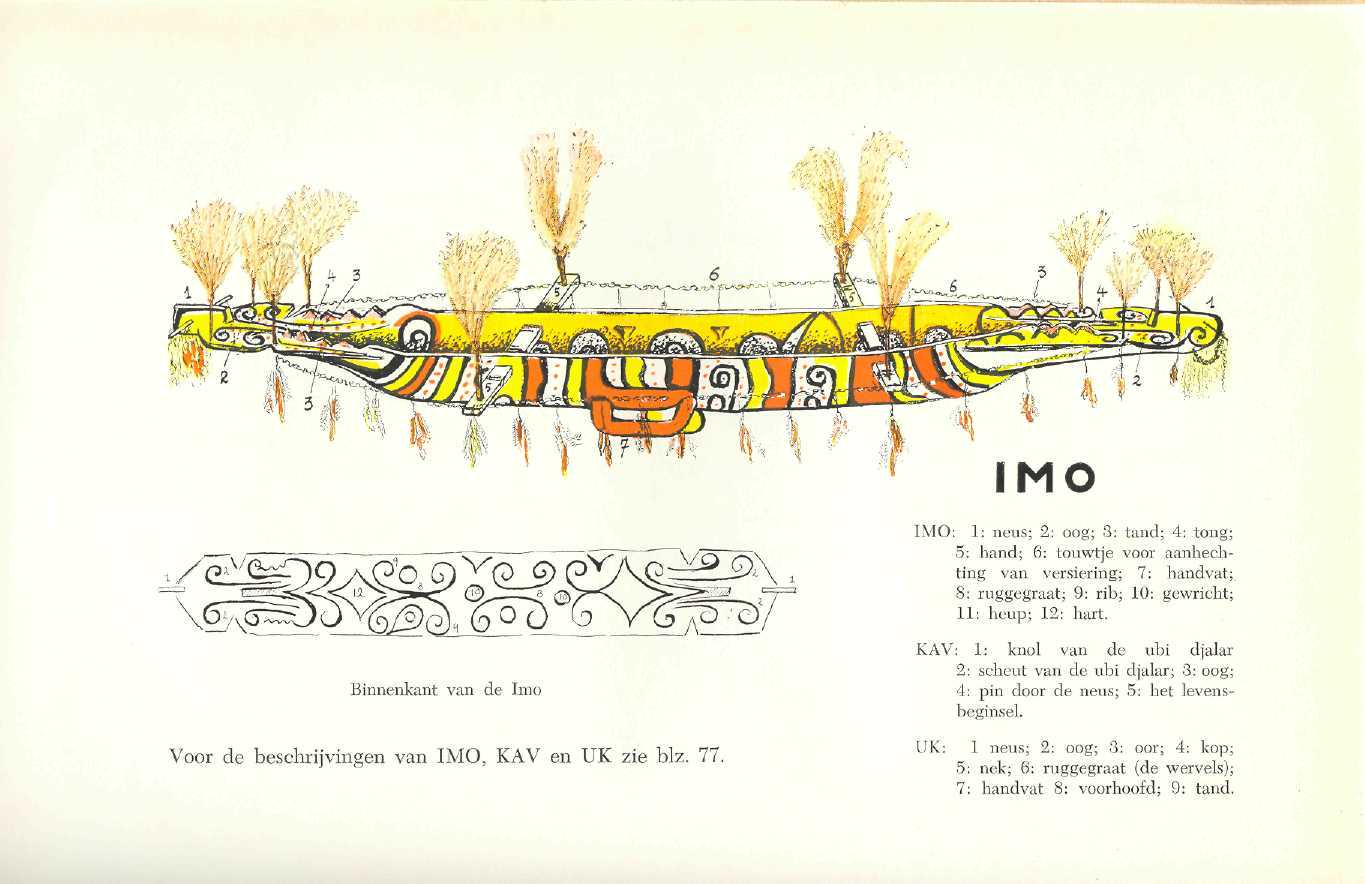
imo - the secret cult of the western and inland Marind. imo-miráv - its fenced ceremonial ground. pahui - the carved secret shields set round the pit, named like the headhunters' ceremonial club. otiv-bombari - the rite of group sex that begins when the déma-performers enter the pit. déma - the ancestral beings, here two masked performers.
Late in the dry season the inland Marind of the imo cult dug a pit inside a fenced ground in the coconut gardens and ringed it with the pahui, tall carved planks, secret shields. At night the old men, led by an old woman, sang; then two déma came out plastered in white clay and plumed with birds of paradise, herons and cassowary, faces hidden behind half-coconut masks, and danced down into the pit. That began otiv-bombari. The initiates, painted black from head to toe, crowded the pit; the women, "not one or two ... but all the women, or at least many of them," lay naked in the sheds outside the fence to have sex with the men. Toward daybreak men in the palms hurled down young coconuts, and in a deafening roar of bullroarers the déma leapt free, the shields and ornaments were flung into the pit and the earth stamped down over them. The coconut meat was mixed with the men's semen, collected by the women, for the feast. The tale of a victim killed in the pit was for the uninitiated: what went into the ground was the déma, in its ornaments.
it is doubtless so among the inland imo people, and we may take it for a certainty that it is used in the rite when performed in an inland village
J. van Baal, Dema (1966), p. 620
Particulars
- Object
- Bullroarers sounded at the close of the inland imo rite, around a pit ringed with carved pahui shields; their form is not described.
- Function
- Made the deafening noise at daybreak when the two déma-performers leapt out of the pit and the secret shields and ornaments were thrown in and buried; certain for inland villages, probable on the coast.
Source
J. van Baal, Dema: Description and Analysis of Marind-anim Culture (South New Guinea) (1966), pp. 617-621