No. BATAVIA1913-001
Armati bark spirit-warning bullroarer
Indonesia · Noord-Nieuw-Guinea (Dutch New Guinea), Sarmi hinterland · Oceania · Sahul
Restricted
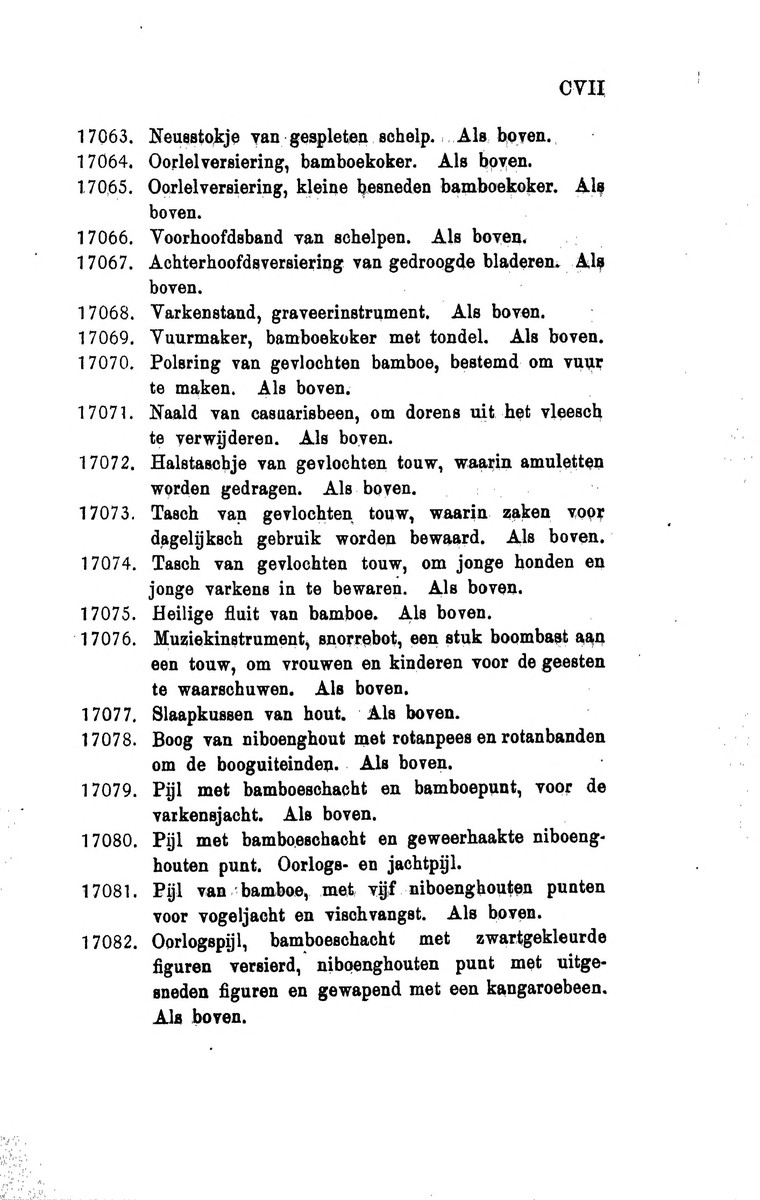
Source term: snorrebot
Dutch for "bullroarer".
When spirits were about, a voice rose into the air: among the Armati, in the forest country inland and southwest of Sarmi on New Guinea's north coast, a plain piece of tree bark whirled on a cord warned women and children that the spirits were near — and to keep away. The 1913 Batavia register entered it among the workaday gear of Armati life — bows, sago mallets, plaited cord bags, a fire-making wristband — and one other sounding thing: a sacred bamboo flute.
Muziekinstrument, snorrebot, een stuk boombast aan een touw, om vrouwen en kinderen voor de geesten te waarschuwen.
Musical instrument, bullroarer: a piece of tree bark on a cord, to warn women and children of the spirits.
Notulen van het Bataviaasch Genootschap van Kunsten en Wetenschappen, deel LI (1913), Bijlage VII, p. CVII, accession 17076.
Particulars
- Object
- A piece of tree bark on a single cord; Bataviaasch Genootschap accession 17076, entered in the 1913 register as Armati material from inland southwest of Sarmi.
- Function
- Sounded to warn women and children that spirits were near.
Source
Notulen van de Algemeene en Directie-vergaderingen van het Bataviaasch Genootschap van Kunsten en Wetenschappen, deel LI (1913; published 1914), Bijlage VII (accession register), pp. CVI–CVII, no. 17076