STOBER2024-001 - lexical attestation
Lupranggina, the roar that cries pig
Papua New Guinea - Mato (Nengaya) villages, north coast of the Huon Peninsula, Morobe Province - Oceania - Sahul
Restricted
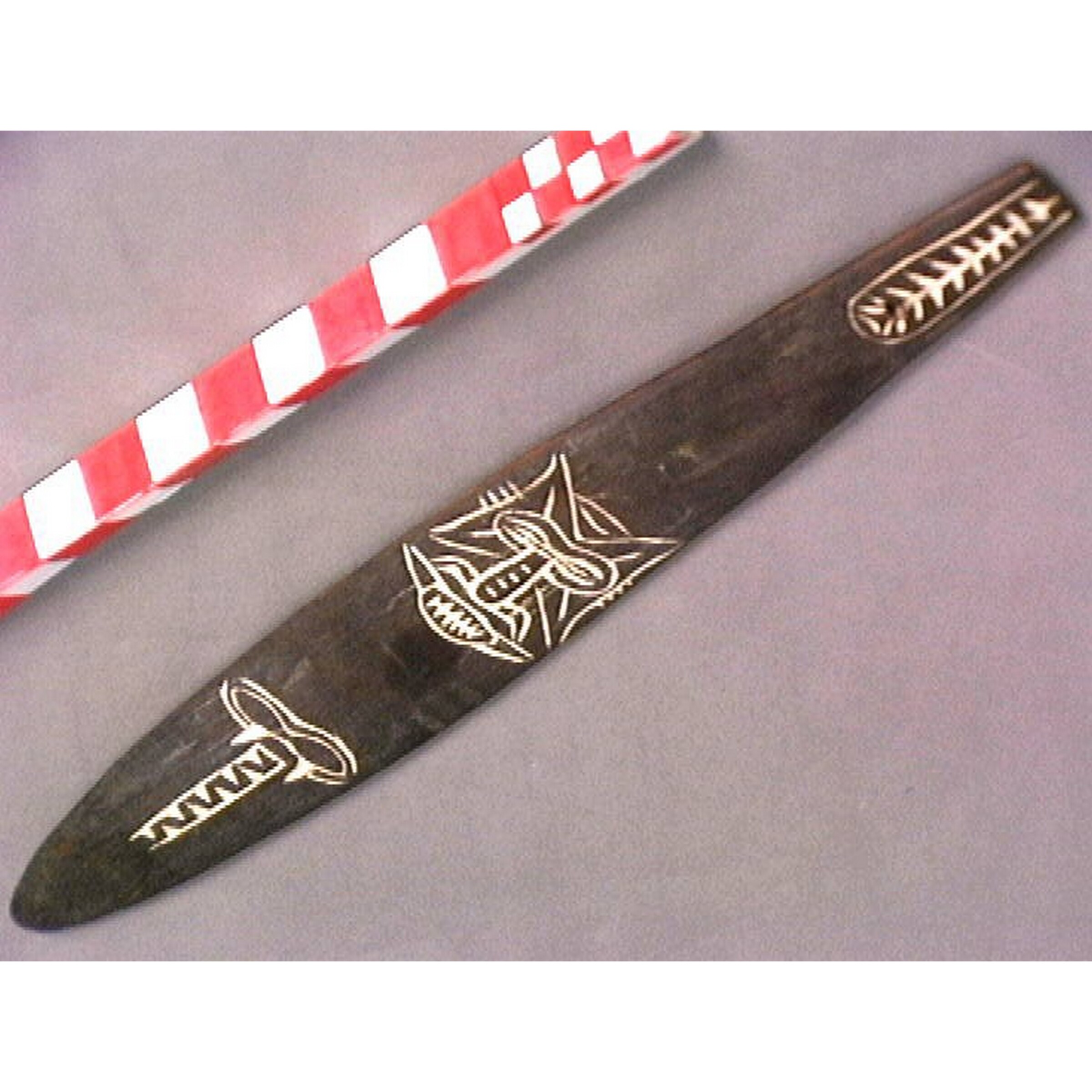
lupranggina
Source term: bullroarer
lupranggina: literally "old, old man" (lup, "man"); Roinji kusira. buxu: "pig", the word heard in the roar. sanggulanggulang: a smaller bullroarer-like object for reaching one's personal benevolent spirit. ramang numana: the initiation house.
When the lupranggina roared, the Mato heard a word in it: buxubuxu. Buxu means pig. The elliptical blade of black palm, swung in circles on its rope, told everyone that the pigs were to be killed, because the boys were about to go into the initiation house. That house was built for the occasion. A red flower was planted beside it, and the circumciser wore it while he worked. The boys came out as ramang haundi, new initiates, and moved into the boys' house. The instrument's name means, literally, "old, old man." The Mato also kept a smaller object like it, the sanggulanggulang, a key for reaching one's own benevolent spirit.
It meant that it was time to kill the pigs ('buxu') as the boys would now enter the initiation house for their initiation rites
Stober, Mato Dictionary (2024), s.v. lupranggina
- Object
- Elliptical blade of black palm, tied to a rope and swung in circles. A smaller form, sanggulanggulang, was kept as a personal religious object.
- Source
- Scot Stober (compiler), Mato Dictionary (Webonary.org, SIL International, 2024), s.v. lupranggina, sanggulanggulang, buxu, ramang numana, ramang haundi, gaxagaxak
- Source location
Page references
s.v. lupranggina; sanggulanggulang; buxu; ramang numana; ramang haundi; gaxagaxak
- Source confidence
- medium to high
- Location note
- Glottolog languoid point for Mato (mato1252). Mato is spoken in six villages (Tabares and Remuk dialects); no village is named for the instrument.
Regions: New Guinea · Sahul · Melanesia
- Initiation rite