No. PNG101
Sepoe
Papua New Guinea · Gulf · Oceania · Sahul
Restricted
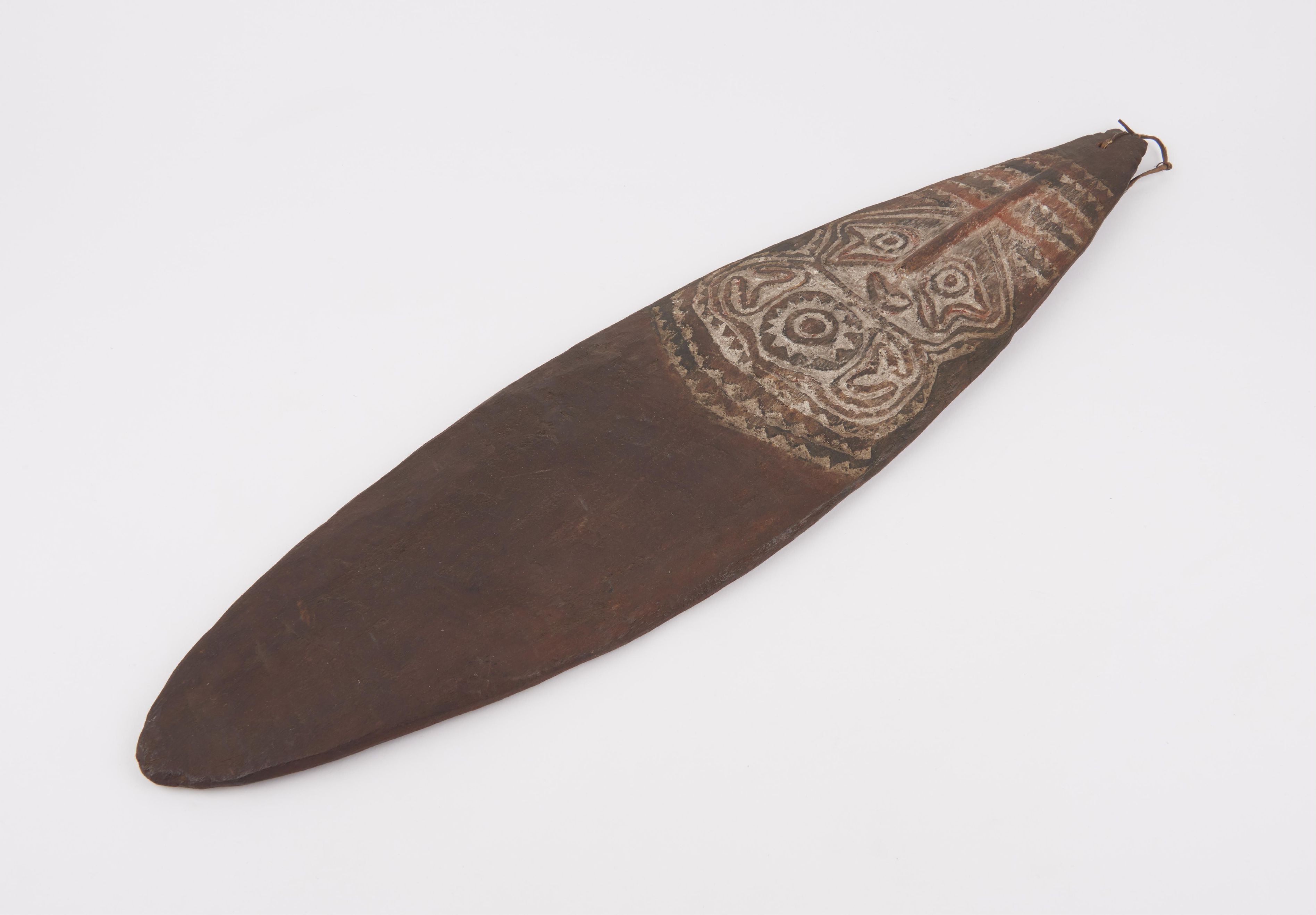
tiparu
Source term: Tiparu
Only a man who had passed initiation could look upon the tiparu; then pigs were killed and a great feast prepared. But when it was swung, every woman and child fled the village — for merely to hear its roar, the Toaripi held, was to die. James Chalmers of the London Missionary Society recorded the bull-roarer and its death-taboo along the Papuan Gulf in the 1880s, among the eastern Elema villages, Sepoe among them, where its name was tiparu.
"Tiparu, only seen by a young man after initiation into manhood, and then pigs are killed, and a large feast prepared. All women and young people leave the village lest they should hear it and die."
James Chalmers, quoted in A. C. Haddon, The Study of Man (1898), p. 240
Particulars
- Function
- Swung at initiation; seen only by initiated men. Women and children fled the village, for to hear the tiparu was to die.
Source
K. A. Gourlay, Sound-Producing Instruments in Traditional Society: A Study of Esoteric Instruments and Their Role in Male-Female Relations (New Guinea Research Bulletin 60; Canberra and Port Moresby, 1975), Table 1, entry 101; A. C. Haddon, The Study of Man (1898), p. 240, quoting James Chalmers of the London Missionary Society