No. PNG140
Kurti
Papua New Guinea · Manus · Oceania · Sahul
Function not recorded
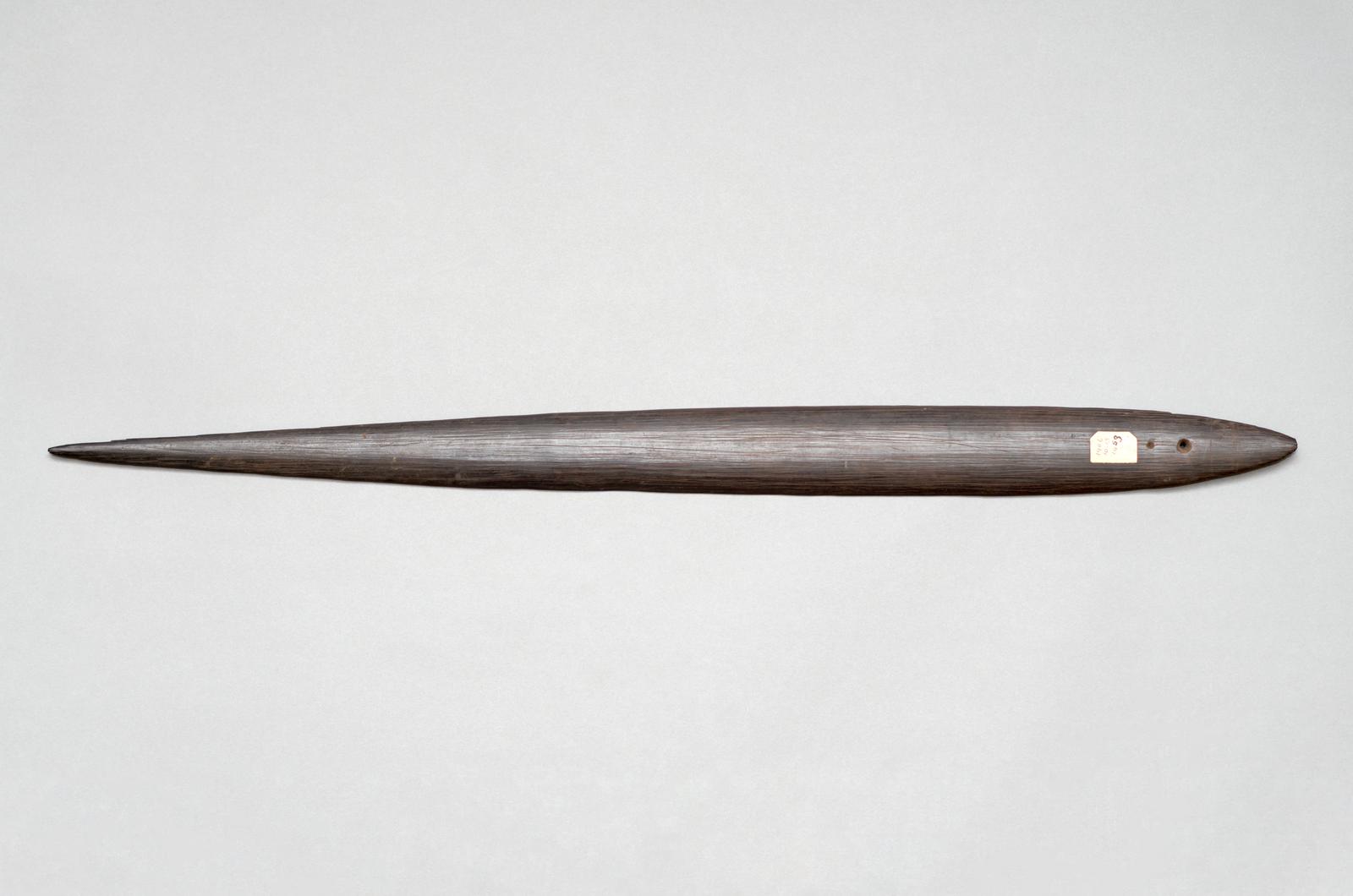
On the north coast of Manus the Kurti kept three sacred sound-makers — the bullroarer, the sacred flute, and the log slit-gong — yet only the slit-gong's use was ever written down. The bullroarer itself slipped past everyone: Reo Fortune, who lived among the Manus islanders, recorded not one, and Gourlay, surveying the island decades later, could only call it “largely unknown.” And still it did not quite vanish: it sounded at Kurti, and no one ever set down how it was swung.
Particulars
- Function
- Not recorded.
Source
K. A. Gourlay, Sound-Producing Instruments in Traditional Society: A Study of Esoteric Instruments and Their Role in Male-Female Relations (New Guinea Research Bulletin 60; Canberra and Port Moresby, 1975), Table 1, entry 140