No. PNG16
Mundugumor
Papua New Guinea · East Sepik · Oceania · Sahul
Restricted
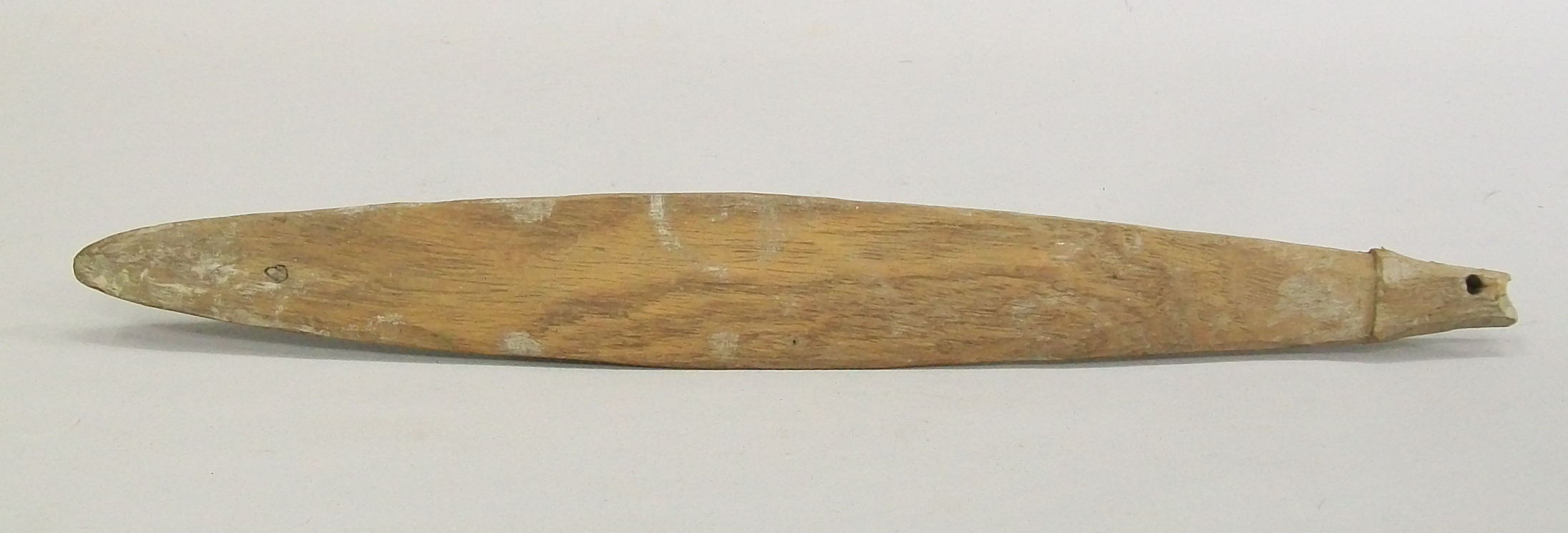
Among the people Margaret Mead called the Mundugumor — the Biwat of the Yuat, a tributary of the lower Sepik — the great sacred instruments were long bamboo flutes capped with carved wooden figures (wusear), many bearing human hair and sometimes human teeth. The flutes were held to be the children of Asin, the crocodile-mother spirit, and their sound was the voice of that ancestor. During the rite that marked a flute's birth, a water drum stood for the mother crocodile, and initiates were made to crawl into the mouth of a large crocodile effigy to be swallowed and reborn. Some twenty “big men” owned the ritual objects and controlled initiation into their secrets, including the bullroarer; the crocodile-birth ceremony belonged to the flutes.
Particulars
- Function
- Youth initiation into instrument secrets controlled by about twenty “big men” who owned the ritual objects.
Sources
- K. A. Gourlay, Sound-Producing Instruments in Traditional Society: A Study of Esoteric Instruments and Their Role in Male-Female Relations, New Guinea Research Bulletin 60 (1975), pp. 3, 45; Table 1, p. 5, entry 16 View
- Margaret Mead, Sex and Temperament in Three Primitive Societies (1935), pp. 172, 181, 213
- Allen (1967), p. 69, via Gourlay 1975, p. 45
- Merriam (1964), pp. 69-71, via Gourlay 1975, Table 1, entry 16
- Newton (1967), p. 47, via Gourlay 1975, Table 1, entry 16