No. HAYS1986-006
Angaataha ancestral-presence bullroarer
Papua New Guinea · Angan language region · Oceania · Sahul
Restricted
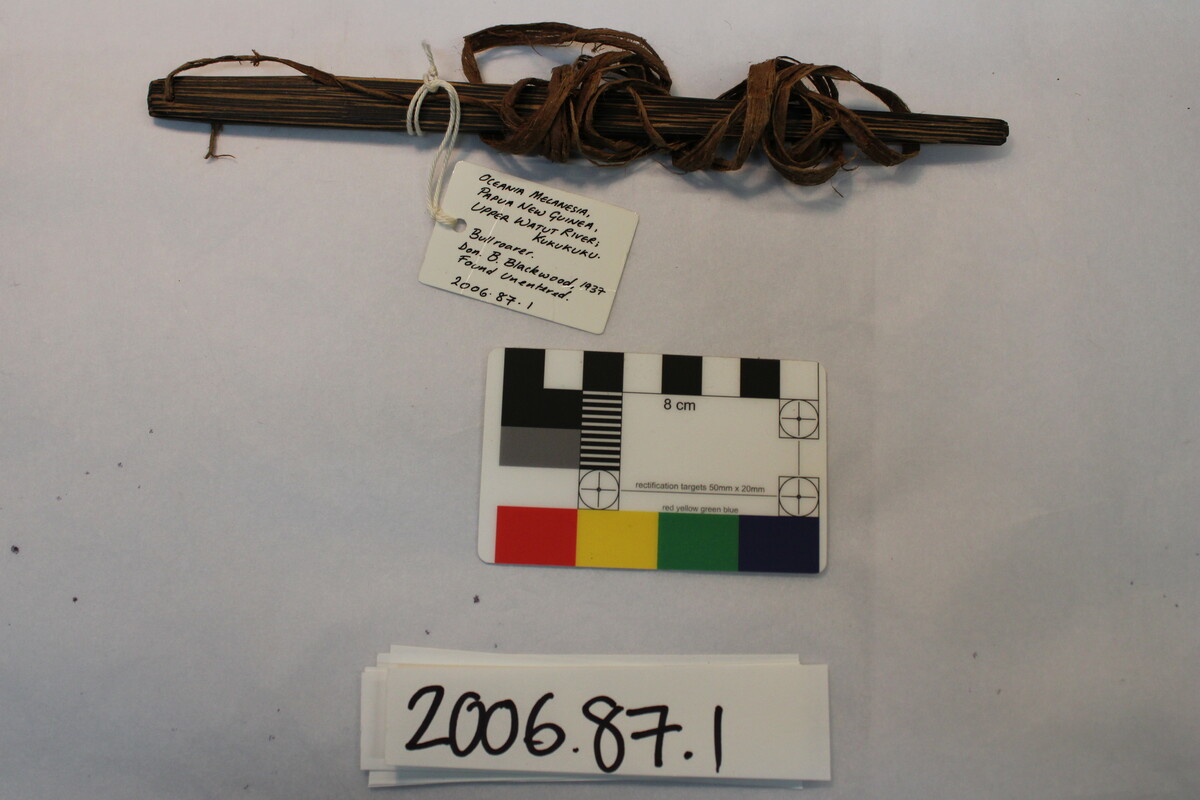
Source term: bull-roarer
No Angaataha term recorded by Hays.
Angan speakers of the rough borderland where the Eastern Highlands falls away toward the Morobe and Gulf watersheds, the Angaataha ran their male initiations without the sacred flutes that dominated men's cults to their north and west. The bullroarer carried that weight alone, and its sound was read neither as a bird nor as a monster but as company: when it was heard, ancestral spirits were present.
Among the Anga-speakers who did not possess sacred flutes were the Angaataha, for whom the sound of the bullroarer indicated the presence of ancestral spirits
Hays 1986:439–440 (Anthropos 81), citing James 1983
Particulars
- Object
- A bullroarer swung in Angaataha male initiation; no size, form, material or local name is recorded.
- Function
- Sounded in male initiation, where its voice signalled that ancestral spirits were present.
Source
Terence E. Hays, Sacred Flutes, Fertility, and Growth in the Papua New Guinea Highlands, Anthropos 81 (1986):435–453, pp. 436, 439–440; citing James (1983)