No. DEACON1934-003
Senbarei (Onua) temigh wump
Vanuatu · East Malekula · Onua · Oceania · Melanesia
Sacred / spirit
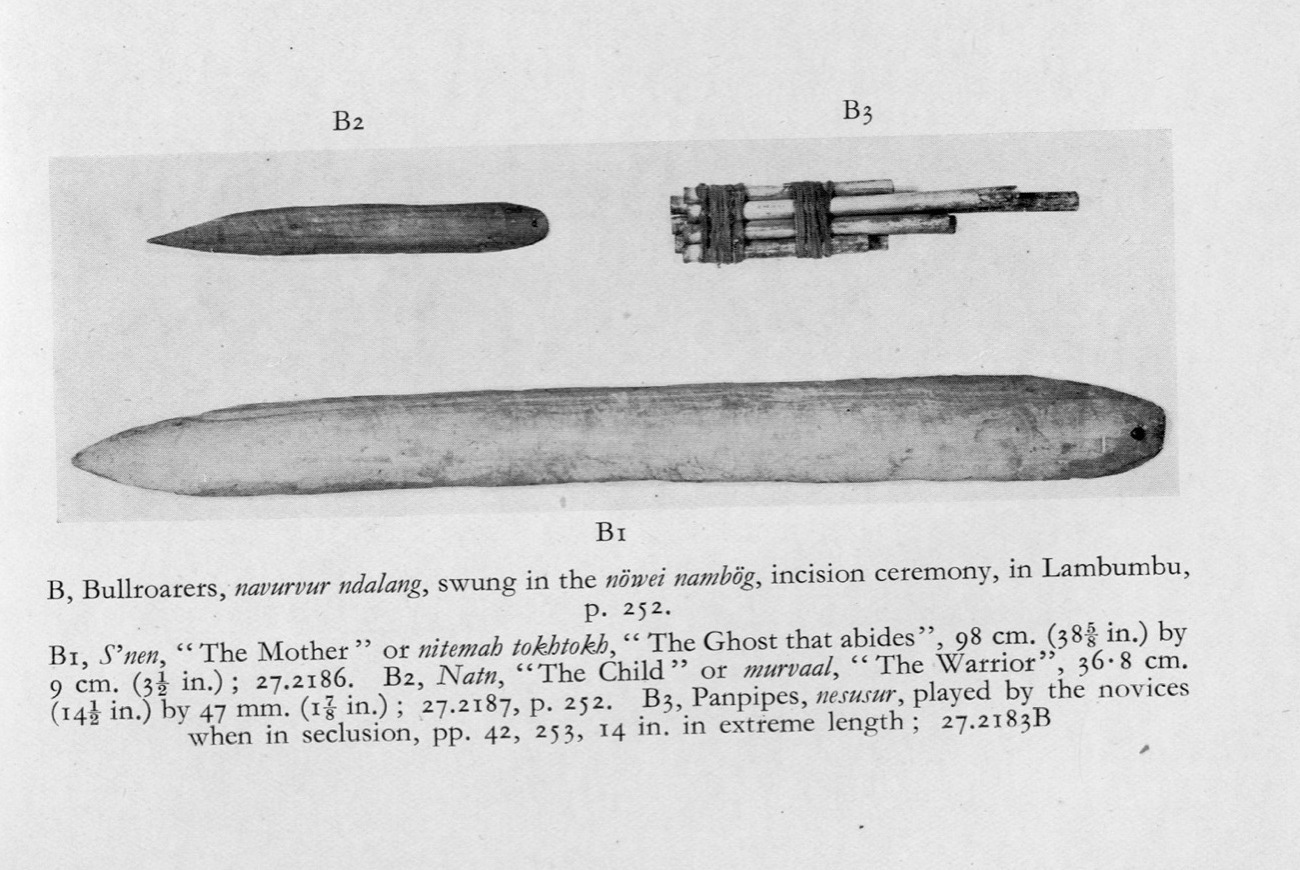
temigh wump
temigh wump = Senbarei (Onua district); Deacon glosses plain temigh as 'an image set up for Nimangki rites' (cf. Seniang temes), with temigh wump as the bull-roarer of the Ruan rites.
Deacon's Malekula glossary sets two Senbarei words side by side: temigh, an image raised for the Nimangki grade-taking rites, and temigh wump, the bull-roarer, instrument of the Ruan rites. In the Onua country on Malekula's east coast, the roarer was not a toy on the edge of ritual life but stood inside it, named in the same breath as the sacred images of the grade societies and given rites of its own. What the Ruan involved, the young anthropologist never lived to write up; a single typescript page on it survives among his papers in London.
temigh wump (Senbarei): the bull-roarer; associated with the Ruan rites.
A. B. Deacon, Malekula: A Vanishing People in the New Hebrides (1934), p. 752
Particulars
- Function
- Ritual: the bull-roarer of the Senbarei district, associated with the Ruan rites; Deacon's glossary distinguishes it from the plain temigh, an image set up for Nimangki grade rites. The Ruan rite itself was never published.
Source
A. B. Deacon, Malekula: A Vanishing People in the New Hebrides (1934), glossary p. 752: 'temigh wump (Senbarei): the bull-roarer; associated with the Ruan rites'. Royal Anthropological Institute MS 98/8/9 catalogs Deacon's one-page typescript 'The Ruan, Senbarei (Onua)'