No. MAY1981-001
Fasu hakamā
Papua New Guinea · West of Lake Kutubu and north-east of the Kikori River, Nipa-Kutubu District, Southern Highlands Province · Oceania · Sahul
Restricted
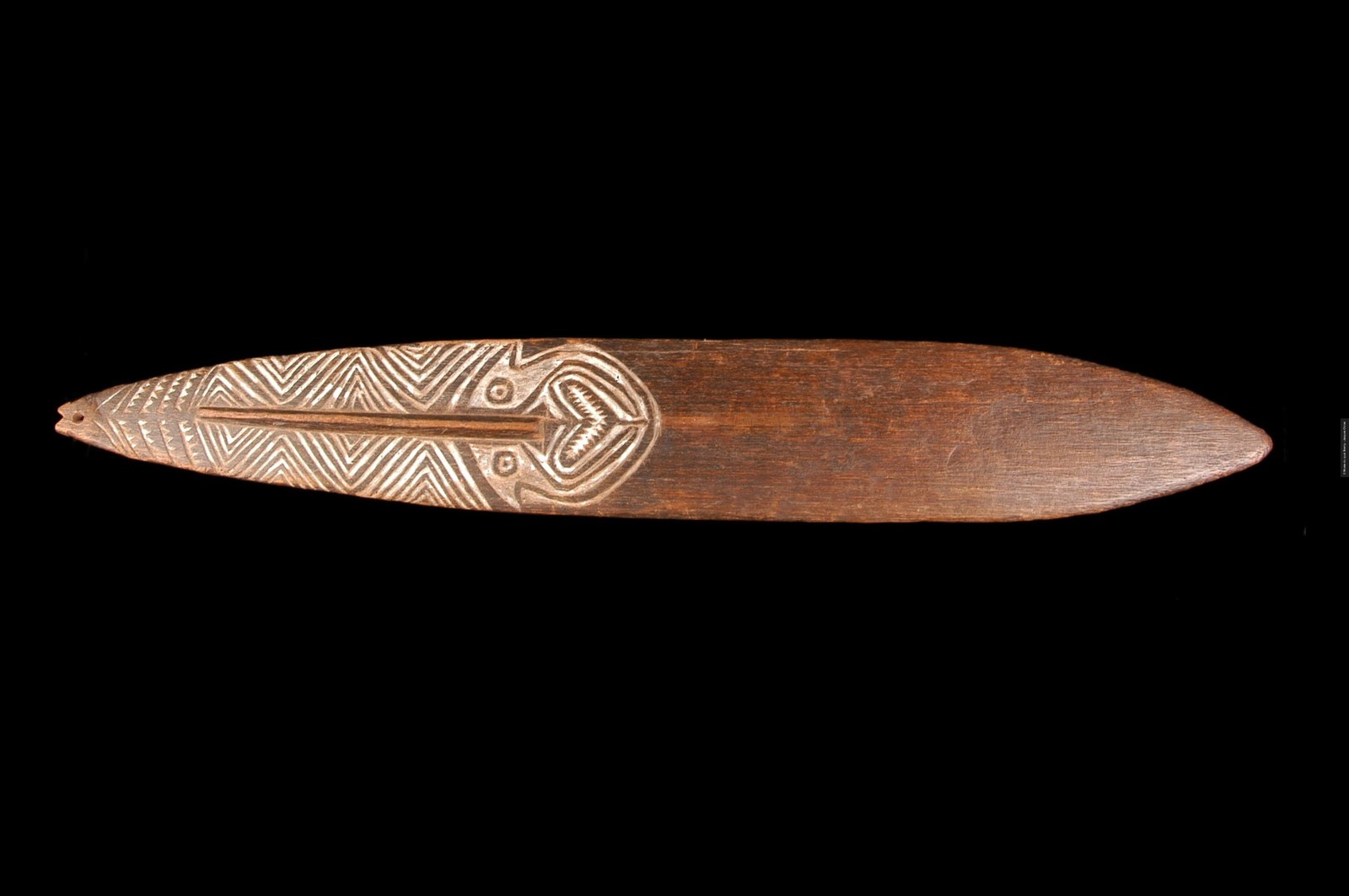
hakamā
Source term: bullroarer: hakamā
hakamā: bullroarer (Fasu). Tone-distinct from hákamá, "old woman; title of respect for an old woman". Namo Me: "true-essence language", the speakers' own name.
The Fasu call their language Namo Me, "the true-essence language". About a thousand of them live west of Lake Kutubu and north-east of the Kikori River, with a smaller group far to the south where the Turama and Kanau rivers meet. Their word for the bullroarer is hakamā. Said with a different tone, the same syllables make hákamá, an old woman, and the title of respect given to her. It was from Kaibu, one of their villages, that initiators were invited to Lake Kutubu in the boyhood of a man named Yaru, bringing the bullroarer cult that the lake people knew by its blade, the amaga.
Particulars
- Object
- A bullroarer, called hakamā; its form is not recorded.
- Function
- Not recorded in the dictionary. Initiators from Kaibu, a Fasu village, were invited to Lake Kutubu and introduced the amaga bullroarer cult there.