No. CHINNERY1915-001
Hunjara / Koko wowow initiation bullroarer
Papua New Guinea · Yodda Valley · Kokoda · Kumusi Division · Oceania
Restricted
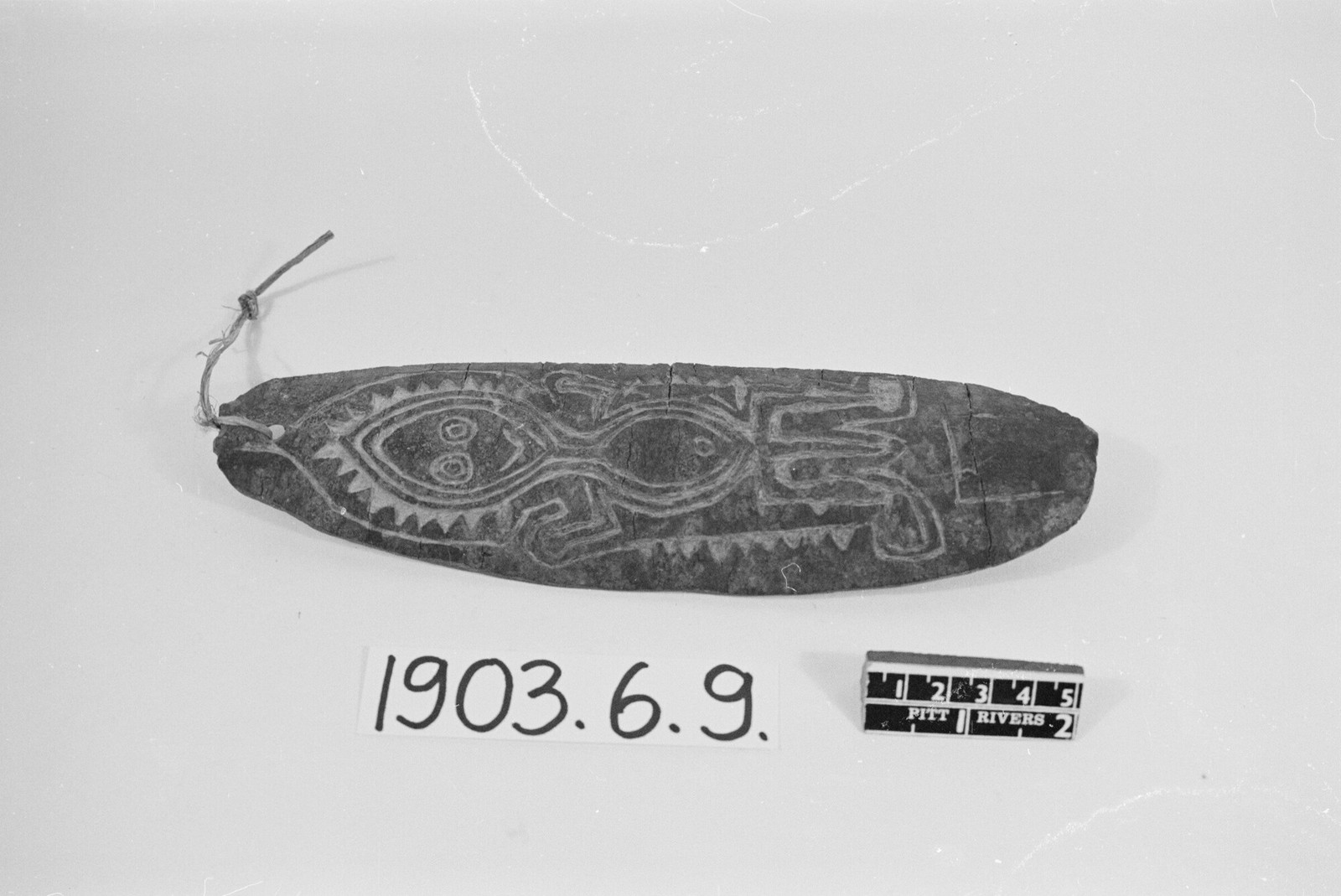
wowow
Source term: bullroarer
wowow: the Hunjara / Koko name for the bullroarer sounded at initiation.
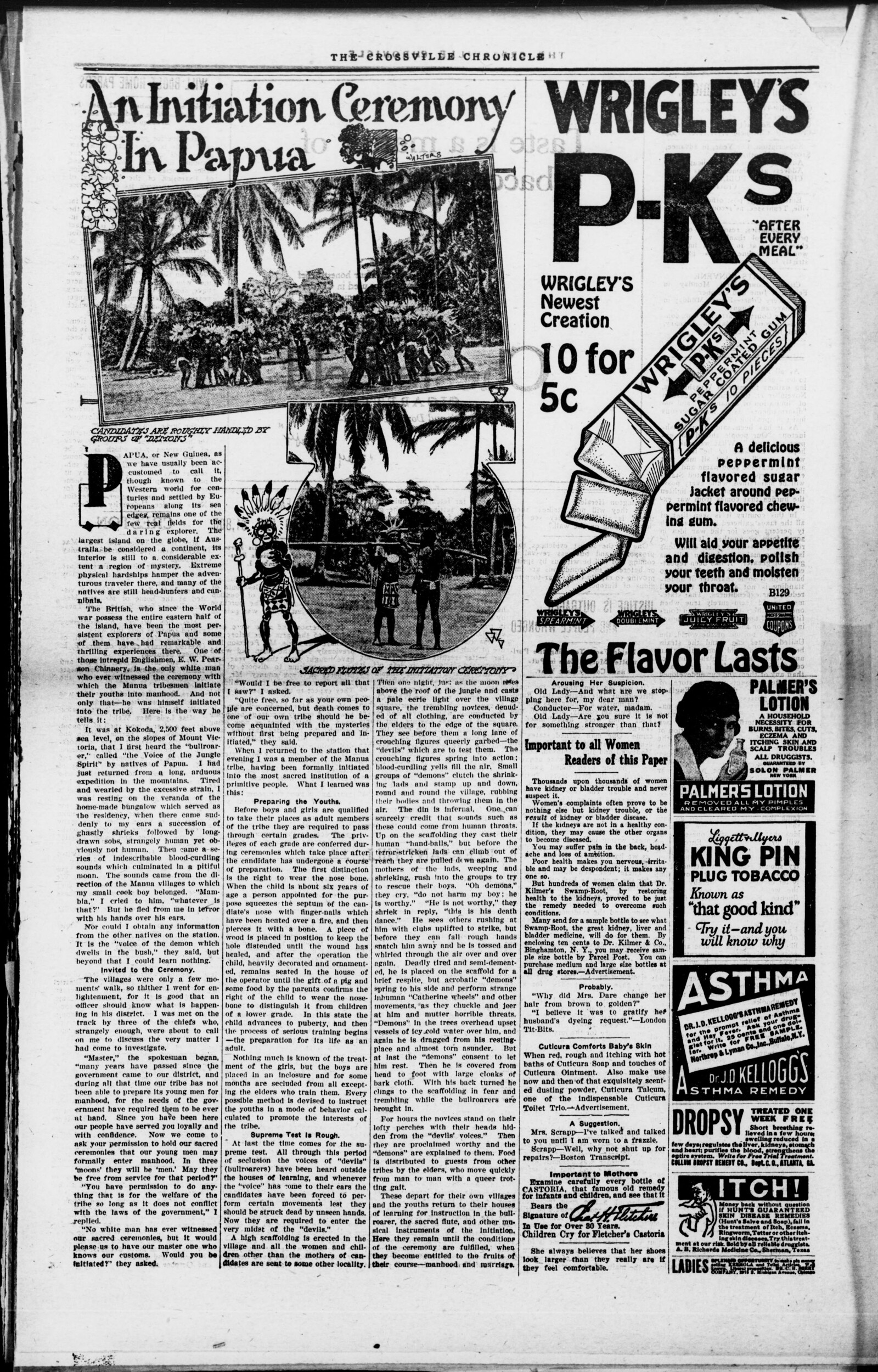
Near Kokoda in 1911, hooded Hunjara initiates—including girls and women—waited while some thirty wowow roared around them. Men called on dead ancestors and pleaded, “Do not kill my child,” before lifting the hoods and revealing the instruments behind the voices. At the ceremony’s end, their handles and ornaments were burned; the small blades and strings were packed away in secret.
After the trees are pulled down, the bullroarers are exhibited for the first time (at Koko about thirty were brought into play).
Chinnery and Beaver 1915:75
Particulars
- Object
- Plain goroba-palm blade attached by strong genda-fibre string to a hard wooden handle; about thirty were brought into play at the witnessed Koko ceremony. No dimensions or surviving specimen are given.
- Function
- Sounded during initiation preparations and revelation as the presence or voice of spirits; candidates were shown the instruments, after which handles were burned and blades and strings secretly stored.
Source
E. W. P. Chinnery and W. N. Beaver, Notes on the Initiation Ceremonies of the Koko, Papua, Journal of the Royal Anthropological Institute 45 (1915), pp. 69-78; Chinnery witnessed the 1911 Koko ceremony