No. DEACON1934-004
Big Nambas bullroarer, Malekula
Vanuatu · Northwest Malekula · Big Nambas plateau · Oceania · Melanesia
Restricted
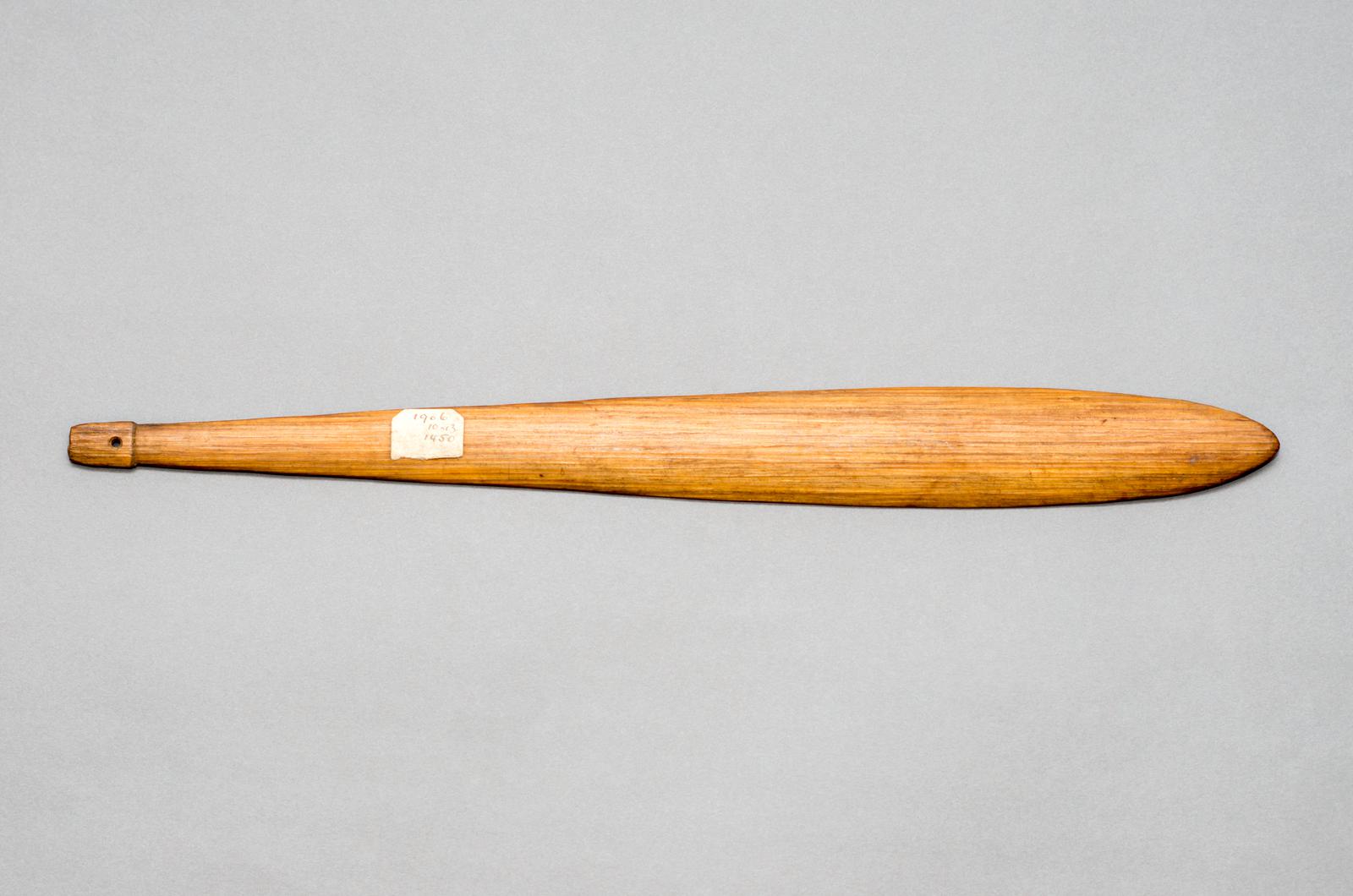
When Arthur Bernard Deacon died of blackwater fever on Malekula in 1927, aged twenty-four, his field papers went home without him. Camilla Wedgwood sorted them in London into the book that made his name — and into files of loose ends, among them a single typed page headed 'Bull-roarer, Big Nambas.' The people of the high northwest plateau, whom outsiders then knew hardly at all, had shown or told him something about the instrument; that one page, still unpublished in the Royal Anthropological Institute's archive, is the only trace of what.
Les hommes vont de ci de là en faisant résonner le rhombre pour effrayer les femmes en les empêchant d'approcher.
The men go here and there sounding the bullroarer to frighten the women and prevent them approaching.
Corlette & Leenhardt, 'Langue des Big Nambas', Journal de la Société des Océanistes 3 (1947), p. 76
Particulars
- Function
- Sounded during the circumcision seclusion: men move about the area sounding the roarer to frighten the women and keep them from approaching. Deacon's unpublished field note records the instrument but not its use.
Sources
- Royal Anthropological Institute, A. B. Deacon collection, MS 98/7/2: 'Bull-roarer, Big Nambas. 1 p. 25.5 x 20 cm. CHW', in Deacon's bull-roarer file MS 98/7 View · archived
- L. A. C. Corlette & M. Leenhardt, 'Langue des Big Nambas. Le Mallicolo (Nouvelles-Hebrides)', Journal de la Societe des Oceanistes 3 (1947): 57-91, at p. 76 View · archived