Atlas Essay —
Always From the North
New Guinea · Torres Strait · Cape York · the Australian interior
Two men who had spent years inside the ceremonial grounds of Central Australia set down a rule they had watched operate: sacred performances move between tribes in one direction only, and that direction is south. A century of fieldworkers, linguists and geneticists has been rediscovering that rule ever since — and the bullroarer, the whirled blade that speaks for the dead across the whole of Sahul, moved along the same grain. It came into Australia from New Guinea, not out of Australia into it.
The bullroarer entered Australia from the north. New Guinea is not a thin ritual fringe facing Cape York but roarer country from the Baliem valley to Bougainville, and its instrument carries the fuller, older theology — one word for the blade, the swallowing monster and the ghost. Everything else that can be traced across the Torres Strait — ceremonies, class systems, canoes, drums, dogs, languages, genes — runs the same way. The arrow points south.
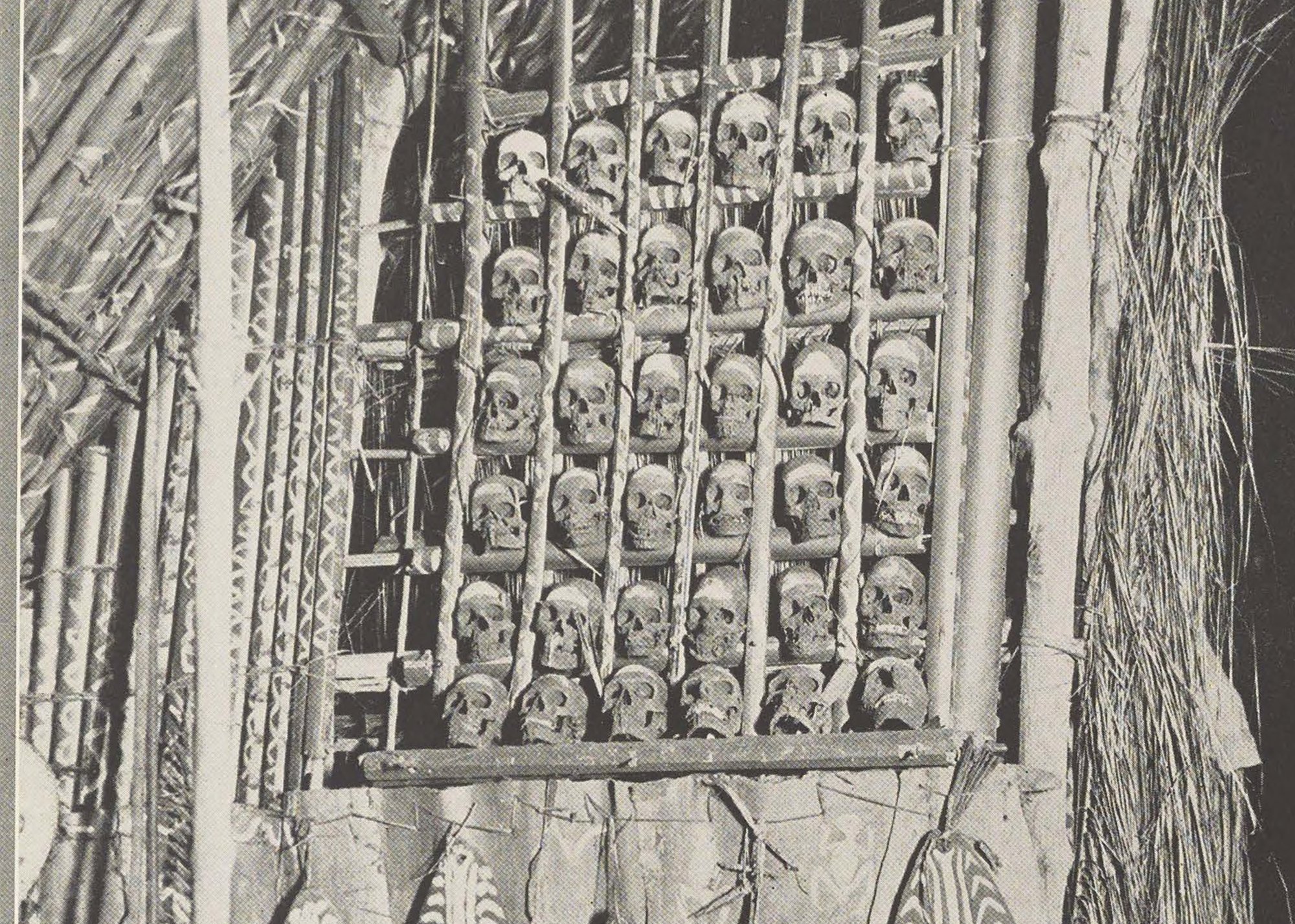
In brief
- Bullroarers are attested right across New Guinea — Indonesian Papua, the Sepik, the Highlands, the Huon Gulf, New Ireland, Bougainville — not only on the southern coast facing Australia.
- Spencer and Gillen, watching Central Australian ceremony first-hand, recorded that corroborees “always pass from north to south and never vice versa,” and watched the eight-subsection system move down into the Arrernte from the north during their own fieldwork.
- Donald Thomson found the Cape York hero cult to be an intrusion from New Guinea by way of the Torres Strait; the outrigger canoe, the hourglass drum and the dingo all made the same crossing.
- Johanna Nichols places the languages of northern Australia in one structural pool with those of northern New Guinea; Pama-Nyungan spread out of the northeast across the rest of the continent within the last six millennia.
- Genomics finds the same vector: a Holocene expansion from northeast to southwest inside Australia, carried by culture rather than by bodies, plus an older Papuan-related current into Cape York.
- The New Guinea roarer theology is the fuller form — balum, kani, ngosa: in each language one word for instrument, monster and ghost — of which the Australian initiation-beings are the downstream, partitioned version.
Every record named below is on the map — open it, or browse the Oceania records directly.

The old arrow
The standard position points the other way. In 1994 the ethnomusicologist Mervyn McLean published a distribution study of New Guinea instruments, plotting the reported occurrence of drums, flutes, gongs and bullroarers people by people and laying the maps against language migration. Reviewing it for The Galpin Society Journal, Jeremy Montagu — then the curator of the Bate Collection at Oxford, and the most widely read organologist in the English-speaking world — drew the conclusion that has been repeated ever since:
“The concentration of bull-roarers in the part of PNG nearest to Australia, and the rarity elsewhere on the island, suggests very strongly that the instrument came from Australia, where it is known almost everywhere, and is a good example of the value of these maps and this methodology.”
Jeremy Montagu, review of Mervyn McLean, Diffusion of Musical Instruments and their Relation to Language Migrations in New Guinea, The Galpin Society Journal 50 (1997), p. 252
Two things had to be true for that sentence to work: a concentration on New Guinea’s Australian-facing edge, and rarity everywhere else on the island. The first is real. The second is not. And once the second goes, the reasoning does not merely lose its footing — it reverses, because every other class of evidence about traffic between the two shores has been pointing north-to-south for a hundred and thirty years.
New Guinea, coast to coast
Follow the dots away from the Fly and the Gulf and they do not thin out; they multiply. In Indonesian Papua the instrument is at Kolepom among the Kimam, whose roarer is called Jet after the white-skinned, hugely bearded being who lives underground and comes at initiation to swallow the boys; among the Yei; among the Kamoro and the Asmat on the southwest coast; and up in the Grand Valley of the Baliem, where the Dugum Dani boys whirl an aneivu-aneivu whose drone, by the 1960s, had lent its name to the aeroplane.
On the north coast and the great river behind it, the Sepik roarer is the voice of the initiation-spirit “der die Knaben verschlingt” — that swallows the boys — and the big carved blades are the spirit’s own representatives, as Otto Reche set down after the Kaiserin-Augusta-Fluss expedition. It is with the Abelam, whose ulke names the female spirits of the bush pools; with the Murik of the river mouth, where the swung ironwood is the voice of the eldest spirit-brother Urubaia; with the Iatmul at Mindimbit.
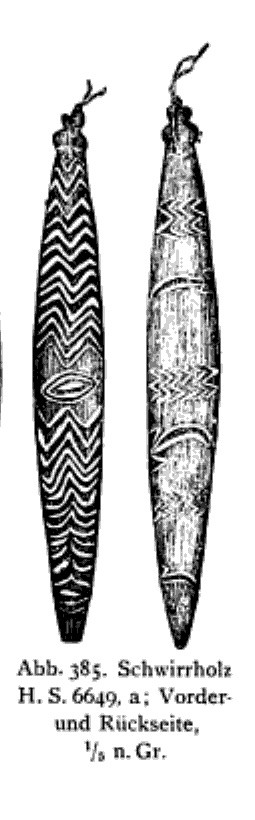
It is in the Highlands: at Lake Kutubu, at Sinasina, at Kainantu, among the Fore and their neighbours, whose word for the instrument is simply the dictionary word for a humming sound. It is in the Yupno valley behind Madang, where the roarer is numbung. And on the Huon Gulf it reaches its most elaborate form anywhere on earth — the balum complex, to which we will come back, because it is the single strongest piece of evidence in this essay.
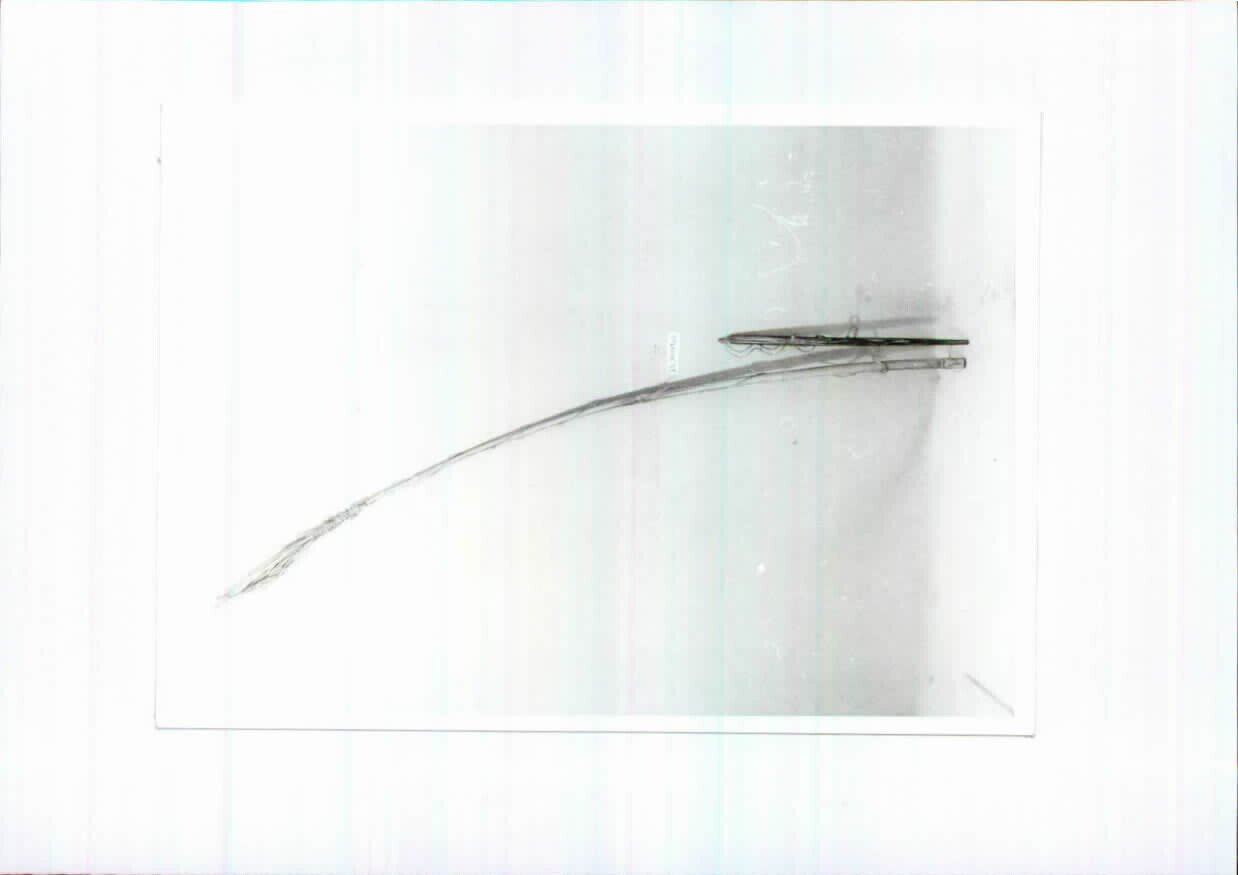
And it keeps going east, off the mainland entirely: New Hanover, New Ireland, the Baining of the Gazelle Peninsula, the Sulka, the Mali, Bougainville and Buka — where each Kurtachi bullroarer bears the personal name of the ancestor whose voice it is, and the whole set are the urar, the spirits of the dead, heard at the wapi initiation. These are not echoes of one southern custom. They are separate, named, locally theorised traditions in a dozen ecological worlds, several of which never had any conceivable contact with Australia at all.
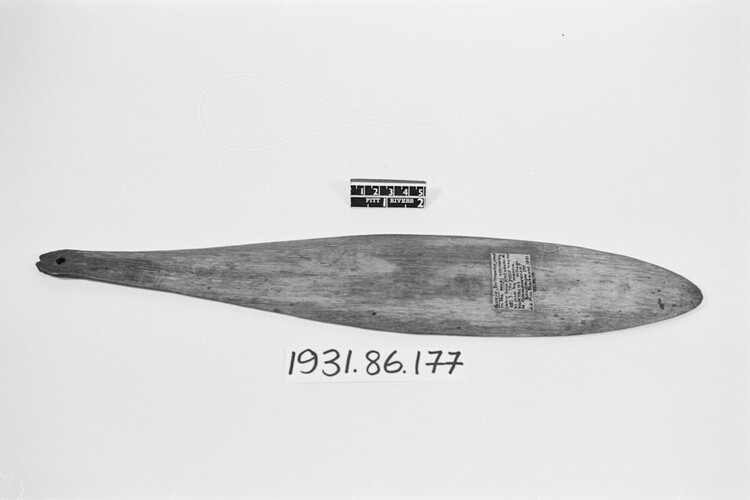
The dots on the map mark reported localities, not equal survey effort; the west is thinner on paper than it is on the ground. That is precisely why the correction is so heavy. Even the record as it stands — collected piecemeal by missionaries, patrol officers, German expedition ethnographers and Papua New Guinean student-teachers — is already far too wide to call the bullroarer rare on New Guinea. The southern coast is not a beachhead. It is one edge of a continent-sized roarer country.
“It is a curious feature in regard to such things as corrobborees, which are handed on from tribe to tribe, that they always pass from north to south and never vice versa.” Baldwin Spencer & F. J. Gillen, The Northern Tribes of Central Australia (1904), p. 20
“They always pass from north to south”
Spencer and Gillen were not theorising from an armchair. Gillen was the telegraph-station master at Alice Springs and spoke Arrernte; Spencer came up from Melbourne to sit through the whole engwura, the great initiation cycle, in 1896–97. They were watching the ceremonial economy of the interior at close range over years, and what they noticed was a current in it. Ceremonies arrive from the north. They pass down. They do not pass back up.
The general statement stands in the introduction to The Northern Tribes of Central Australia, and they immediately anchor it in something they could see happening in front of them — the replacement of the four-class marriage system by an eight-subsection system, a change of the deepest social consequence, rolling down the map during their own careers:
“The tide of change, rolling southwards from the Warramunga nation, has at length reached the northern limit of the Arunta nation. It has perceptibly affected the Kaitish tribe, the Unmatjera, to a slight extent; but as yet the Arunta itself is untouched. … In regard to another question, viz. the introduction of eight, instead of four class names, we know, as a matter of fact, that this change has actually entered the Arunta from the north and at the present moment is spreading southwards.”
Spencer & Gillen, The Northern Tribes of Central Australia (1904), p. 20
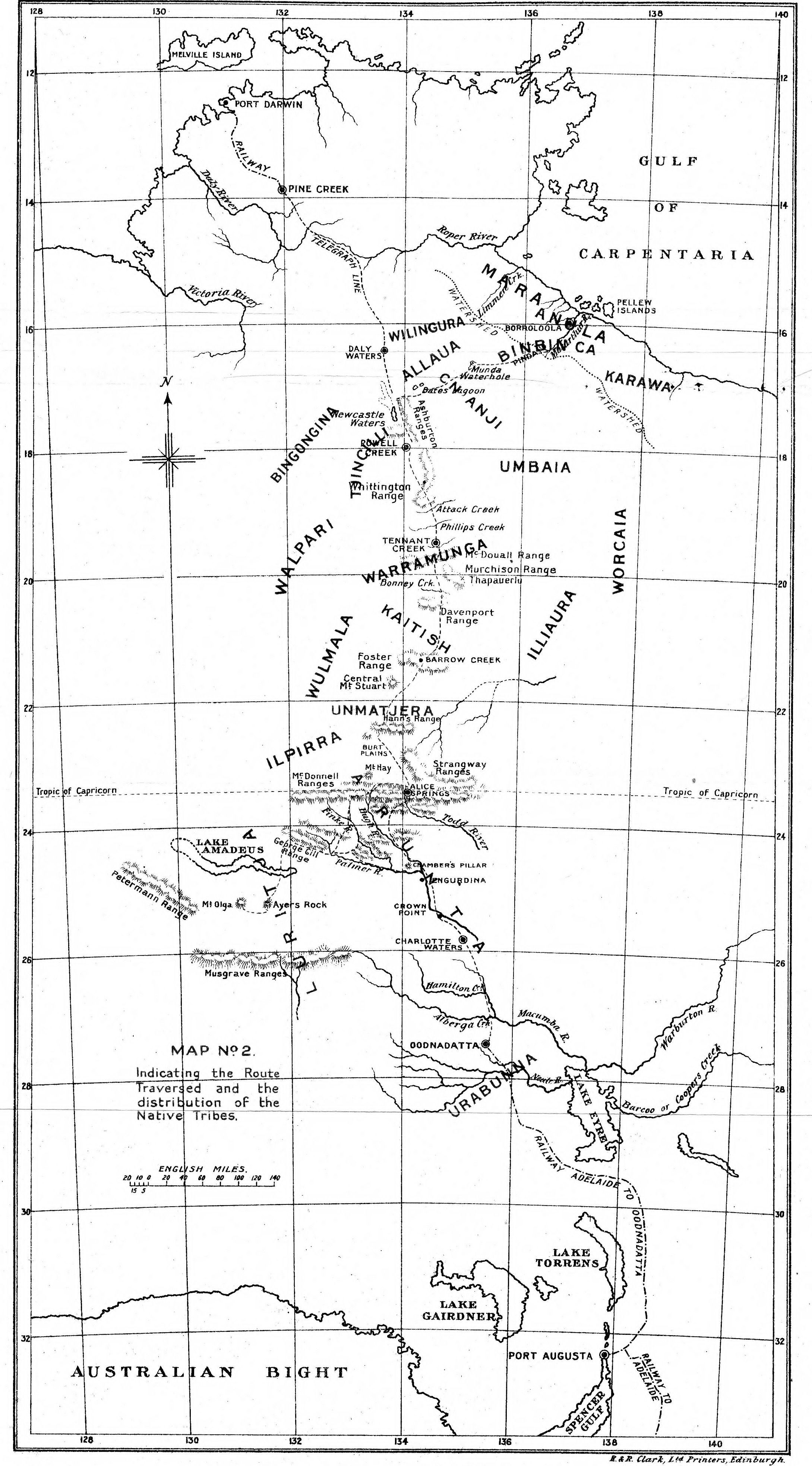
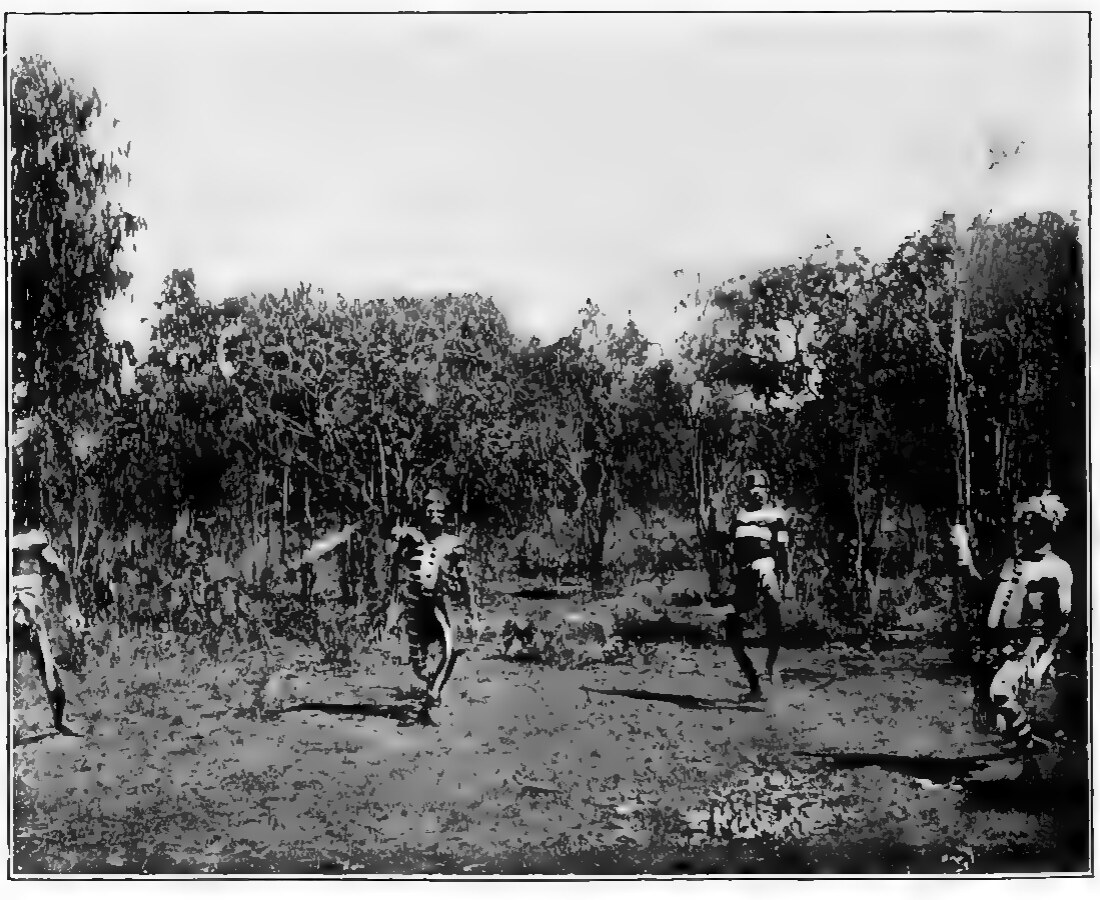
They say the same of the initiation rites themselves — the very ceremonies in which the bullroarer is revealed. Circumcision and subincision, they conclude, were introduced into the central lines of migration “at a later time, and again from the north”; the southernmost tribes were the last to take them up and the last to give up the older tooth-knocking rite; and the whole sequence indicates that these rites “originated somewhere in the north and gradually spread southwards, as indeed the natives believe that most of their customs have done” (p. 18). That last clause is worth reading twice. The people whose ceremonies these were said the same thing.
Nor is it only ritual. Five years before Northern Tribes, cataloguing weapons, the same authors trace the ornate boomerang of the Queensland tribes down into the centre along the trade route that follows the rivers “from the interior of Queensland southwards to the Lake Eyre basin, just as in early times the natives themselves did, when they spread over the country” (Native Tribes of Central Australia, 1899, p. 596). In that book they had already noted the same eight new class names entering the Arrernte from the Ilpirra on their north, adding that in tradition the beings who introduced the classes “lived away to the north, because the adoption of the distinctive names … is at the present time taking place in the Arunta tribe, and, as a matter of actual fact, these eight names did originate in the north, and are now slowly spreading southwards through the tribe” (1899, p. 422).
Australia, in short, was never a sealed room. It was a long, slow conveyor running one way, and the fieldworkers who knew it best said so while standing on it. Anyone tempted to treat the interior as a museum of pristine isolates should reckon with the Molonga: a wholly new ceremony first reported on the northern Georgina River in 1893, which W. E. Roth watched being taught and traded, and which travelled some sixteen hundred kilometres in twenty-five years. Ceremonies in Australia move, they move fast, and they move down.
The door at Cape York
If things enter Australia from the north, they enter at one place. Cape York Peninsula reaches up toward New Guinea across a strait that is shallow, island-studded and, for most of the human occupation of Sahul, was not there at all: Australia and New Guinea were one landmass until the sea rose over the land bridge in the early Holocene. Even after the flooding, the Strait was a chain of stepping-stones worked by canoe.
The classic demonstration is Donald Thomson’s. Thomson — the finest Australian fieldworker of his generation, later famous for his Arnhem Land work — spent 1928–33 on Cape York and published the result as “The Hero Cult, Initiation and Totemism on Cape York” in the Journal of the Royal Anthropological Institute for 1933, a monograph-length study running from page 453 to page 537. His finding was that the peninsula’s hero cults — the initiation complexes built around culture heroes such as I’wai the crocodile — were not an Australian growth but an intrusion, arriving from New Guinea by way of the Torres Strait and dying out inland as they went. Ursula McConnel, working the same country, mapped the totemic hero-cults across the peninsula in Oceania in 1936 and disputed the details; Lauriston Sharp took the argument up again in 1939. What none of them disputed was the direction. The argument on Cape York in the 1930s was about how far the northern influence had penetrated, not whether it had come.
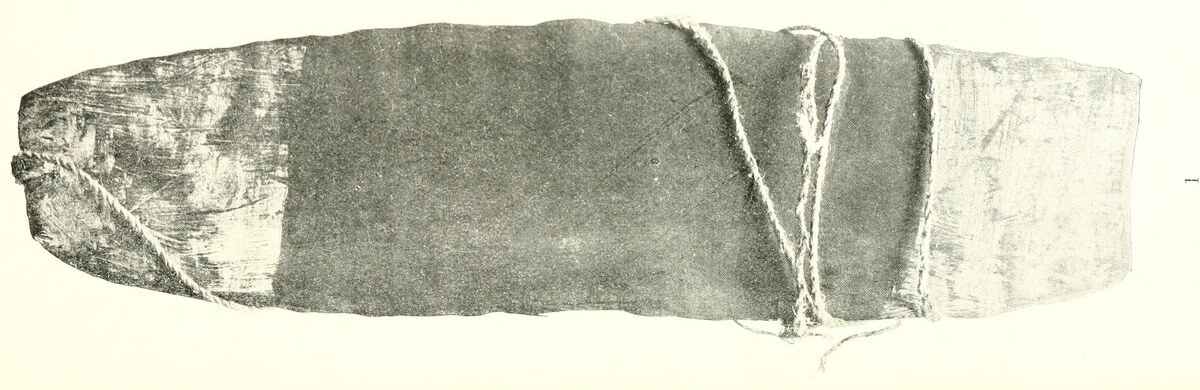
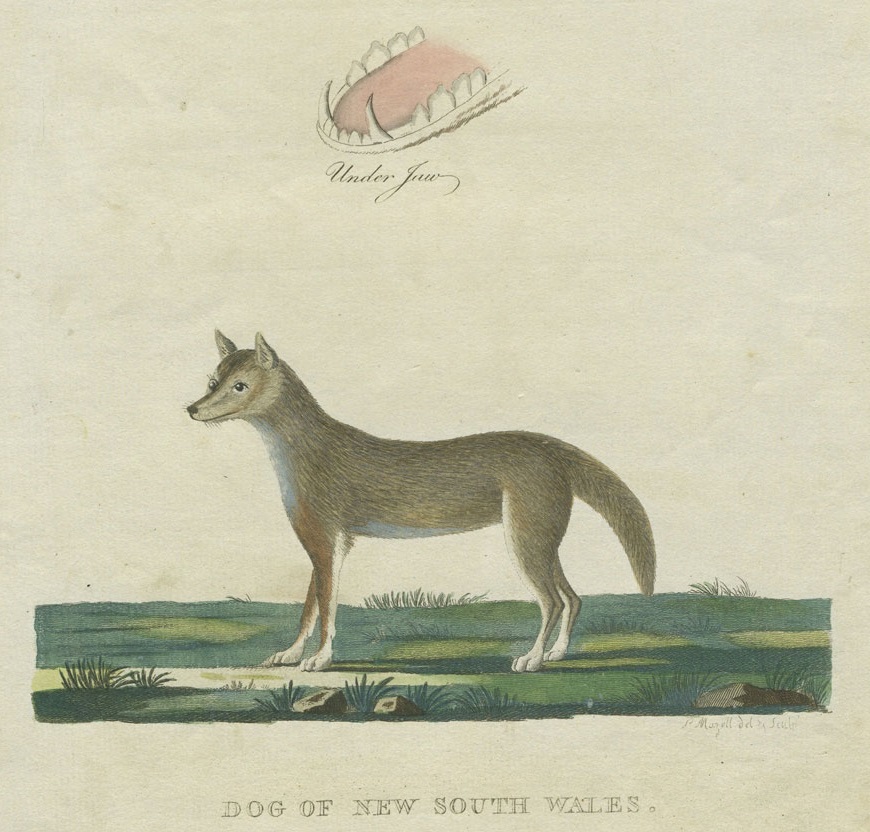
The material record says the same. The New Guinea double-outrigger sailing canoe crossed and was in use on the peninsula; so was the hourglass drum, an unmistakably Papuan instrument in a continent otherwise without membrane drums. Frederick McCarthy’s survey of Aboriginal trade, published in Oceania in 1939, treated the Strait as a live commercial artery rather than a wall, tracing goods, songs and ceremonies down the chains of exchange that reached from the islands into Queensland and beyond. And one northern arrival swept the whole continent: the dingo, which appears in the Australian archaeological record only about three and a half thousand years ago, cannot have walked in, and within a geological instant was everywhere from the Kimberley to the Great Dividing Range — the standing proof that a thing can enter Australia from the north and take the entire landmass.
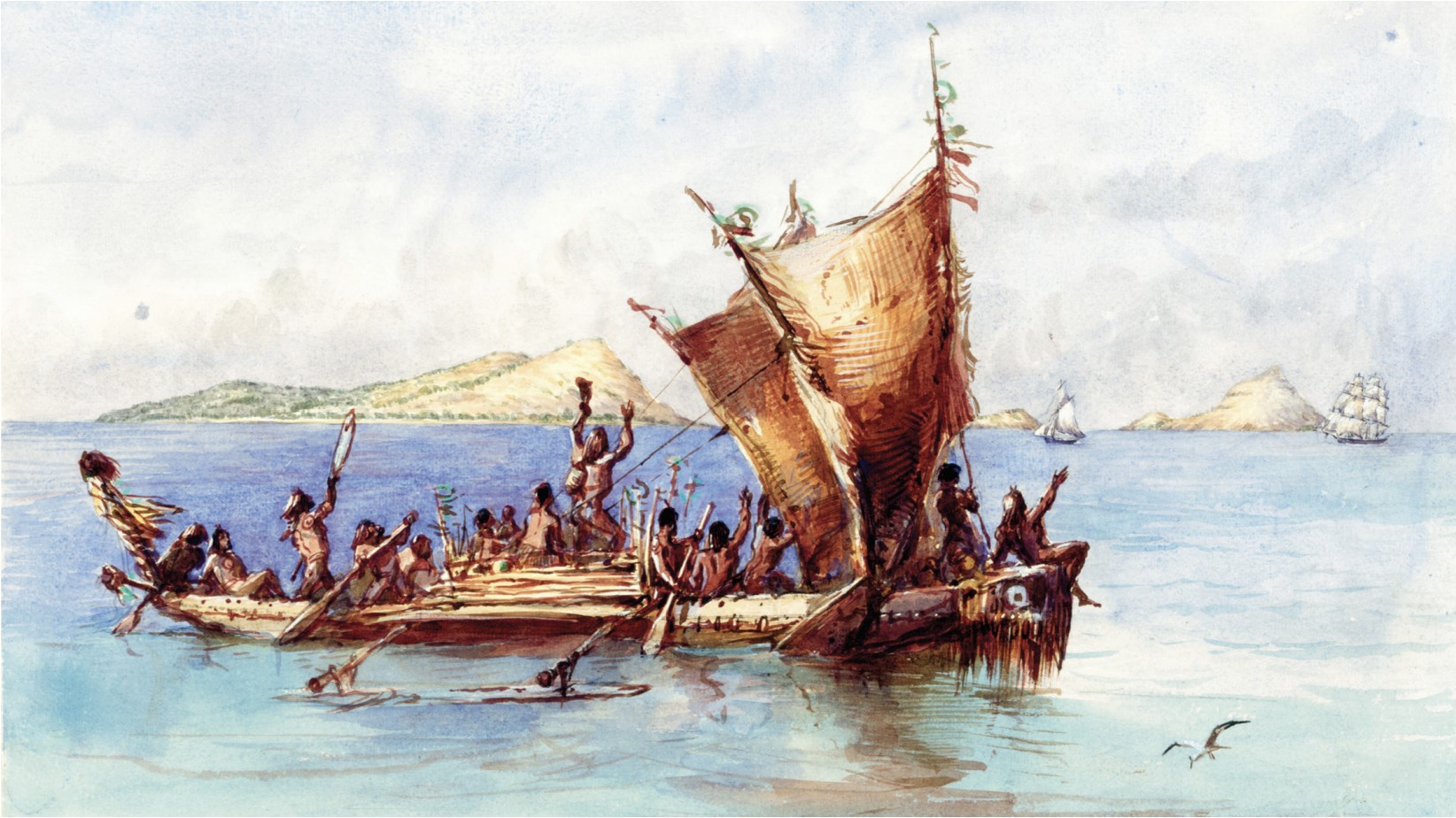
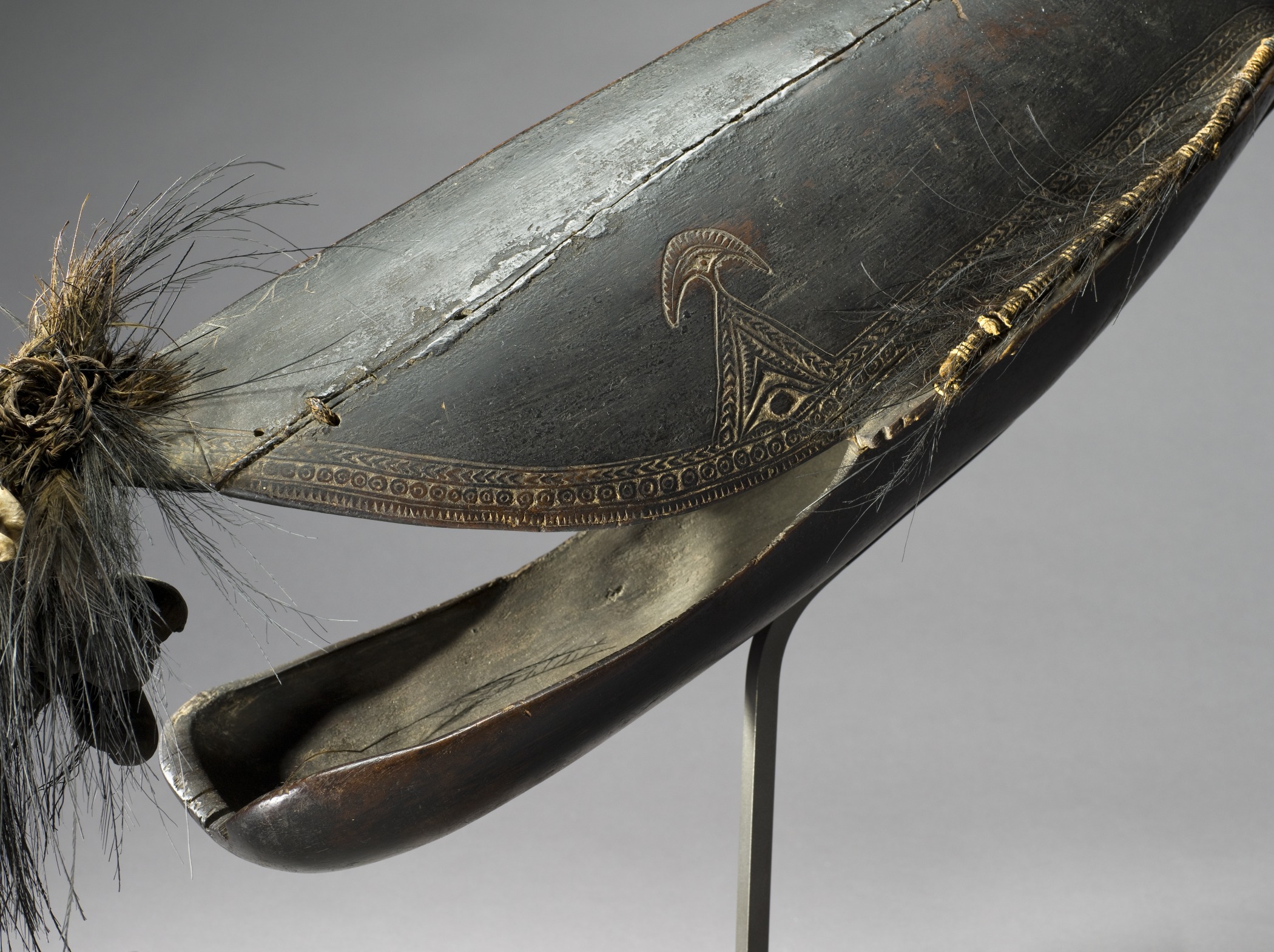
The counter-observation is that some things stop at the water. The bow and arrow, universal in New Guinea and the Strait, never took hold on the Australian mainland; pottery and horticulture stayed north. That is true, and it is the shape of the phenomenon rather than an objection to it. A strait that filters is a strait that transmits: the goods that failed to cross show that crossing was selective, which is exactly what makes the things that did cross — the canoe, the drum, the dog, the hero cult — evidence of a real current rather than an accident of contact.
What the linguists found
Language leaves the cleanest trail, and the trail runs the same way. Johanna Nichols’s survey of ancient population structure in the Annual Review of Anthropology sorts Sahul into zones of spread and zones of accretion, and the geography it produces is the geography of this essay. Of the top end she writes:
“The wetter and coastal north and northwest of Australia form an accretion zone in which a dozen or more stocks are found. These languages form a structural pool with those of coastal and especially northern New Guinea, which suggests an origin in relatively recent colonizations. … Pama-Nyungan forms a structural pool with the languages of southeastern and highland New Guinea … and on geographical and other evidence this pool is older than the coastal one.”
Johanna Nichols, “Modeling Ancient Population Structures and Movement in Linguistics,” Annual Review of Anthropology 26 (1997), pp. 359–384
Read that slowly. Northern Australia and northern New Guinea are one linguistic province, and the relationship is recent enough to be visible. Australia’s single great language family — Pama-Nyungan, which covers seven-eighths of the continent — belongs structurally with southeastern and highland New Guinea, and that link is older. Nichols places the Pama-Nyungan homeland in the northeast, in southern Cape York, “a long-standing center of technological innovation,” and has the family spreading out from there over the past six millennia by a combination of migration and language shift. The language of nearly all of Australia was born at the door and walked south.
The people whose languages these are say so too. R. M. W. Dixon, collecting Aboriginal origin legends in their own languages, found that a great many of them place the first people’s arrival in the north — some describing an ancestral walk across from New Guinea — and that the direction a group’s legend points is often the direction in which its closest linguistic relatives actually lie.
Individual scholars pushed the link much further, and were not shy about it. Ernest Worms, the Pallottine missionary-ethnographer of the Kimberley, held that the Arrernte were a powerful group who had come down from New Guinea into Central Australia carrying a whole culture complex with them. Carl Strehlow, whose Aranda work remains one of the deepest bodies of Australian ethnography, concluded that parts of the Central Australian mythology were imports — writing of a “wandering myth” that had fused with a local rain totem and with “the view of the dangerous water-snake, which is distributed Australia-wide” (Strehlow 1908, p. 10). The Rainbow Serpent, the being whose voice the bullroarer so often is, was a traveller in Strehlow’s reading a hundred and twenty years ago.
“It’s like you had two men entering a village, convincing everyone to speak a new language and adopt new tools, having a little sexual interaction, then disappearing.” Eske Willerslev, on the Holocene spread across Australia, in Science, 2016
What the geneticists found
This is where the case stops being a period piece. Nothing about modern Australian population genomics is friendly to diffusionism as a school; the field is scrupulous, politically careful, and quick to stress the deep continuity of Aboriginal occupation. It has nevertheless produced, without meaning to, the strongest version of the north-to-south argument yet.
The 2016 Nature genomic history of Aboriginal Australia, based on complete genomes from eighty-three Aboriginal Australians and twenty-five Highland Papuans, was published alongside Claire Bowern’s phylogenetic work on eight hundred thousand words of Australian language data. The two datasets agreed: the Holocene expansion inside Australia ran from the northeast to the southwest, within the last ten thousand years, in successive waves in which existing languages were overlaid by new ones — and it tracked the appearance of a new stone technology, the backed edge blade. What it did not track was people. The accompanying gene flow, as Eske Willerslev put it, was a trickle: a few individuals with an outsize cultural impact.
That is a description of cultural diffusion so pure it embarrassed the people who found it. Something moved across Australia from the northeast in the Holocene, changed the languages and the toolkit of nearly a continent, and left almost no genetic signature at all. An initiation cult travelling with its instruments and its secrets is exactly the sort of thing that spreads like that: intensely transmissible, carried by small numbers of initiated men, and specifically designed to be handed on.
And the northeast itself has a Papuan component. A 2021 review in Quaternary International by Sally Wasef and colleagues gathers the genomic evidence for gene flow between Papuans and Indigenous Australians in Cape York and contextualises it against the archaeology of the Strait — a modest but real current running down into the peninsula, precisely at the point where Thomson found the hero cult arriving and where Nichols puts the Pama-Nyungan homeland. Three independent bodies of evidence — ritual ethnography, historical linguistics, population genomics — converge on one small piece of ground and one direction of travel.
The instrument’s own testimony
Set the maps aside and listen to the object. On the Huon Gulf, in each of the Jabêm, Bukaua, Kai and Tami languages, one word does three jobs. Balum is the bullroarer. Balum is the monster that swallows the boys at circumcision. Balum is the ghost of a dead man. Among the Kai the word is ngosa, and Frazer glossed it “grandfather”; among the Tami it is kani, the spirits of the dead. Instrument, devourer and ancestor are not three things that resemble each other. They are one thing with one name.
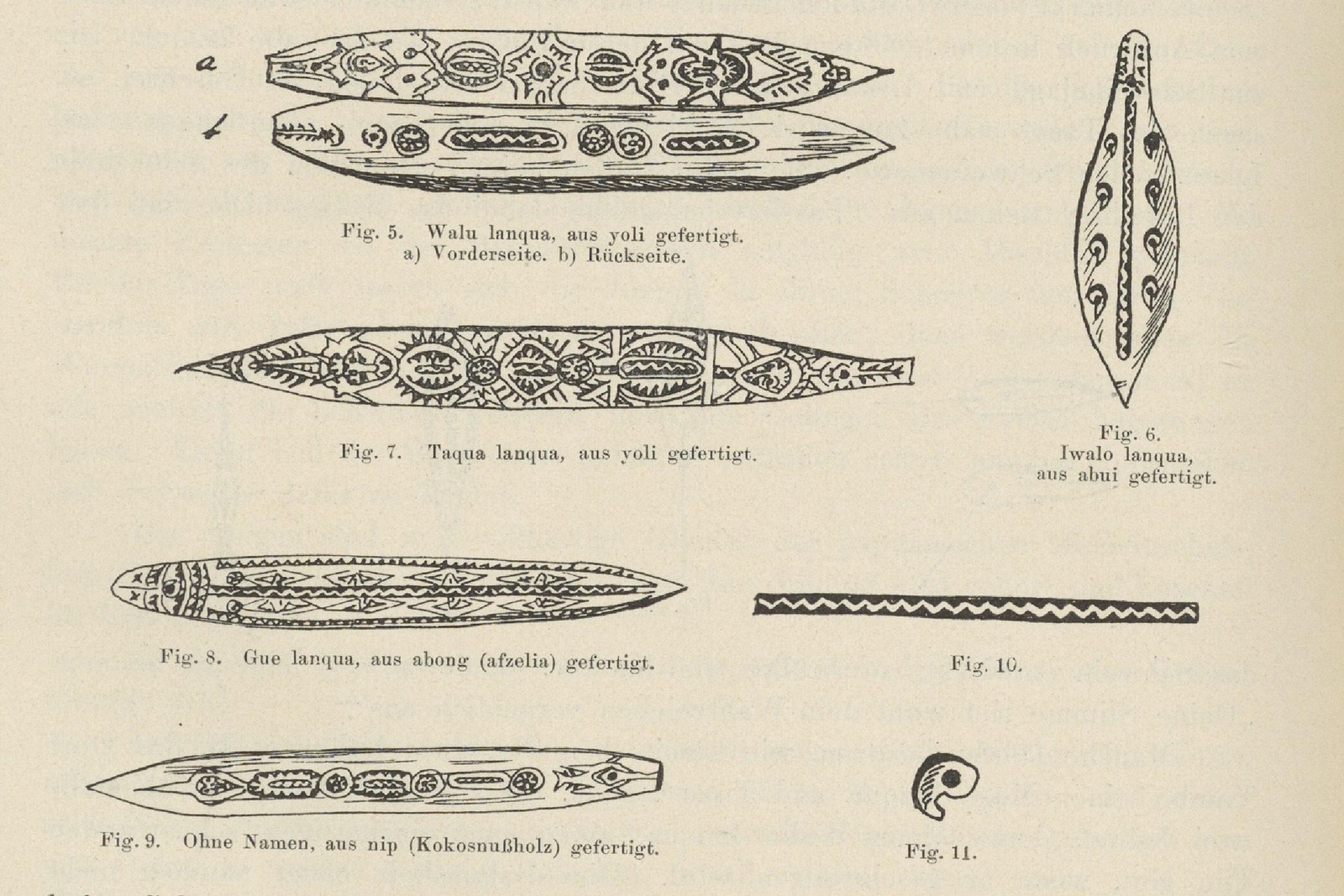
The same collapse recurs all over New Guinea and never quite in Australia. The Marind-anim roarer is sosom, and Sosom is the giant dema who comes with the southeast monsoon to swallow the initiates and give them back; the Keraki next door call him sosa. In the Purari Delta the roarer is imunu viki, “the crying spirit,” and the same imunu names the wickerwork monster of the men’s house, the kaiaimunu. On Kolepom he is Jet. Among the Bush Kaliai he is Varku, whom the woman Kewak owned first as Arku before the men took him and renamed him.
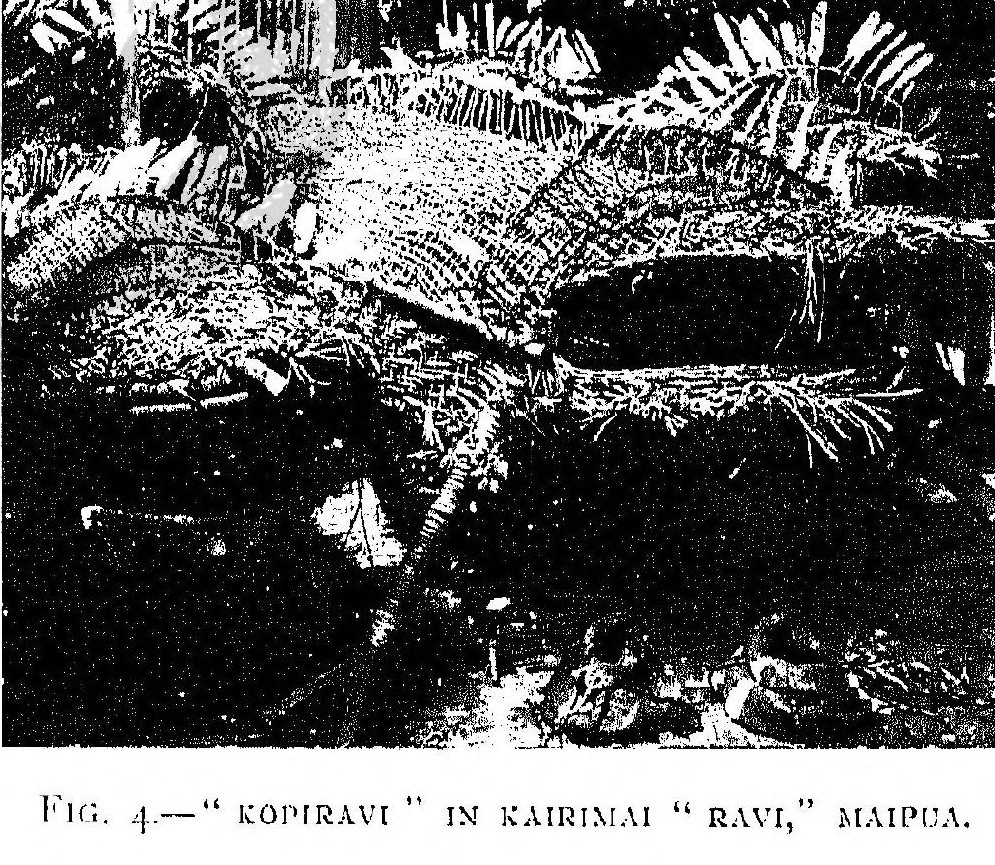
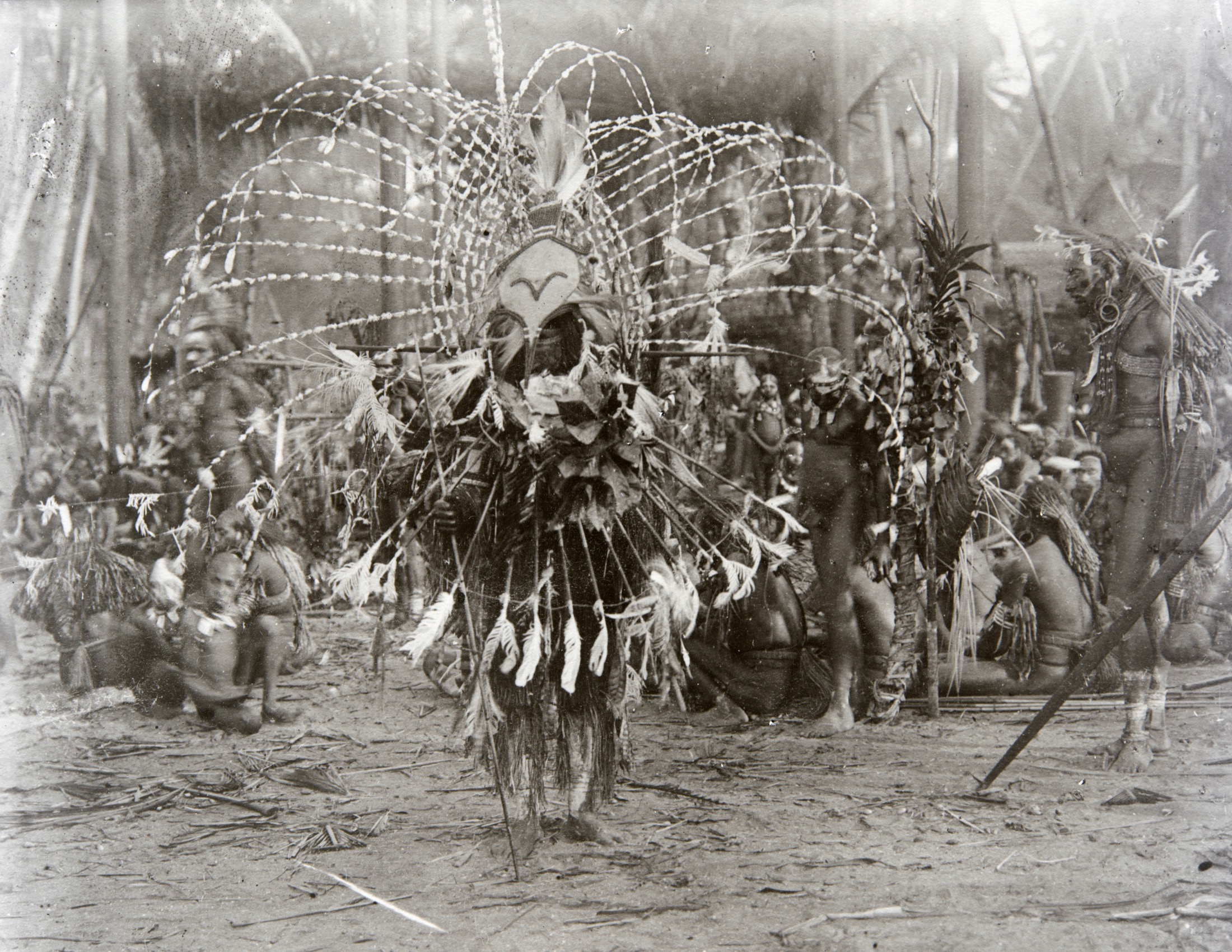
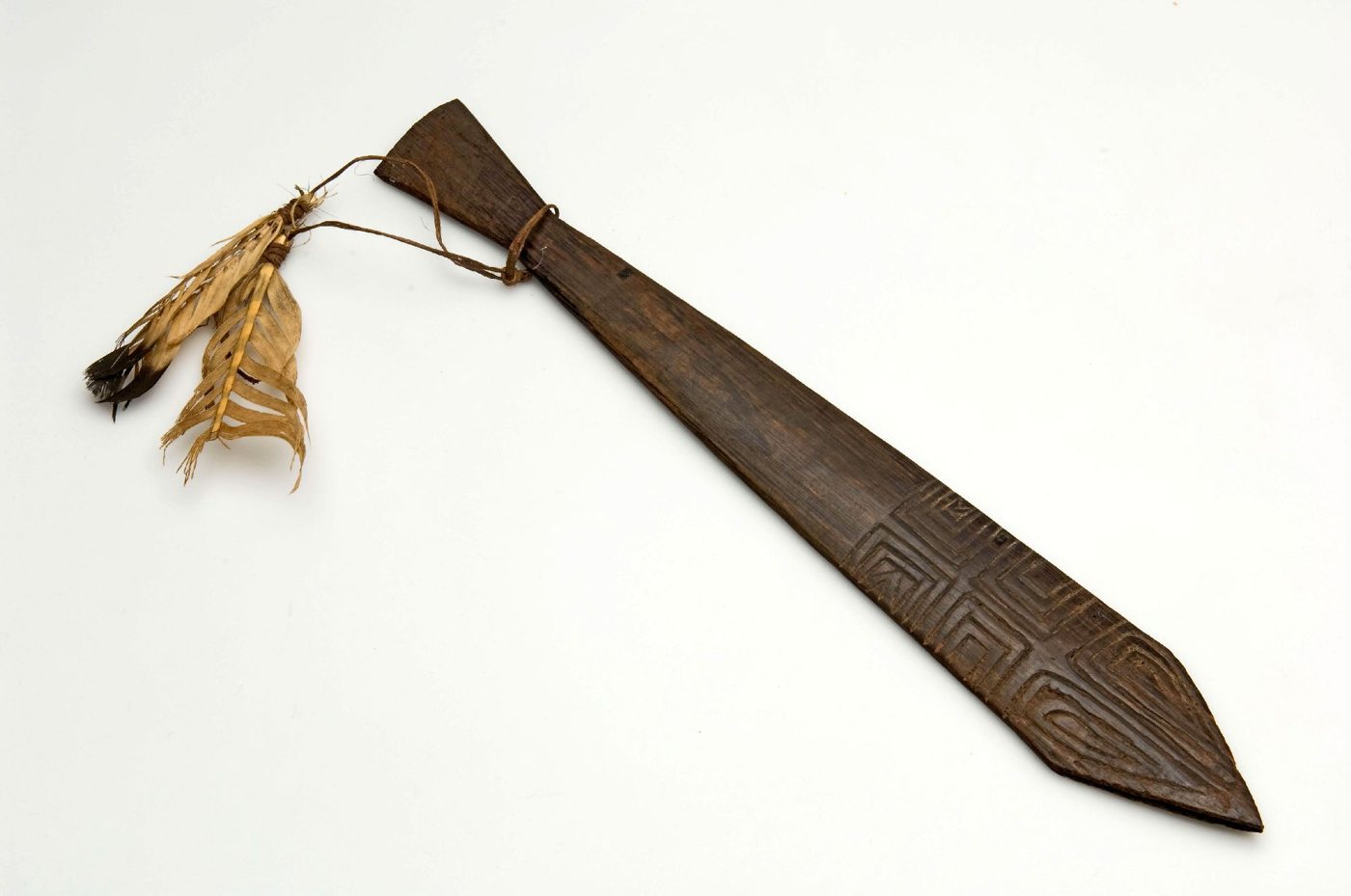
Australia has the same theology and holds it differently. In the centre the men keep a secret instrument-word — Urabunna chimbaliri, Arrernte churinga irula — while the being has a separate public name, and it is the public name that the women are told the sound belongs to: Witurna, who carries the boys off, cuts out their insides and returns them men. In the southeast the roarer is the voice of Dhurramoolan, whom the All-Father Baiame destroyed and whose voice he then put into the trees, so that every blade split from a tree speaks with it. Same complex, split in two: an instrument-name for the initiated, a spirit-name for the public. That is what a tradition looks like after it has been carried a long way and rebuilt around a local secret. The undivided form — one word, one being, no partition — sits in the north.
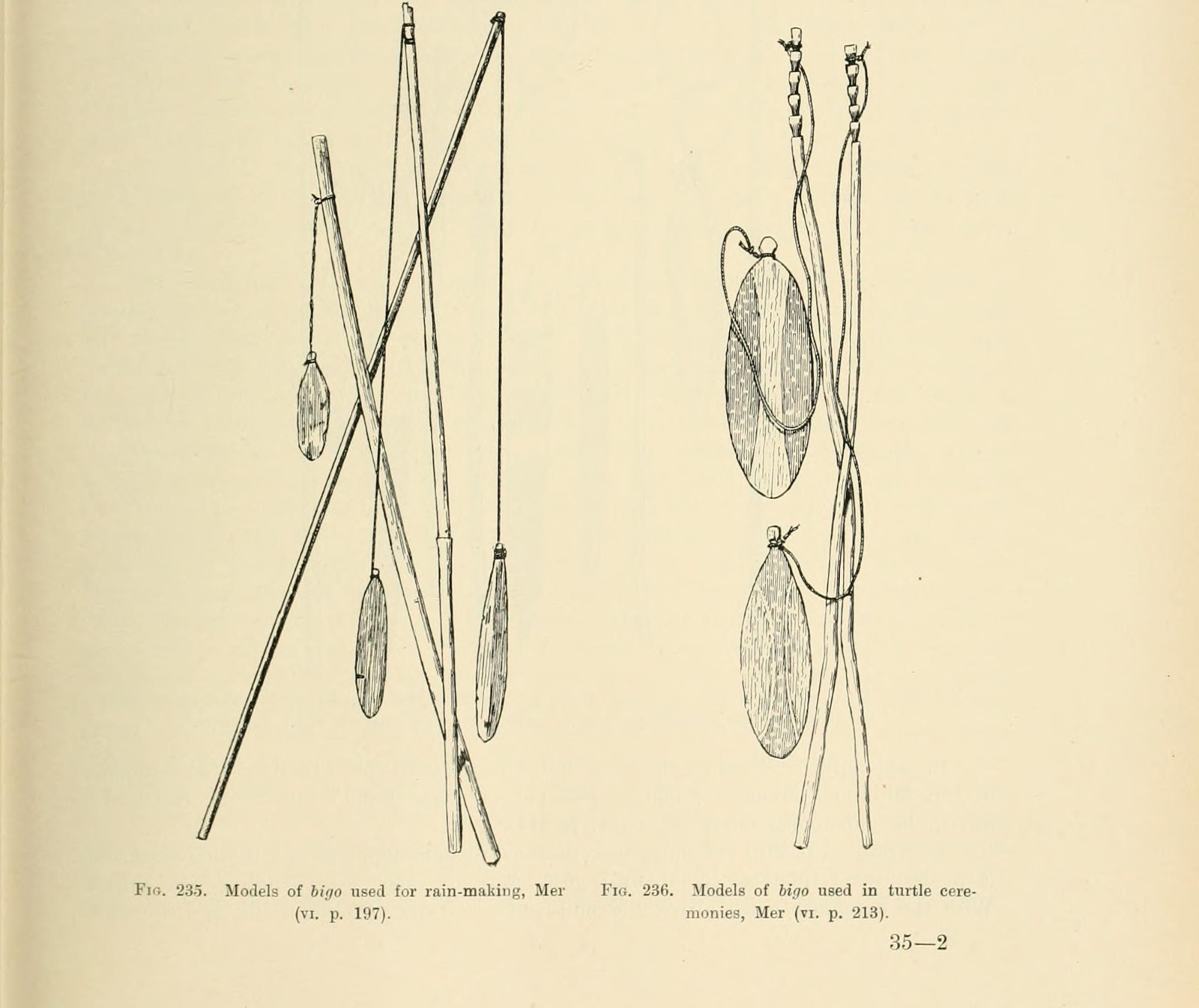
And when the sources name a route, they name it locally and they name it crossing water. Haddon set both halves of the Strait tradition down side by side: on the mainland “a woman discovered a bullroarer somewhere near Bugi,” while “the Kiwai version is that some Kiwai men brought the bullroarer from Boigu” — Boigu being the northernmost island of the Torres Strait, a few kilometres off the New Guinea coast and inside modern Australia (Reports of the Cambridge Anthropological Expedition to Torres Straits, I, 1935, p. 220). The Kiwai madubu, whirled inside a fenced patch of bush barred to every woman, was for making the yams grow. On Mer, at the other end of the Strait, the miniature bigo hung on the rain-charm.
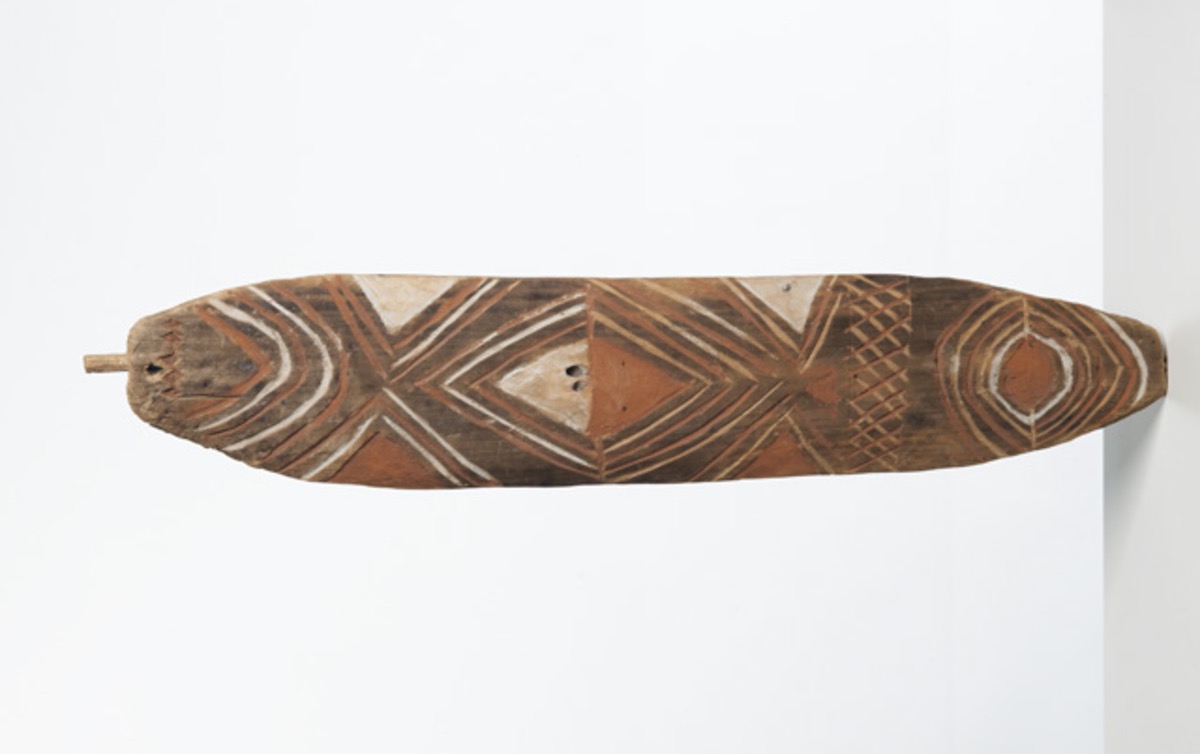
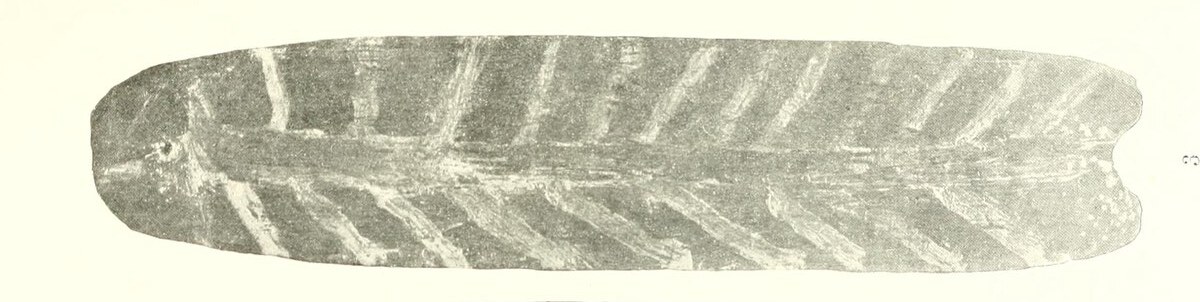
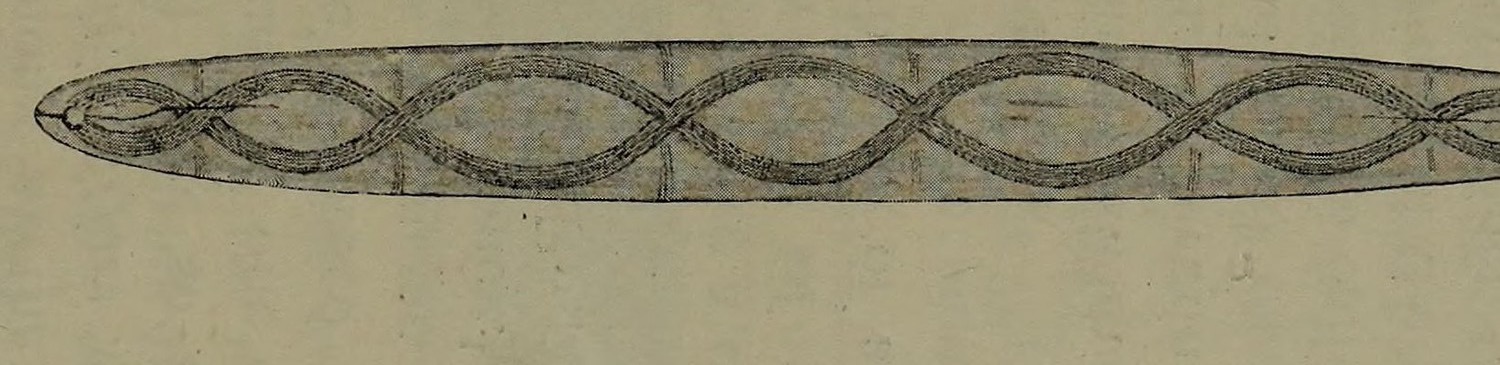
Now look at what the instrument turns into on the far side of the water. In Central Australia the roarer becomes the churinga — not merely an instrument but a sacred object stored in a cave, the material body of an ancestor, inseparable from the totemic estate. Spencer and Gillen’s figure of the wooden purtuli tied to Katakitji’s snake-totem waterhole shows the endpoint: a bullroarer that has become a title deed to country. That is what a travelling ritual object does when it settles. It grows roots.
The answer nobody ordered
The remarkable thing about the question of how the bullroarer came to Australia is how little work has been done on it. One reviewer’s paragraph in 1997, resting on one distribution map, has stood for thirty years as the settled view, and it was never tested against the island it described. Meanwhile the evidence that bears on it has been accumulating in four separate literatures that rarely cite each other: the Central Australian ethnography, the Cape York cult studies, the historical linguistics of Sahul, and the genomics of the last decade. Laid side by side, they say one thing.
They say that Australia has always received. Corroborees come down from the north; the class systems came down from the north; the initiation rites came down from the north, and the people whose rites they were said so. The dog came from the north. The language of seven-eighths of the continent was born in southern Cape York and spread southwest with almost nobody carrying it. The hero cults of the peninsula are New Guinea cults that got wet. And the bullroarer — whose fullest, least-divided, most theologically elaborate form sits on the Huon Gulf and the Sepik and the Purari, a thousand kilometres and more from any Australian shore — came the same way, through the same door, and then went south for the length of a continent until it reached the Kurnai on the coast of Victoria and could go no further.
This is not the story anybody wanted. There is a romance in the other direction — the oldest continuous culture on earth as the wellspring of the world’s mystery cults, the deep south exporting its secrets to the tropics — and there is a professional discomfort with diffusion that has kept the question politely unasked for two generations. But a map of a thousand particular places is not sentimental, and it does not care which answer is more flattering. Plot the instrument where it was actually found, read what the fieldworkers actually wrote, and the arrow points one way. That is the way the cookie crumbles.
Explore the interactive map, browse the Oceania records, or follow the garden-and-weather strand in Thunder Before the Plow.
Key sources
- Spencer, Baldwin & F. J. Gillen. The Northern Tribes of Central Australia. London: Macmillan, 1904 — pp. 17–20 for the north-to-south rule, the “tide of change” and the eight-class spread; p. 18 for circumcision and subincision “from the north.” And The Native Tribes of Central Australia. London: Macmillan, 1899 — p. 422 (the eight names “did originate in the north”), p. 596 (the boomerang trade route south to Lake Eyre).
- Thomson, Donald F. “The Hero Cult, Initiation and Totemism on Cape York.” Journal of the Royal Anthropological Institute 63 (1933), pp. 453–537. With McConnel, Ursula. “Totemic Hero-Cults in Cape York Peninsula, North Queensland.” Oceania 6 (1936); and Sharp, Lauriston. “Tribes and Totemism in North-East Australia.” Oceania 9 (1939).
- Nichols, Johanna. “Modeling Ancient Population Structures and Movement in Linguistics.” Annual Review of Anthropology 26 (1997), pp. 359–384 — the Australia–New Guinea structural pools and the northeastern Pama-Nyungan homeland.
- Dixon, R. M. W. “Origin Legends and Linguistic Relationships.” Oceania 67:2 (1996), pp. 127–140.
- Malaspinas, Anna-Sapfo, et al. A genomic history of Aboriginal Australia. Nature 538 (2016), pp. 207–214; with Bowern’s companion linguistic phylogeny and the Willerslev remark as reported in Science, 2016. And Wasef, S., et al. A contextualised review of genomic evidence for gene flow events between Papuans and Indigenous Australians in Cape York. Quaternary International (2021).
- McLean, Mervyn. Diffusion of Musical Instruments and their Relation to Language Migrations in New Guinea. Kulele: Occasional Papers on Pacific Music and Dance 1. Boroko: National Research Institute, 1994. Reviewed by Jeremy Montagu, The Galpin Society Journal 50 (1997), pp. 251–253 (the quoted passage at p. 252).
- Haddon, A. C. Reports of the Cambridge Anthropological Expedition to Torres Straits: vol. IV (1912), figs. 235–236 for the Mer bigo; vol. I (1935), p. 220 for the Bugi and Boigu traditions. See the Kiwai madubu and Meriam bigo records.
- Neuhauss, R. Deutsch-Neu-Guinea, Bd. III (1911), pp. 410–413 (S. Lehner, ‘Die Bukaua’) for the balum–lanqua naming grammar; Frazer, J. G. The Belief in Immortality and the Worship of the Dead, I (1913), pp. 290–291, for the Kai Ngosa, “Grandfather”; Reche, O. Der Kaiserin-Augusta-Fluss (1913), pp. 349–351 for the Sepik swallowing-spirit; Wirz, Paul, Die Marind-anim von Holländisch-Süd-Neu-Guinea, II (1922), pp. 25, 86, for Sosom’s westward limit.
- McCarthy, Frederick D. “Trade in Aboriginal Australia, and Trade Relationships with Torres Strait, New Guinea and Malaya.” Oceania 9–10 (1939). Roth, W. E. Ethnological Studies among the North-West-Central Queensland Aborigines (1897) for the Molonga; its twenty-five-year, sixteen-hundred-kilometre career was traced by D. J. Mulvaney, “The chain of connection” (1976).
- Strehlow, Carl. Die Aranda- und Loritja-Stämme in Zentral-Australien (1907–1920); the “wandering myth” passage at Strehlow 1908, p. 10. For Worms on an Arrernte migration from New Guinea, see the survey of his diffusionist writings in German Ethnography in Australia (ANU Press, 2017).
The reading offered here — that the undivided northern naming of the roarer (balum, sosom, ngosa) is the upstream form of Australia’s partitioned instrument-name and spirit-name — is, as far as we know, original to this page.