No. MUS2026-162
Gugu Yalanji-area jinna-juronggor wind charm
Australia · Butcher's Hill · Boggy Creek Reserve southwest of Cooktown
Sacred / spirit
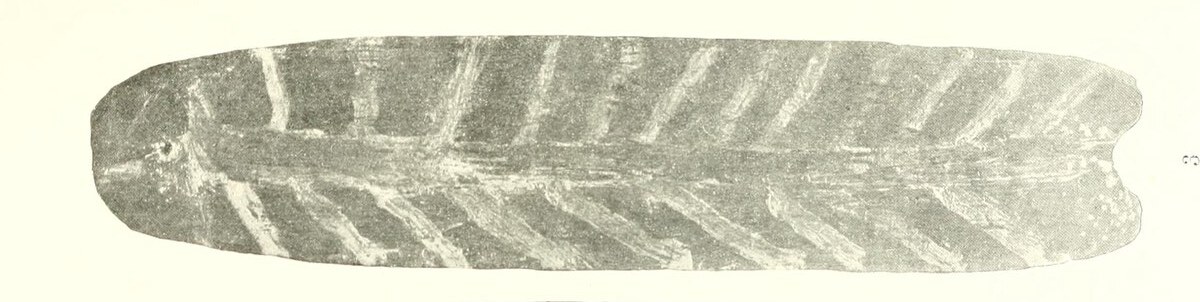
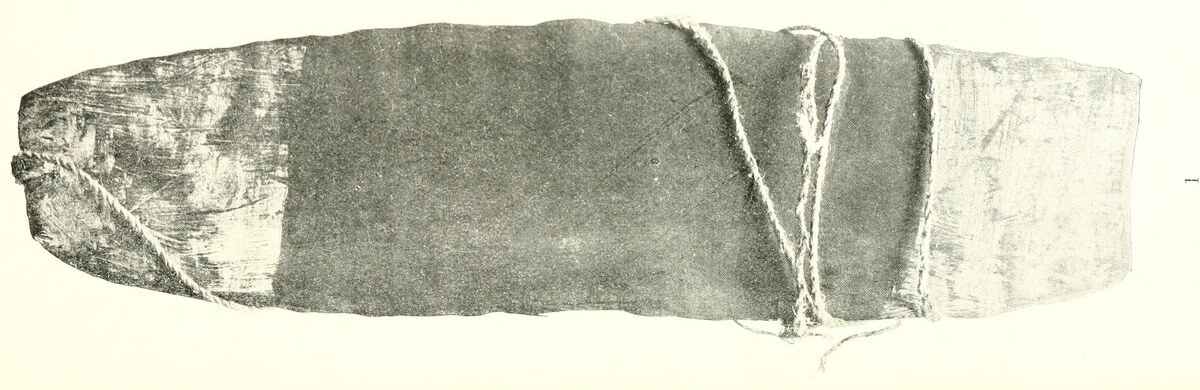
jinna-juronggor
Source term: form of roarer / charm or whirler
jinna-juronggor: local name for the painted protective whirler.
At Butcher's Hill southwest of Cooktown, a painted wooden jinna-juronggor hung beside a baby. The breeze set its corded blade spinning, and the moving charm protected the child. Walter Roth found the same roarer form around Cooktown and the Bloomfield River, where anything near or beneath its white-striped red blade became taboo. Two Gugu Yalanji-area examples survive in the Australian Museum, still preserving their bark-fibre strings.
A painted wooden charm or whirler was hung in a breeze near a baby, so that it would spin around in the wind and protect the child.
Khan 1993:164, summarizing Roth Bulletin 11
Particulars
- Object
- Painted oblong wooden plate, 22.7 x 5.4 cm, with 29 cm hand-spun bark-fibre string through a terminal hole and gum cement at the perforation. A companion blade is 29.3 x 8.3 cm with 60.2 cm string.
- Function
- Hung in a breeze near a baby so it spun in the wind and protected the child; Roth also says this roarer form made things near or beneath it taboo.
Source
Kate Khan, Catalogue of the Roth Collection, vol. 1 (1993), p. 164, exact objects E.13712-E.13713; Walter Roth, Bulletin 11 (1908), p. 75