Atlas Essay —
Thunder Before the Plow
Ice Age France · the Neolithic Tigris · the Pueblo Southwest · the Great Basin · Torres Strait · the Sudanic belt · Dionysiac Greece
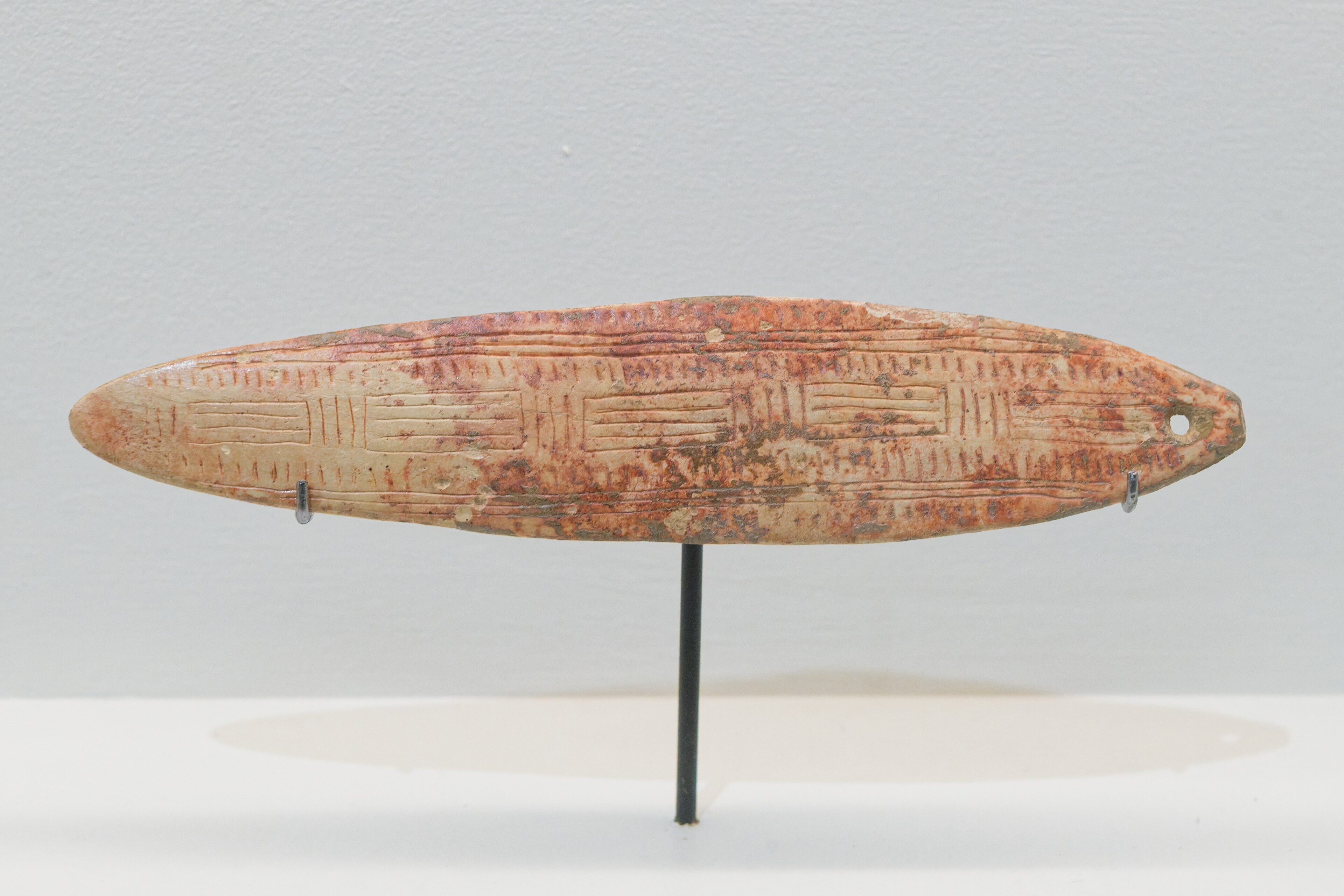
In a Dordogne rock-shelter a reindeer-antler blade lay ochred, drilled at one end, incised with ranked lines and dots and shaped, an excavator wrote, into a fish without a tail. It is twelve thousand years old, and when a replica is swung on a cord it does exactly what its Australian and Amazonian cousins do: it roars. The bullroarer is not a curiosity of the mystery cults. It is one of the oldest instruments on earth, and the mysteries are its last sacred stop, not its beginning. Follow it back far enough and a second thing comes clear — before it was ever pointed at a crop, it was pointed at the weather. The plow is late. The thunder is old.
In brief
- An accepted Ice Age corpus of about thirty-four Franco-Cantabrian bullroarers runs back through the Magdalenian; the Lalinde type-specimen is roughly 12,000 years old, and its replica roars (Dauvois 2018).
- Behind it, Michel Dauvois puts the type older still — the Pavlovian of central Europe, around 24,000 BC — and an independent Neolithic Near-Eastern group carries it to the threshold of history: Körtik Tepe's serpent-carved grave plaques, Göbekli, Çatalhöyük. When the written record opens, in the Greek mysteries, the instrument is already sacred.
- The Americas were peopled from Beringia before farming existed anywhere, and the roarer crossed with the foragers as a weather instrument. Where Americans later farmed, they turned the old thunder on their fields: the Hopi whirl it to compel “the wind and rain to come to the aid of the crops,” and the Wauja and Mehinaku spin it at the pequi harvest with the women shut indoors.
- Great Basin foragers keep the densest wind-roarer tradition on earth with no crops at all (Ute, Paiute, Shoshoni); Siberia matches.
- In the Old World the crop-roarer appears exactly where farming later spread — the New Guinea lowlands and the Sudanic belt — and is caught mid-recruitment at two farming/foraging seams, the Pueblo Southwest and Torres Strait.
- Europe kept thunder in the names: Dionysos Bromios, “the Roarer,” in the mysteries, and, after the cult died, the Scots thunner-spell and the Croatian grmavica.
Start at the Ice Age anchor and read outward — open the Lalinde bullroarer on the map, or trace the serpent thread that runs through this essay with the Snake-linked lens.
The bullroarer is a Palaeolithic instrument that reaches the Greek mysteries with roughly fifteen thousand years of documented depth behind it, and its first work was the weather. Foragers from the Kalahari to the Great Basin whirl it to raise the wind, turn the thunder and call the rain, and they carried it into the New World before anyone on earth had planted a seed. Among the peoples who planted nothing, from Arnhem Land to the Kalahari, no roarer on record is set over a plant. Farming, when it came, did not invent a new instrument; in the Old World and the New it took the old weather-worker and turned it on the crop. The weather layer is old. The crop layer is laid on top of it.
Older than farming
Older than farming anywhere on earth. Three Ice Age horizons carry the instrument, each deeper than the last.
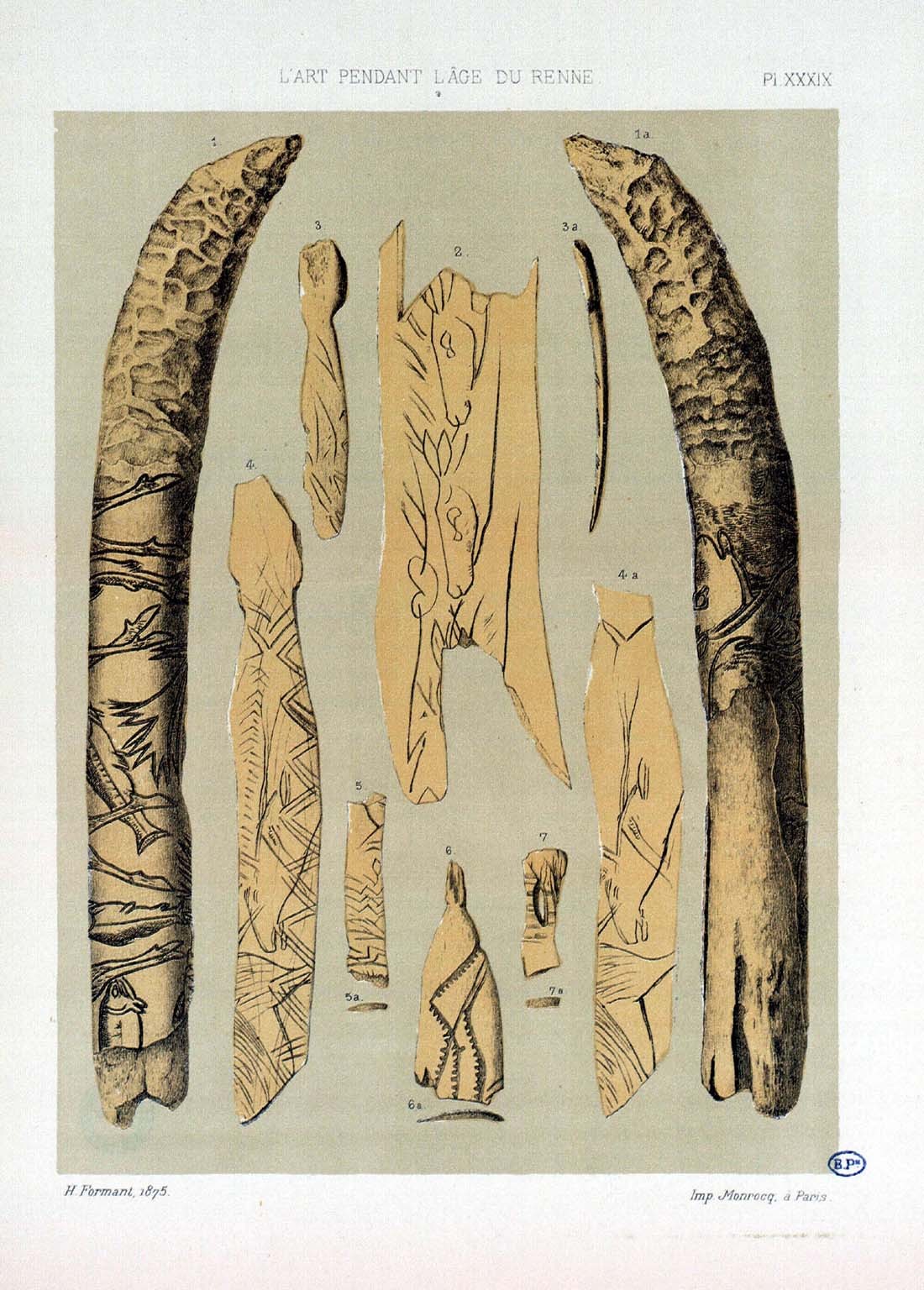
The Magdalenian is solid ground. The type-specimen is the ochred reindeer-antler blade from La Roche de Birol at Lalinde, which Denis Peyrony published in 1930 as a rhombe and Henri Breuil hailed as the first complete Magdalenian churinga — the Australian analogy that named the whole field. Behind the holotype stands a genuine corpus of about thirty-four bramaderas across Cantabrian Spain, the Pyrenees, and the Dordogne, catalogued by Ignacio Barandiáran Maestu: Laugerie-Basse, Bourrouilla (which yielded ten pieces alone), Lortet, Le Morin, El Pendo, Isturitz. Michel Dauvois settled the physics. A true rhombe, he showed, is thin — its thickness about a seventh of its width — so that as it circles the swinger it also spins on its own axis, and it is that double gyration, la double giration, that produces the instrument's characteristic drone. He built and swung experimental replicas; his copy of the Lalinde blade sounds.
Behind the Magdalenian, the trail runs deeper. The Solutrean is named in the literature, though its best-known piece, Badegoule, went into print as a rhomboidal bone pendant, and Dauvois's thickness rule prunes the look-alikes. The deep floor is Gravettian, and the claim is Dauvois's own. The much-repeated “oldest bullroarer, Ukraine, 17,000 BC” is a dead meme — it traces to a single uncited line and points at the Mezin mammoth-bone percussion set, not a roarer. The real claim is better: in western Europe the rhombes appear not much before the Solutrean, “alors qu'ils sont plus anciens en Europe Centrale, au Pavlovien (environ –24 000)” — older in central Europe, in the Pavlovian, around 24,000 BC, the culture of the Dolní Věstonice Venus and the first fired clay. Dauvois points to no single figured Pavlovian piece, and the reason is the instrument's oldest habit: a bullroarer parted from its cord is indistinguishable from an ornament, and the candidates hide in plain sight among the elongated, perforated ivory “pendants” of the Moravian sites.
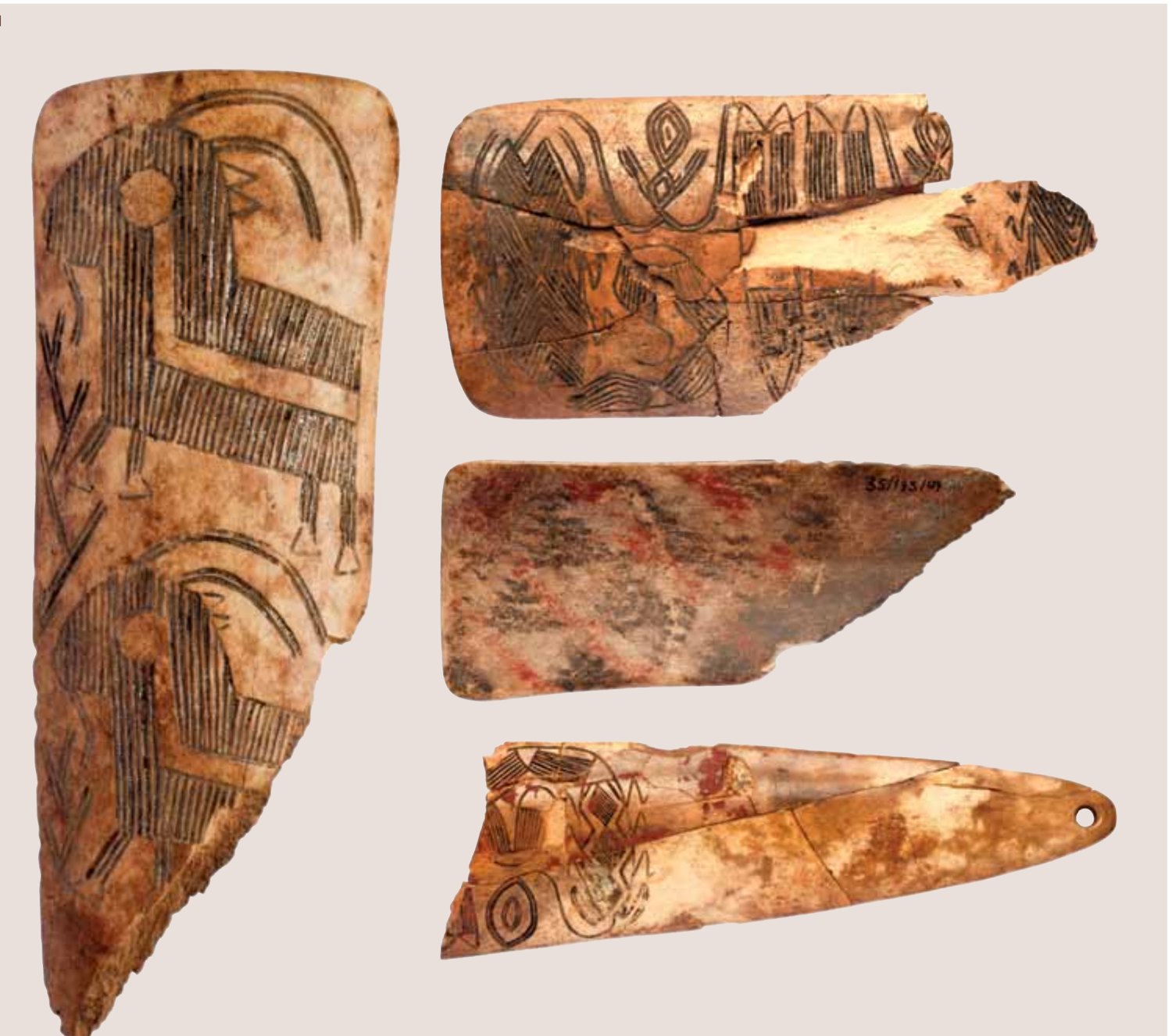
Move east, as the Ice Age ends, and the instrument re-appears, not obviously descended from the European corpus but strikingly convergent in form. Oliver Dietrich and Jens Notroff assembled thirteen elongated, one-end-perforated decorated bone “spatulae” from Pre-Pottery Neolithic sites and asked whether they are bullroarers, building a hardwood replica that hums. The most suggestive node is Körtik Tepe, where seven decorated plaques come from graves, perforated at the narrow end and carved with goats and, unmistakably, serpents — a single snake with a triangular head, a band of three snakes as hatched rhomboids. The earliest plausible Near-Eastern roarers are grave goods that carry serpent iconography, carrying the serpent's voice back into the Neolithic. At Göbekli Tepe three bone spatulae join them, one apparently depicting the site's own T-pillars; at Çatalhöyük an antler object is identified as a bullroarer in the site's own worked-bone report, complete with polish and cord-wear at the perforation. A second, wholly independent deep-time strand runs through Neolithic Northeast Asia, where end-pierced jade blades — some in large-and-small pairs at Chahai and Xinglongwa — show the same “end-pierced blade in a grave, function un-asked” signature; it is a parallel, not a link in the European chain.
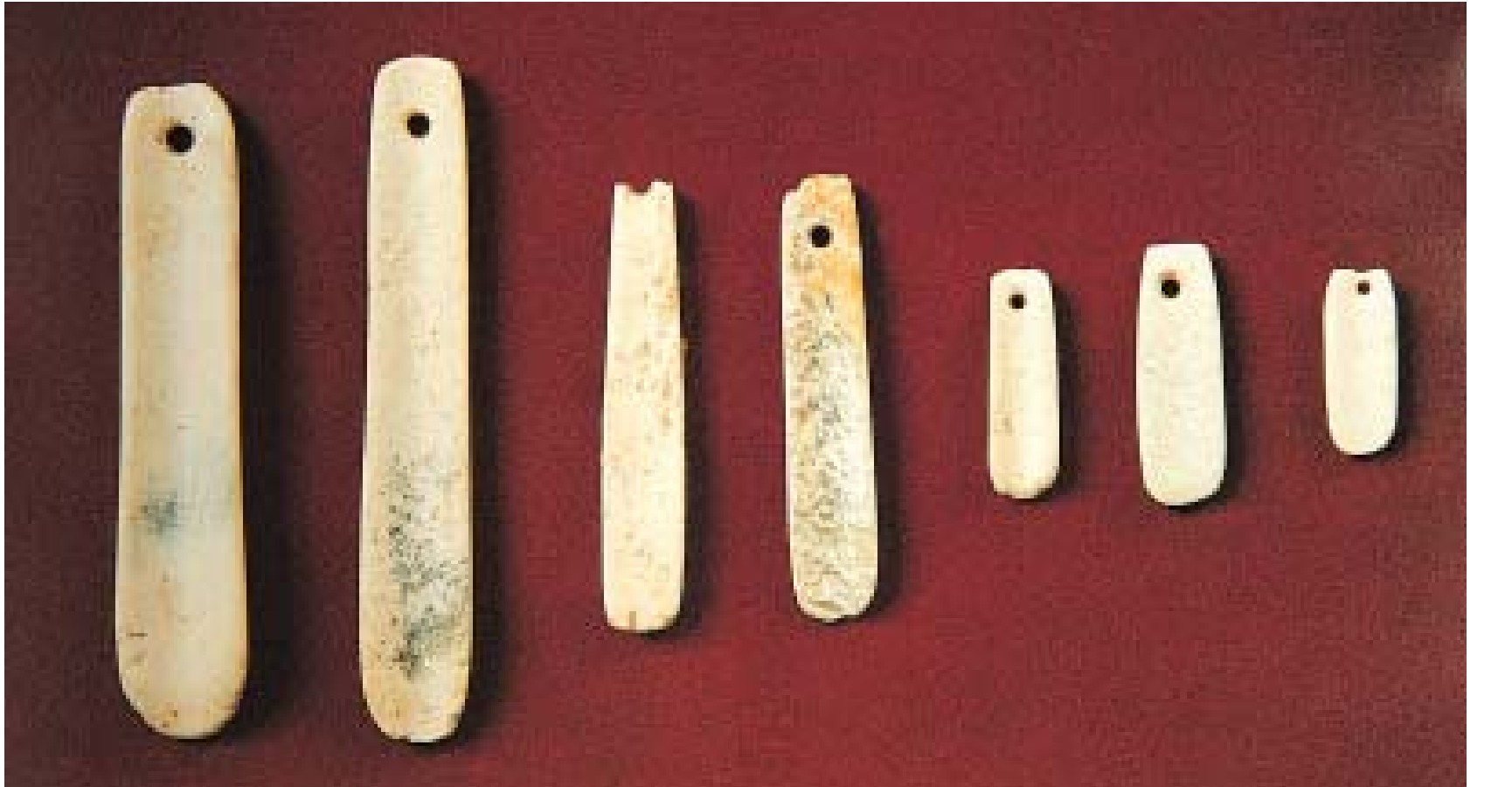
Then the instrument does what a secret instrument does: it vanishes from the record without vanishing from the world. The later Neolithic, the Bronze Age, and the Iron Age show no Minoan, Mycenaean, Cypriot, or pharaonic bullroarer from about 6,500 BCE to 330 BCE — and no one who knows the living instrument will find that strange. Everywhere it is documented, the roarer is the concealed thing: whirled at night, buried with the dead, kept from women and children on pain of death, hidden in the kiva between rites. Its everyday body is wood, which rots; the Ice Age pieces survive only because hunters cut them from bone and antler. An instrument whose whole office is to be heard and never seen is the last object a palace fresco or a temple relief would show. Two phantoms must be cleared from the bridge. The “Tutankhamun bullroarer” is a modern factoid, absent from the excavation records. The other is a broken wooden blade from Gebelein, 24 cm long and dated by its colouring and ornament to Naqada II, just before the First Dynasty, which Hans Hickmann noticed while cataloguing the Cairo Museum's instruments and published in 1955 as a Schwirrholz; the museum's own catalogue calls it a wooden model of a sacrificial knife, and Marcelle Duchesne-Guillemin, surveying the music of the pharaohs in 1981, found the bullroarer “totally absent from Egypt.” The first roarer on Egyptian soil is Ptolemaic and Greek: the rhombos named in the Orphic Gurôb papyrus, mystery material that happens to sit physically in Egypt. And when the record finally resumes, the instrument surfaces exactly where a secret survivor should: not in the open religion of the temples but in the mysteries, the one corner of Greek life organized around initiation, concealment, and terror in the dark — the backstreet rites Demosthenes sneered at in 330 BC, where a rival helped his mother daub her initiates with clay and bran. The roarer whirled in rites like hers already had the Ice Age behind it.
The Americas: thunder first, then corn
Depth alone does not tell you function. But there is one place on earth where the function was, in effect, laid out twice, in order — the Americas. The chronology is not in dispute. The founding populations crossed from Beringia by roughly sixteen thousand years ago; agriculture appears nowhere on Earth before about twelve thousand years ago; maize was domesticated in the Balsas valley of Mexico some nine thousand years ago, the Andean and Eastern-Woodlands complexes in the same Holocene window or later. Whatever the first Americans carried across, they carried it as foragers. Then, in isolation, three great farming civilizations arose independently — Mesoamerican maize, the Andes, the Mississippian Eastern Woodlands. If the roarer’s first work was the weather, the Americas should show it twice over: a forager weather instrument wherever no one farmed, and, where maize and the pequi groves came in, the same instrument turned on the crop.
They do. Where Americans farmed, they aimed the old thunder at their fields: the Hopi, Zuni and O'odham whirl it for rain on the corn, and in the Upper Xingu the Wauja and Mehinaku bring it out for the pequi harvest. Elsewhere in the maize world it lingers as a child's toy among the Lacandon and Mopan Maya, the Cherokee, the Catawba, or as a voice in the dark: an evil-spirit driver circled around a Pipil house at dusk, a Maleku diviner's instrument, a Ticuna girls'-puberty voice. Nothing in the hemisphere suggests the farmers needed a new instrument. They had one already, and it spoke with the sky. How the crop use travelled in the Old World is the subject of The Bullroarer and the Harvest.
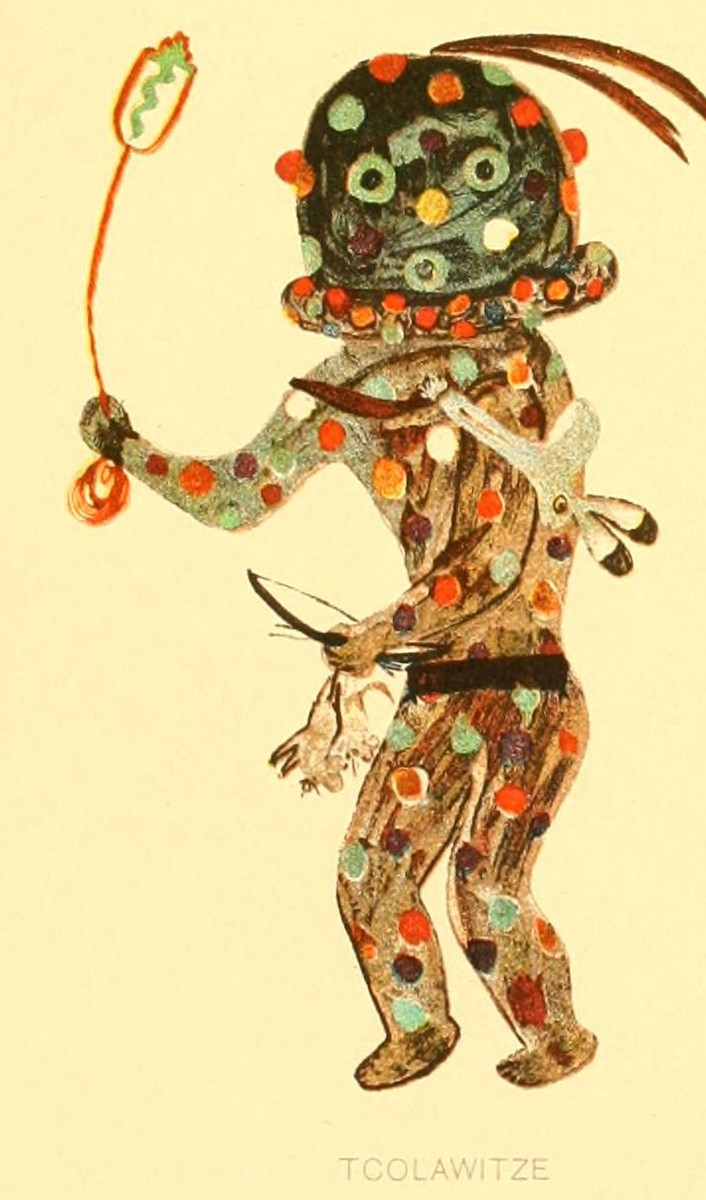
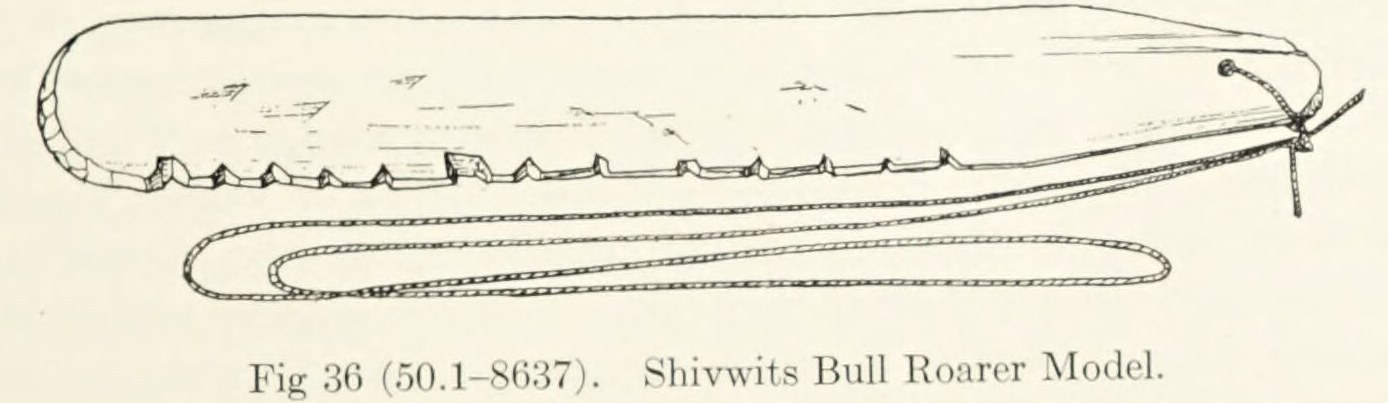
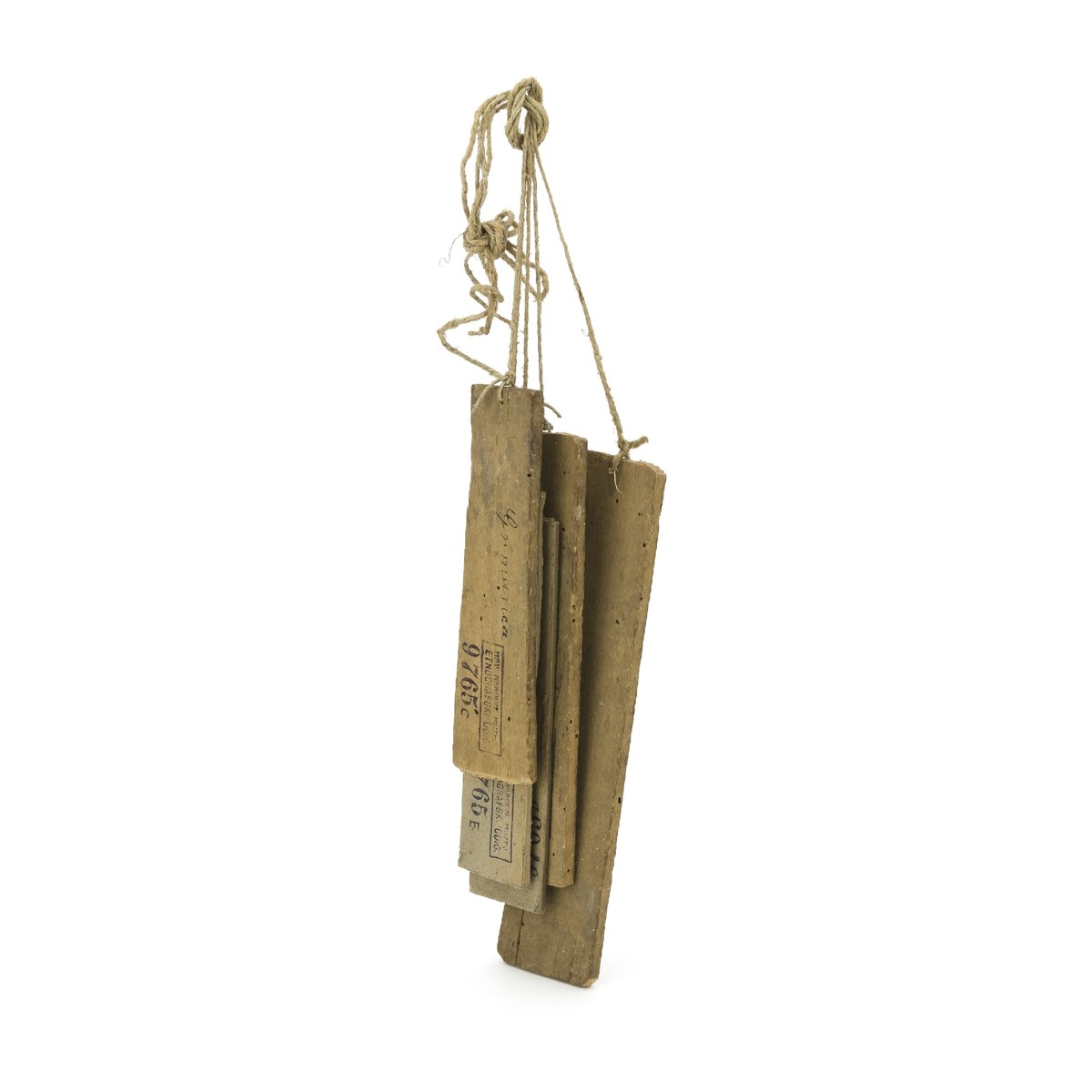
The arid Pueblo Southwest shows the recruitment plainly, and shows what was recruited. At Zuni it is whirled to summon the u'wannami rain-makers and gather the clouds. At Hopi the tovokìnpi is twirled by the kalektaka warrior who trails the Antelope priests in the Snake dance, imitating the thunder that accompanies the rain; John Bourke was told plainly that by making this sound they compelled the wind and rain to come to the aid of the crops. The Navajo whirl it to make a mimic rain-storm; among the Tewa of San Ildefonso it is kept out of sight in the kiva. This is a weather instrument aimed at corn: thunder-mimicry to call the rain. And next door it is the same instrument with its older face showing.
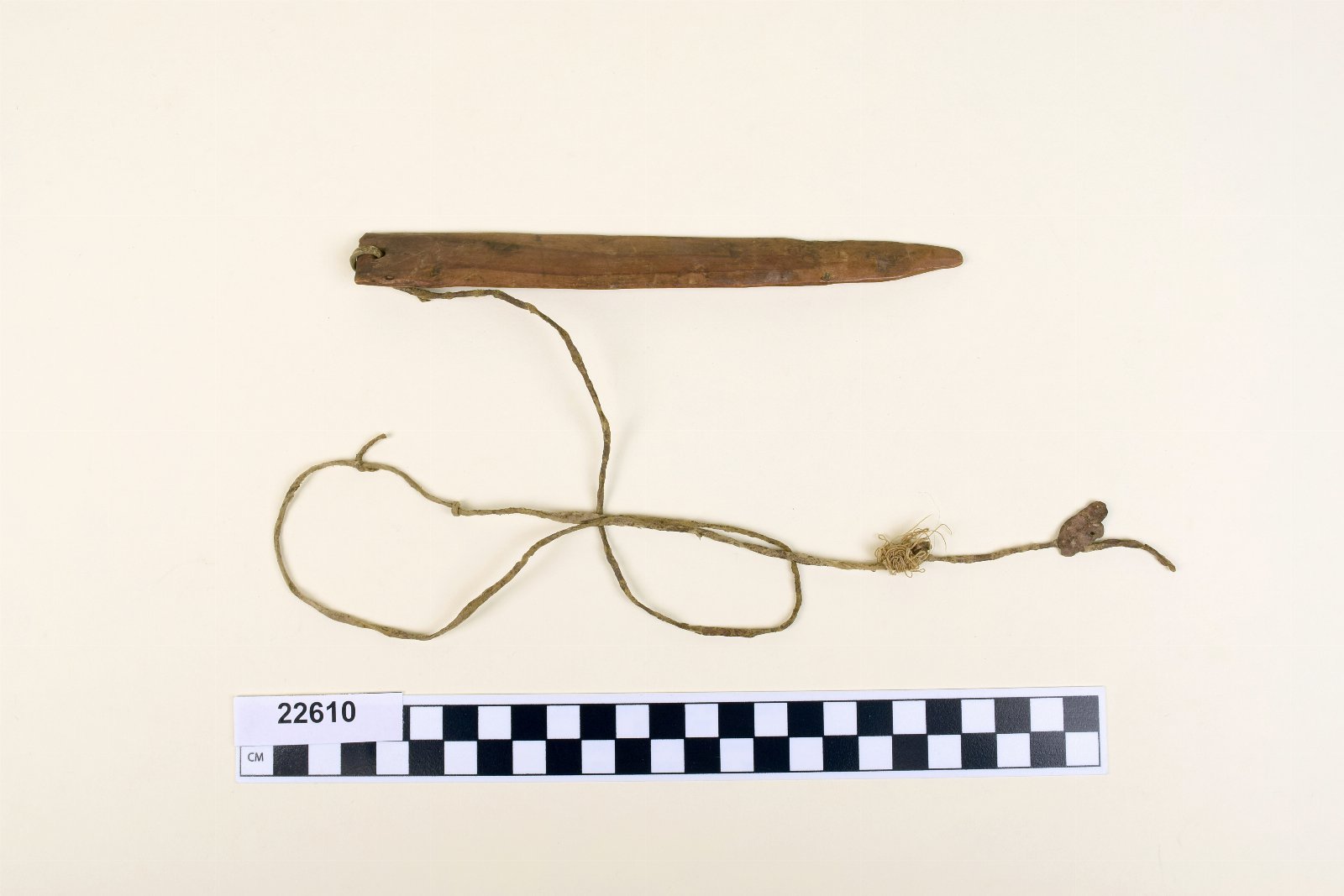
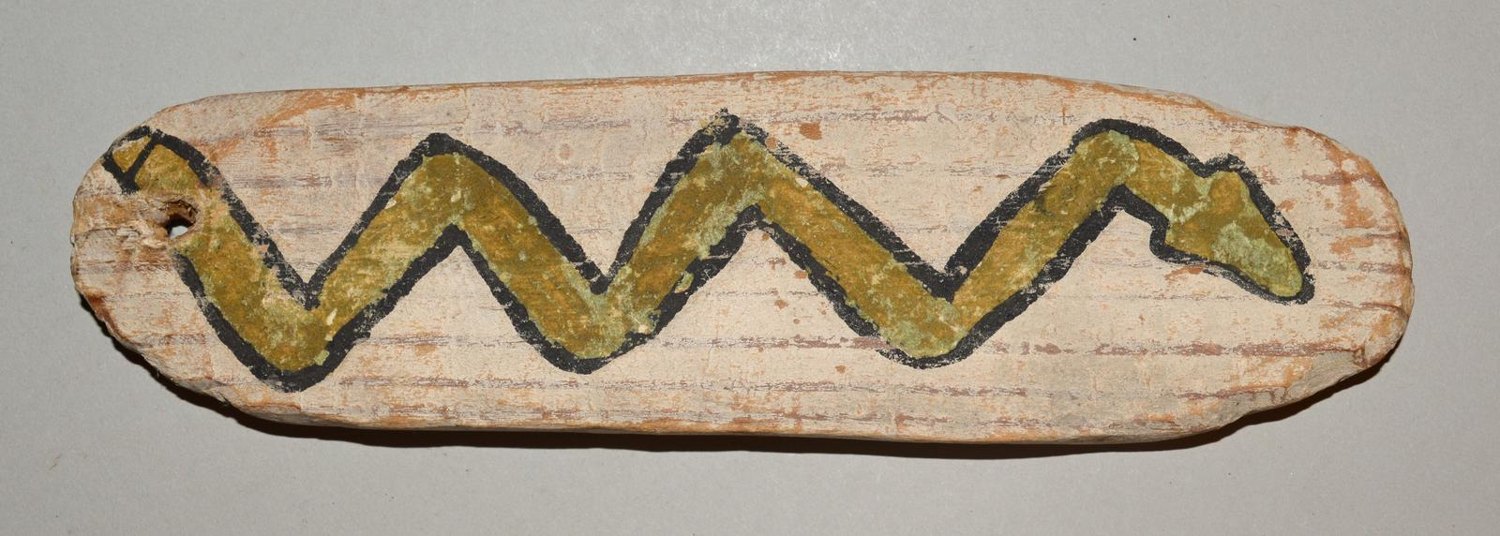
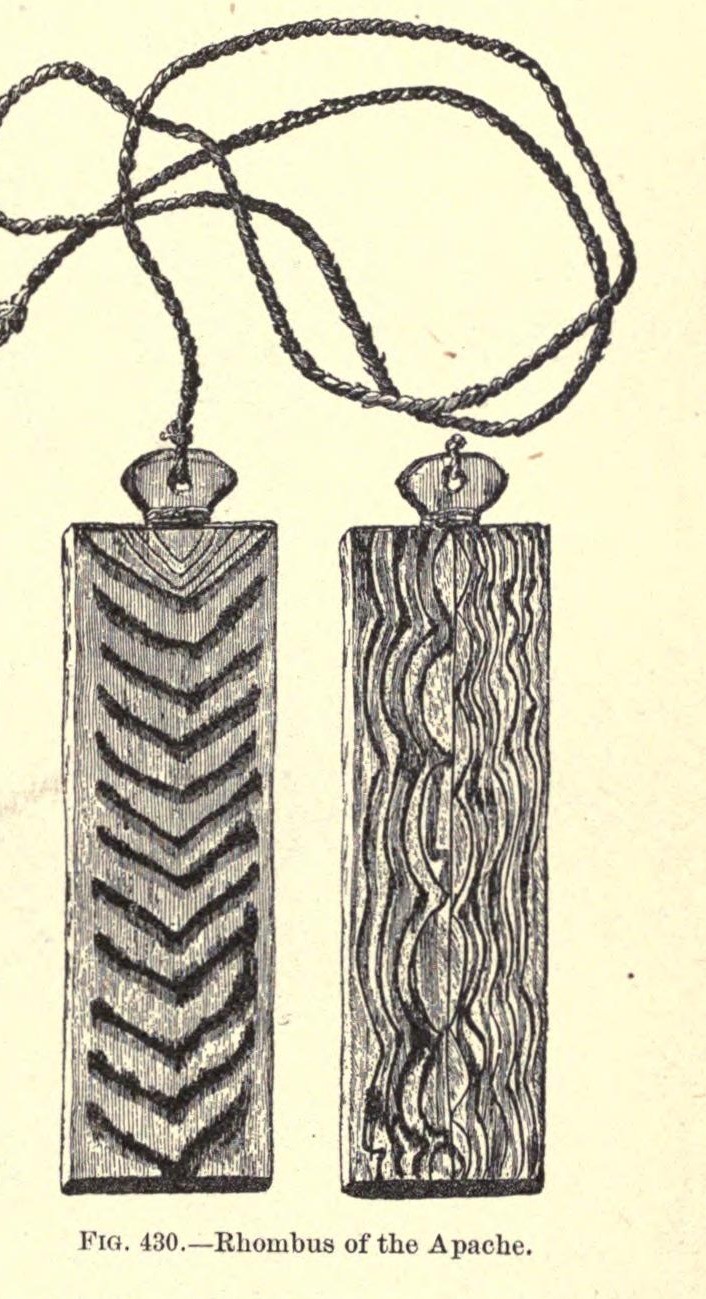
The Apache use the identical roarer — tzi-ditindi, “the sounding wood,” cut from lightning-struck mountain timber and belonging to the wind god — and when Bourke saw it carried in procession at San Carlos in 1884, it was because the season “had been unusually dry, and the crops were parched.” The god it speaks for is the wind’s, and the crops are what the wind and rain are asked to reach. The thunder-and-wind-god function is the constant; the corn is the local add-on wherever people happen to farm. And the same instrument shows its pre-agricultural face most vividly where there was never any farming to recruit it: the Great Basin. Across the Numic-speaking Ute, Southern Paiute, and Shoshoni — foragers nearly to a band — the roarer is the densest weather instrument on earth, and it has nothing to do with crops. The Moanunts and their neighbours make the wind blow and clear away the clouds; the Uncompahgre Ute stop the wind; the Surprise Valley Paiute whirl the kwi'mo to bring the warm south wind and melt the deep snow, and among the Harney Valley Paiute the wimo'to made the wind blow and “was no toy.” These peoples have no gardens. Their roarer is wind for hunting, warm wind to break the winter — not rain rationalized for a crop. Northward the forager weather-use runs on through the Subarctic, where Cree hunters sat up all night whirling it to bring the wind best for hunting, and it reaches across the Bering Strait to the Ainu rera-suyep, the “wind-swing,” sounded to raise a favourable wind for the deer. The foragers on both sides of the peopling corridor, in Siberia and the American West, share one profile: weather-heavy, crop-empty. William Buckner, assembling the same forager wind-roarers, allowed cautiously that “we cannot necessarily rule out… diffusion across Beringia.” The evidence lets us say it harder: on both sides of Beringia the forager's roarer worked the weather and spoke for spirits long before anyone in the hemisphere planted maize, and every corn rite came after.
The Neolithic re-aiming
In the Old World the crop layer follows farming outward from the Neolithic. In the New Guinea lowlands, horticultural society after horticultural society uses the roarer as a crop instrument. The Kiwai madubu is whirled so the gardens fill with yams, sweet potatoes, and bananas; in the garden rite a husband's and wife's mingled fluids are smeared on the blade so its swinging scatters the medicine across the field, and one roarer sent to England bore the label “the mother of the yams.” The Marind carry ritual semen home to spread through houses, plants, and bodies; the Bukawa and Yabim whirl it for the increase of taro while naming the dead; the Nara swing the beriwa over the gardens to make the crops grow. Where the roarer is agricultural here it is a growth instrument, pointed at the plant, not at the sky.
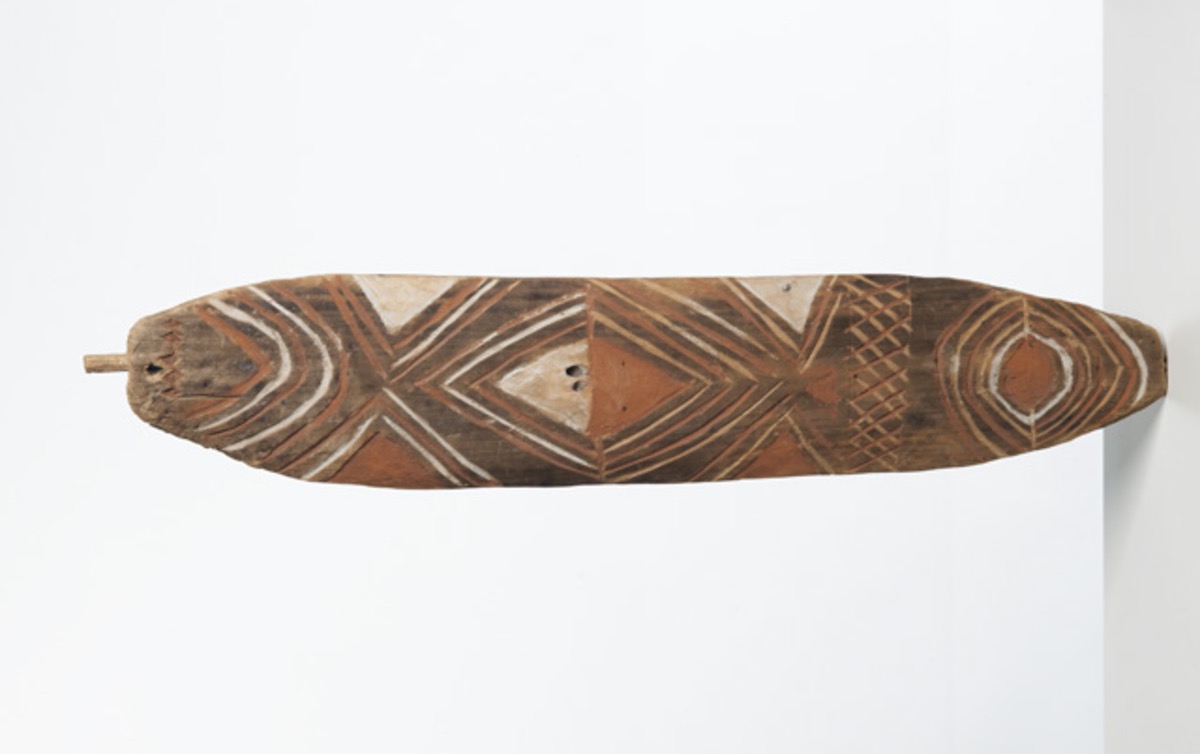
The same overlay lies over the African farming belt. Where the African roarer is agricultural it clusters in the Sudanic and Guinea cultures and reaches south to Owamboland: the Uukwaluudhi omathila rite that joins rain to sowing, the Verre harvest-cycle held to be the direct source of good yields. Boys from Kassena country to Nagaland and Borneo also whirl it in the fields, but only to frighten birds and monkeys off the grain, a scarecrow’s work rather than a rite. Against that whole belt sits Australia, where there is no crop-roarer at all: the Australian instrument is initiation, ancestor-voice, and, in the southeast, rain-making. The Sahul interior is a natural experiment of its own, holding foragers and farmers side by side, and the function tracks subsistence exactly — Australia kept the pre-agricultural uses, New Guinea's horticulture grew the crop function on top.
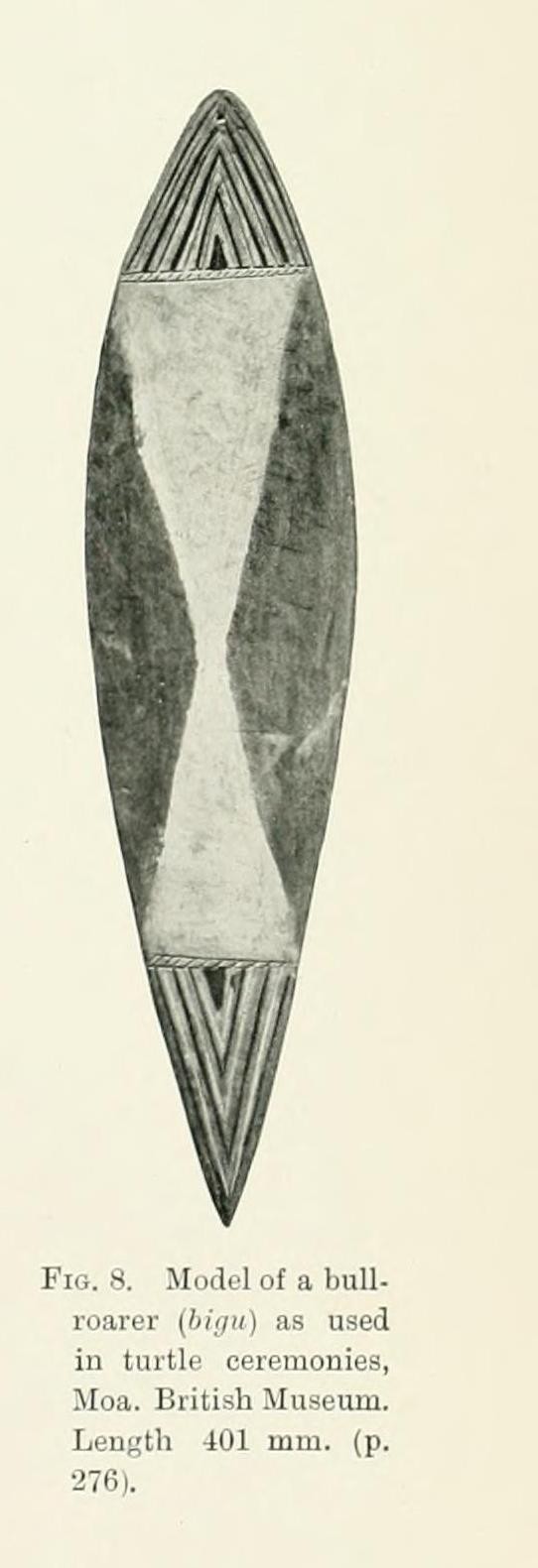
The most telling places are the seams, where you can watch the recruitment happen. The Pueblo Southwest is one: farmers whose roarer still speaks with the thunder, now aimed at the corn. Torres Strait is its Pacific mirror. Between farming New Guinea and foraging Australia, the gardener-fisher islanders show both functions on adjacent islands: Yam Island's bigu “belonged to sweet-potatoes and yams” and was whirled to make the crops grow, while the Meriam of Mer whirl the bigo in rain-making and the Moa islanders raise and quench the wind. The same transition, on both sides of the Pacific, at exactly the farming/foraging boundary.
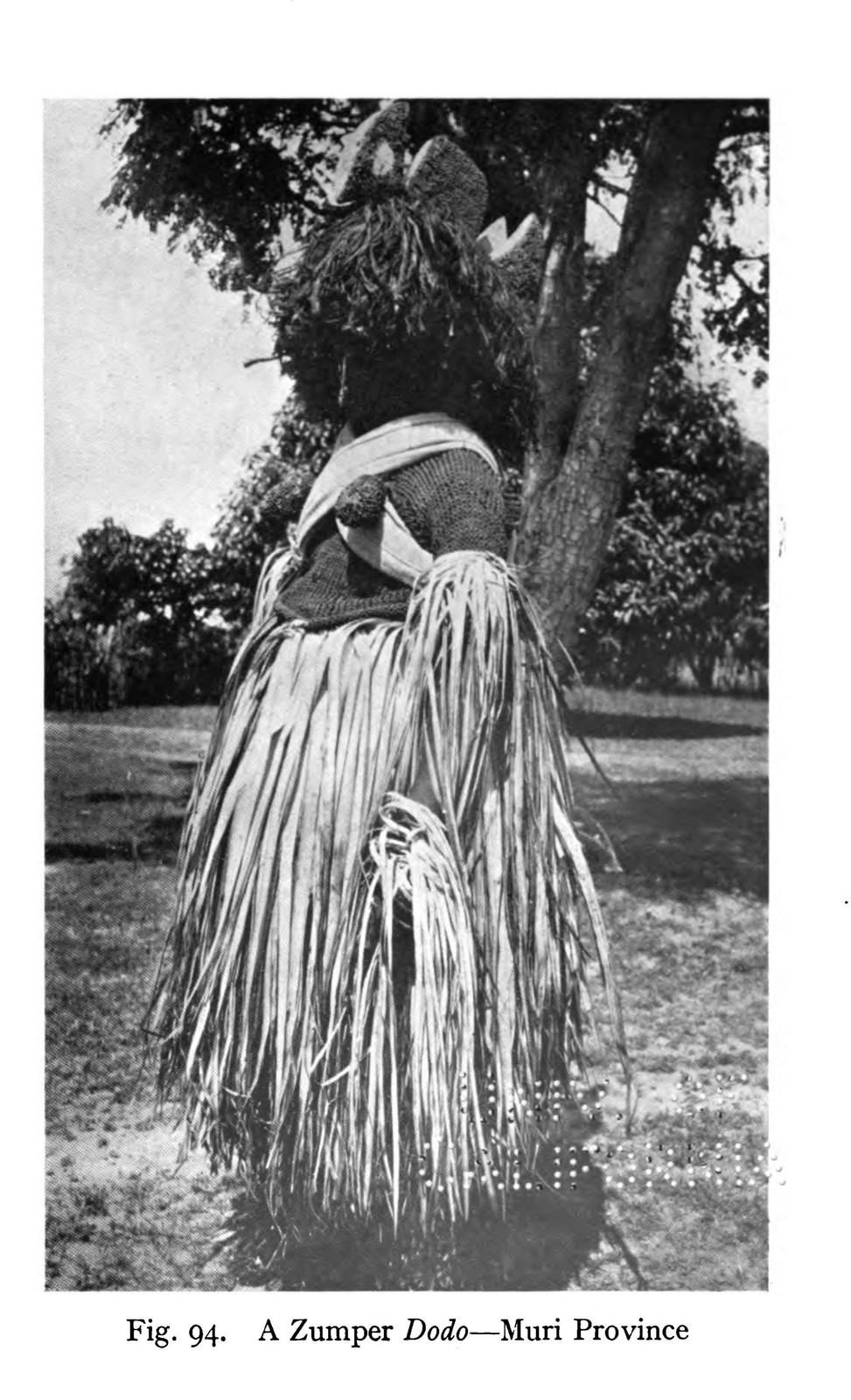
Africa also preserves the two layers stacked in plain view. Beneath the farming-belt crop rites sits an older forager rain-layer, concentrated in the San and Khoisan south: the San rain-and-hunting roarer, and, in the rock art of the Cederberg, eight painted figures each swinging a bullroarer, its sound tied in San practice to rain-making and to !Khwa, the Rain, with a Later Stone Age specimen in the Matjes River layers to anchor it in the ground. And the plainest rites on record that fuse rain and sowing in a single ceremony are African — the Uukwaluudhi omathila, the Gwana Dodo cult that works rain, sowing, and harvest together. That is exactly what thunder-before-the-plow should look like where the two strata meet: a forager rain-roarer underneath, farming-belt crop-roarers on top, and a visible seam where they fuse.
The medicine-men twirled it rapidly, and with a uniform motion, about the head and from front to rear, and succeeded in faithfully imitating the sound of a gust of rain-laden wind.John G. Bourke, on the Hopi Snake dance, The Medicine-Men of the Apache (1892)
Europe keeps the thunder in the names
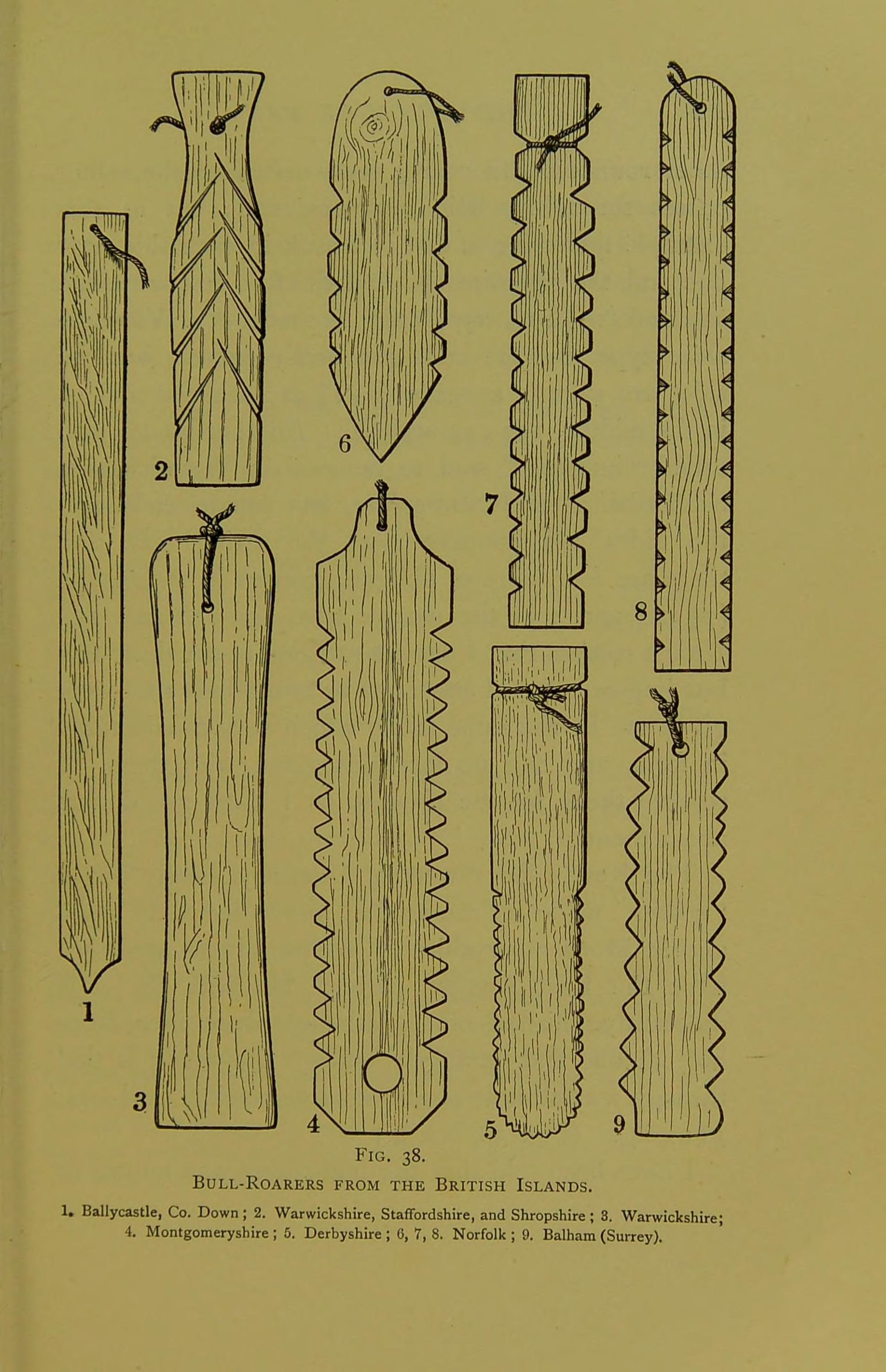
If weather is an ancient layer, it should leave fossils in the words where the cult has otherwise drained away — a storm stranded in a noun after it left the verb. It does. The clearest is Scots. In Aberdeenshire and Kincardineshire boys whirled a notched slat during thunderstorms in the belief that the thunder would cease or the bolt would spare them, and they called it the thunner-spell — the thunder-spell — a usage Walter Gregor set down first-hand in 1881. On the Croatian island of Krk, five wooden blades at Vrbnik carried names built on grmljavina, thunder — grmavica, germjavica — and were whirled overhead to make a thunder-like sound. At Villefranche-de-Lauragais the local rhombe survives with a museum notice recording only that it imitates the rumble of thunder. Across northern and Mediterranean Europe the demoted toy keeps the storm in its name centuries after the cult that gave it meaning was gone. The European vector is generally defensive — the instrument turned against the weather, to make the thunder stop — but the weather is what stayed in the word.
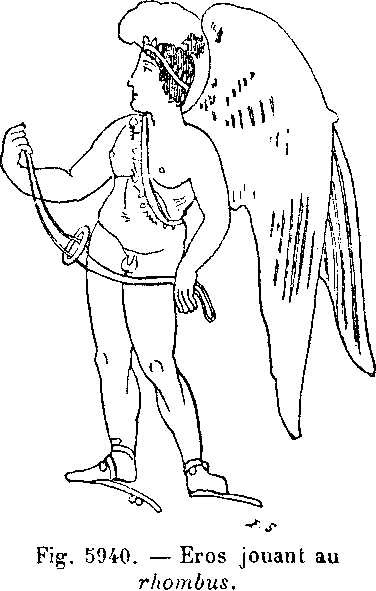
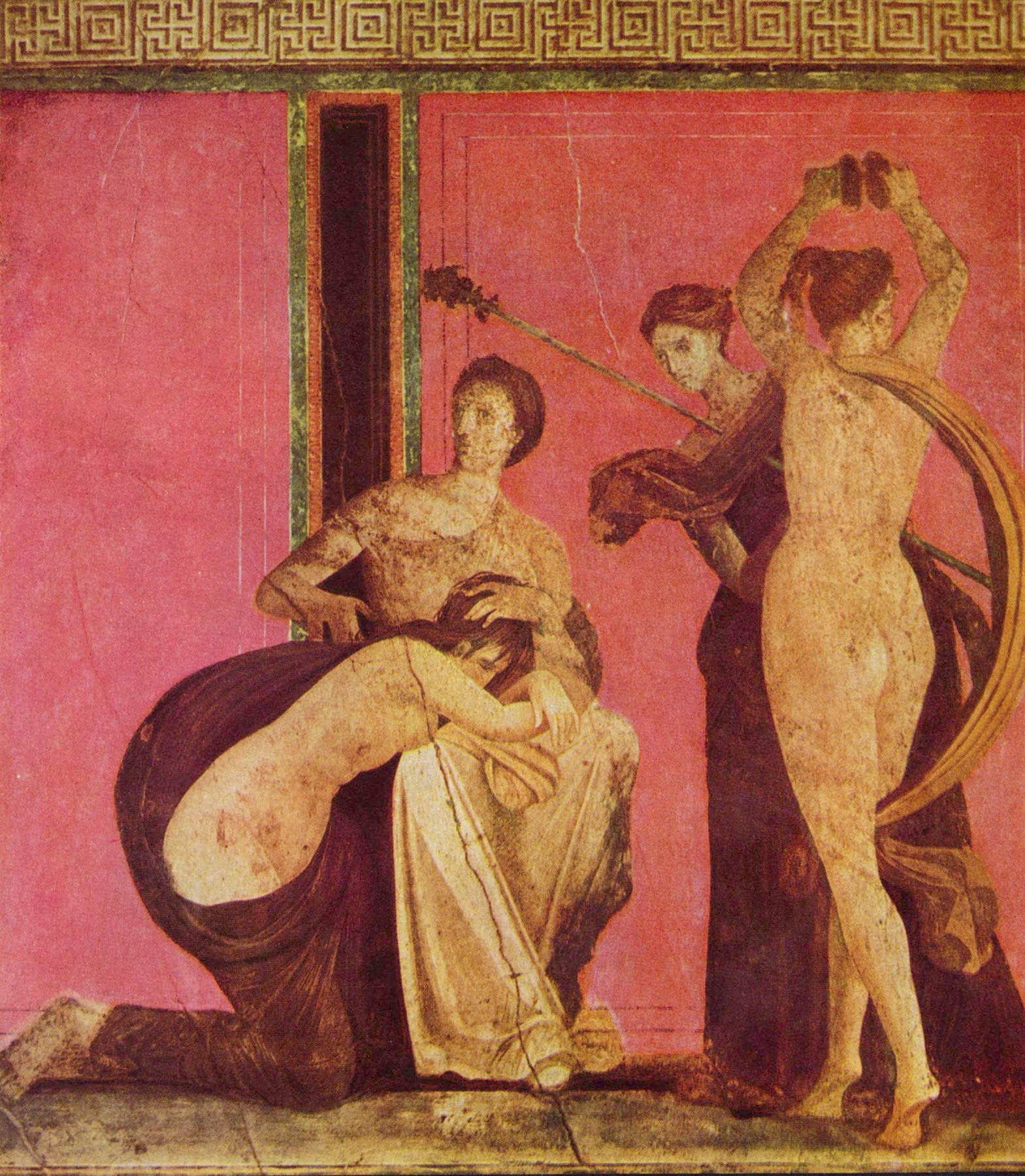
Behind the folk toy stands the sacred original, and it too roars. The Orphic-Dionysiac mysteries staged the murder of the child Dionysos-Zagreus, lured to his death by the Titans with a basket of toys and avenged by Zeus's thunderbolt; the initiate re-enacted the sacra, and the rhombos is named among them in two independent witnesses. The Gurôb papyrus, an early-third-century-BC ritual roll, gives the instruction itself — these things are to be put into the basket: “cone, bull-roarer (rhombos), knucklebones” and then “mirror” — the earliest document on earth to name a bullroarer among sacred objects being assembled for a rite. Clement of Alexandria, around AD 190, quotes the Orphic verse of the same toys: “kōnos and rhombos and a limb-bending doll and golden apples.” The god who presides is Bromios, “the Roarer, the Thunderer,” and rhombos itself means the whirling, roaring, rumbling thing: the roaring instrument, the roaring god, and the thunder-myth converge in one rite. Older still is the eeriest passage on the Greek stage. Aeschylus, in the lost Edonians, staging the arrival of Dionysos's rites in Thrace, conjures “bull-voiced” bellowers, unseen, answering the drum whose echo rolls like subterranean thunder. It was Jane Harrison who put a name to that invisible bull-thunder, and she did not hedge: “We know the very instrument with which in ancient days mimic thunder was manufactured, the famous Bull-roarer or rhombos.” Her reading has become the standard apparatus of the fragment — a disembodied bull-roar out of nowhere is what precisely one instrument makes, and the mysteries owned that instrument by name.
What survives in Europe is therefore not the instrument's origin but its long afterlife: a Palaeolithic technology whose sacred charge decayed into a children's storm-toy that still, in Aberdeen and on Krk, answers to the name of thunder. For the full arc of that demotion — the mystery instrument becoming a plaything — see God to Toy; for why the sound was heard as a god in the first place, The Mechanical Scream; for the wider storm complex the weather-roarer belongs to, The Whirlwind; and for the paired large-and-small roarers that recur from Chahai to New Guinea, Two Voices.
Real thunder cannot be had to order, mimic thunder can, and we know was.Jane Ellen Harrison, “The Kouretes and Zeus Kouros,” BSA 15 (1908–09), pp. 321–322
A dated stratigraphy
Stacked into one column, the vertical history runs from the Ice Age to the mystery cults.
| Horizon | Key sites / objects | Date | What anchors it |
|---|---|---|---|
| Gravettian / Pavlovian | Dolní Věstonice–Pavlov ivory “pendants” | c. 24,000 BC | Dauvois's dating of the type's deep floor; the pieces hide among the ornaments |
| Solutrean | Lespugue; Badegoule | c. 22,000–17,000 BC | Named in the specialist literature; Badegoule first printed as a pendant |
| Magdalenian corpus (~34 pieces) | Lalinde holotype · Laugerie-Basse · Bourrouilla (10) · Lortet · El Pendo · Isturitz | c. 17,000–11,000 years ago | Accepted across the field; the Lalinde replica sounds |
| PPNA/PPNB Near East | Körtik Tepe (serpent grave plaques) · Göbekli Tepe · Çatalhöyük | c. 10,400–6,500 BCE | Thirteen perforated spatulae; the Çatalhöyük piece named in the site's own bone report; the replica hums |
| Later Neolithic to Iron Age | The instrument goes underground — wood, secrecy, and the undepicted sacred | c. 6,500–330 BCE | The silence a concealed wooden instrument predicts |
| Mystery cults (the holdout) | Demosthenes, De Corona · Gurôb papyrus (Ptolemaic Orphic) · Clement, Protrepticus | 330 BC – AD 200 | Textual and explicit; the sacred function stated in the cult's own instruction |
A parallel East-Asian jade strand — end-pierced blades at Chahai, Xinglongwa, and Beifudi, some in graded pairs — runs alongside this column without joining it: the same deep signature, arising independently. The Siberian Mal'ta plaque (centre-pierced, snake-engraved) is not a roarer.
Read the column bottom to top and the case makes itself. At the bottom, in Greece, the instrument is a god's voice and its god is called the Roarer. In the middle, where farming took hold, the roarer is bent to the crop — the yams' mother in the Fly delta, the harvest's source on the Benue, rain for the corn at Walpi. And at the top, before all of that, in the Dordogne caves and on the Beringian trail and in the hands of every forager people who never planted a seed, the instrument does what it did first: it speaks with the sky's voice, raises the wind, calls the rain, and stands in the dark for the dead. The plow, when it arrived, borrowed an instrument that was already old. The thunder never had to borrow anything.
Key sources
- Dauvois, M. 2018. “Néandertal et Cro-Magnon, le renne et le son.” Revue de Paléobiologie 37(2): 457–468, §7 “Rhombes” — the Lalinde holotype (c. 12,000 years); the thickness rule (about one-seventh of the width) and la double giration; the Pavlovian oldest-horizon claim (“plus anciens en Europe Centrale, au Pavlovien (environ –24 000)”).
- Barandiáran Maestu, I. 2015. “Bramaderas en el Paleolítico superior peninsular.” Kobie (BAI) 6 — the Franco-Cantabrian corpus of ~34 bramaderas.
- Dietrich, O. & Notroff, J. 2016. “Bull-roarers of the Pre-Pottery Neolithic?” (Göbekli, Körtik Tepe, Çatalhöyük, Hasankeyf Höyük, Nahal Hemar) — the perforated bone spatulae, the humming hardwood replica, and the Körtik Tepe serpent-carved grave plaques.
- Bourke, J. G. 1892. The Medicine-Men of the Apache (9th ARBAE). Washington: GPO, pp. 476–479 — the Hopi tovokìnpi in the Snake dance (“compelled the wind and rain to come to the aid of the crops”) and the Apache tzi-ditindi, “the sounding wood.”
- Stevenson, M. C. 1904. The Zuñi Indians (23rd ARBAE) — the rhombus whirled to summon the u'wannami rain-makers and gather the clouds.
- Stewart, O. C. 1942. Culture Element Distributions: XVIII, Ute–Southern Paiute (UC-AR 6:4); Kelly, I. T. 1932, Ethnography of the Surprise Valley Paiute (UC-PAAE 31:3) — the Numic forager wind-roarers (make, stop, and warm the wind; the kwi'mo for the warm south wind).
- Haddon, A. C. (ed.) 1912. Reports of the Cambridge Anthropological Expedition to Torres Straits, vol. IV — the Yam Island bigu (“belonged to sweet-potatoes and yams”) and the Meriam rain-making bigo. With Landtman, G. 1927, The Kiwai Papuans of British New Guinea — the madubu “mother of the yams.”
- Rusch, N. & Wurz, S. 2020. “The Doring River bullroarers rock painting: continuities in sound and rainmaking.” Journal of Archaeological Science: Reports — eight painted San bullroarer-players, the sound tied to !Khwa, the Rain, and a Matjes River Later Stone Age specimen.
- Gregor, W. 1881. Notes on the Folk-Lore of the North-East of Scotland — the “thunner-spell” whirled to make the thunder cease. Galin, K. 1988, on the Vrbnik grmavica of Krk.
- Hickmann, H. 1955. “Unbekannte ägyptische Klangwerkzeuge (Aërophone). I. Schwirrholz und Schwirrscheibe.” Die Musikforschung 8: 151–157, p. 151 — Cairo Museum inv. 26669 from Gebelein, 24.1 cm, dated Naqada II, entered in the museum catalogue as a “pièce en bois simulant un couteau de sacrifice” (“a wooden piece imitating a sacrificial knife”). Duchesne-Guillemin, M. 1981. “Music in Ancient Mesopotamia and Egypt.” World Archaeology 12(3): 287–297 — the bullroarer “totally absent from Egypt.”
- Smyly, J. G. 1921. Greek Papyri from Gurob, no. 1, p. 3; Hordern, J. 2000. “Notes on the Orphic Papyrus from Gurôb,” ZPE 129: 131–140, text p. 135, commentary p. 139 — the rhombos at col. i line 29, inside the instruction that cone, bull-roarer, and knucklebones be put into the basket. Clement of Alexandria, Protrepticus II.17–18 — the rhombos among the toys of Dionysos.
- Harrison, J. E. 1910. “The Kouretes and Zeus Kouros,” Annual of the British School at Athens 15 (1908–09): 321–322 (repeated in Themis, 1912, pp. 61–62) — the identification of the unseen bull-voices of Aeschylus, Edonoi fr. 57 (preserved by Strabo, Geographica 10.3.16) with the rhombos; the fragment describes the sound without naming the instrument. Hordern 2000: 139 carries the reading as standard apparatus.
- Buckner, W. 2019. “The Bullroarer” (Traditions of Conflict) — the forager wind-roarers and the cautious Beringian-diffusion note.
The classic studies read the weather-use as late degradation and made initiation-mystery (Lang) or hunter-gatherer spirit-voice (Zerries) the root; Buckner assembled the forager wind-roarers but built no chronology from them. The synthesis offered here — stacking the dated stratigraphy into one column, and reading the forager weather-roarers on both sides of Beringia as the pre-agricultural instrument that farmers in the Old World and the New later turned on the crop, with the Pueblo Southwest and Torres Strait as twin farming/foraging hinges — is, as far as we know, original to this page.