No. CAPELL1956-013
Gunavidji wubar
Australia · Liverpool River mouth around Maningrida, north-central Arnhem Land, Northern Territory
Sacred / spirit
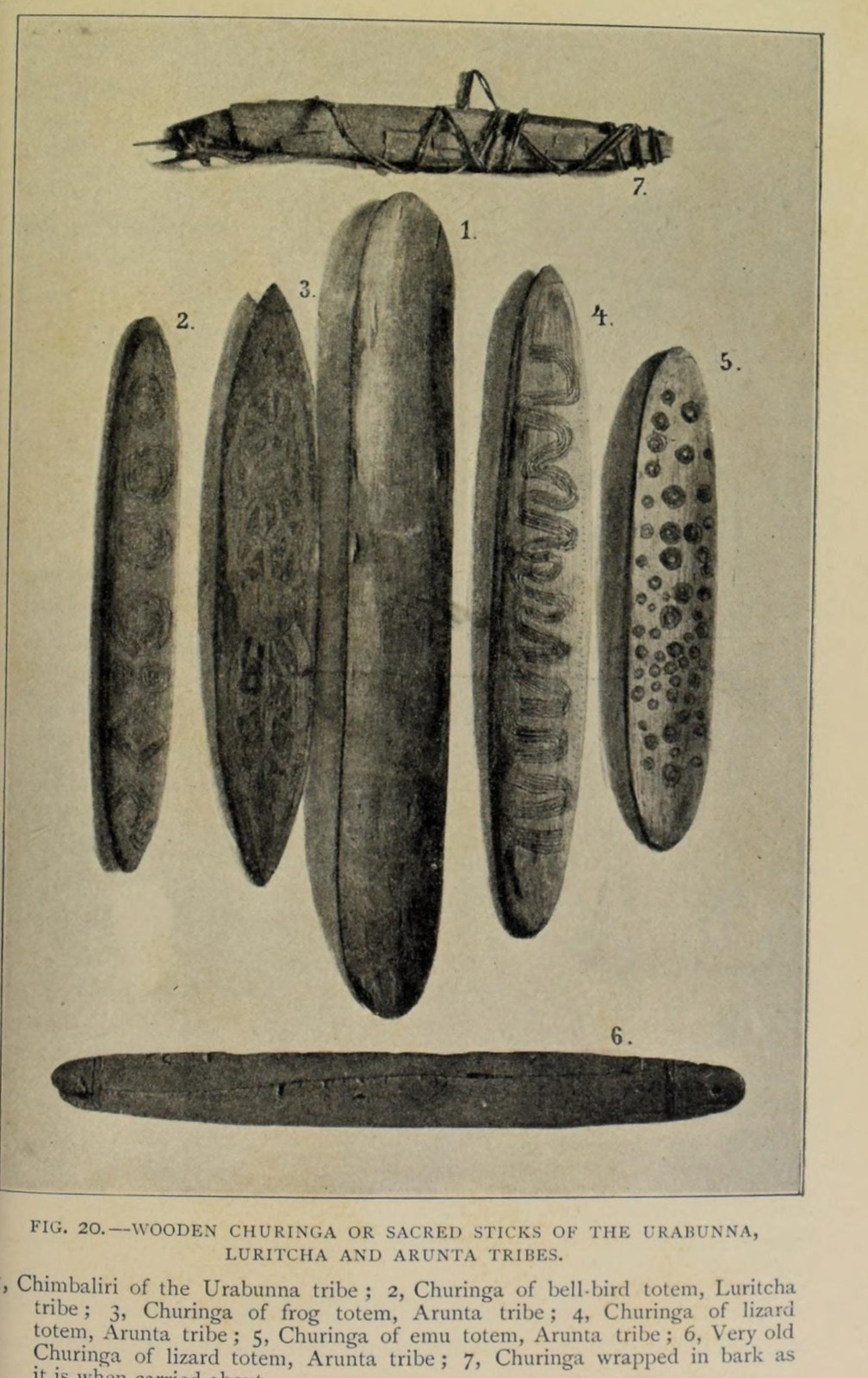
wubar
Source term: BULLROARER: wubar
wubar: the name of the Ubar ceremony, given in answer to 'bullroarer' (Capell 1956, p. 18; Capell & Hinch 1970, wuwar 'Ubar ceremony')
Ndjébbana speakers at the Liverpool River mouth gave wubar for the bullroarer, the Ubar ceremony's name in the form the Kunwinjku also use. Their country runs from Maningrida up the Liverpool River to the limit of the tide, and east to where the Tomkinson River runs into the mangroves. Inland the Gurrgoni said the same; west along the coast the rite was uwar.
Particulars
- Object
- A bullroarer, called wubar; its form is not recorded.
- Function
- Named for the Ubar, the sacred ceremony of west Arnhem Land.
Sources
- Arthur Capell, A Vocabulary of 600 Words in Forty North Australian Languages (typescript, Sydney, 1956), State Library of New South Wales A 6929, p. 18 View
- Arthur Capell and Heather E. Hinch, Maung Grammar, Texts and Vocabulary (The Hague: Mouton, 1970), vocabulary, wuwar 'Ubar ceremony' View
- Murray Garde, 'The Forbidden Gaze', in Martin Thomas and Margo Neale (eds), Exploring the Legacy of the 1948 Arnhem Land Expedition (ANU Press, 2011), pp. 403–407 View
- Ronald M. Berndt, Kunapipi (Melbourne: Cheshire, 1951)