No. CAPELL1956-005
Kunbarlang uwar
Australia · Coast between Hawkesbury Point and Junction Bay, inland toward Table Hill, western Arnhem Land, Northern Territory
Sacred / spirit
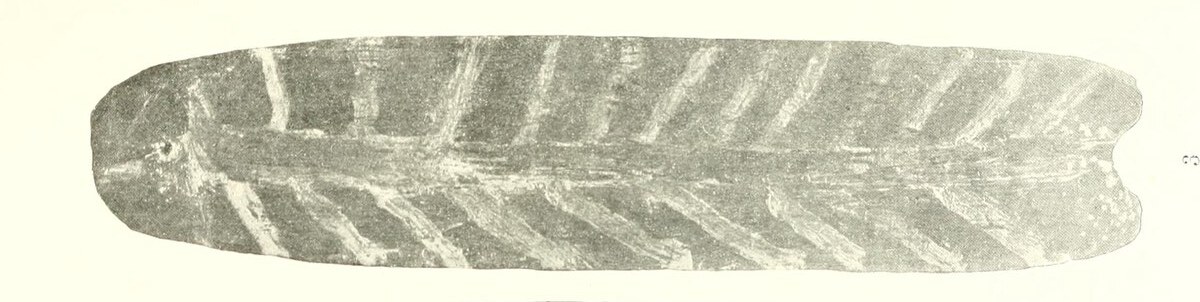
uwar
Source term: BULLROARER: uwar
uwar: the name of the Ubar ceremony, given in answer to 'bullroarer' (Capell 1956, p. 18; Capell & Hinch 1970, wuwar 'Ubar ceremony')
For the bullroarer, Kunbarlang speakers gave uwar, the coastal name of the Ubar ceremony, where their sister language Kunwinjku used its stone-country form, gubar. Kunbarlang country follows the coast between Hawkesbury Point and Junction Bay, east of the Goulburn Islands, and runs inland toward Table Hill. In the Ubar, men beat a great hollow log whose cry was the voice of the rite, and the Snake of the ceremony bore its name.
Particulars
- Object
- A bullroarer, called uwar; its form is not recorded.
- Function
- Named for the Ubar, the sacred ceremony of west Arnhem Land.
Sources
- Arthur Capell, A Vocabulary of 600 Words in Forty North Australian Languages (typescript, Sydney, 1956), State Library of New South Wales A 6929, p. 18 View
- Arthur Capell and Heather E. Hinch, Maung Grammar, Texts and Vocabulary (The Hague: Mouton, 1970), vocabulary, wuwar 'Ubar ceremony' View
- Murray Garde, 'The Forbidden Gaze', in Martin Thomas and Margo Neale (eds), Exploring the Legacy of the 1948 Arnhem Land Expedition (ANU Press, 2011), pp. 403–407 View
- Ronald M. Berndt, Kunapipi (Melbourne: Cheshire, 1951)