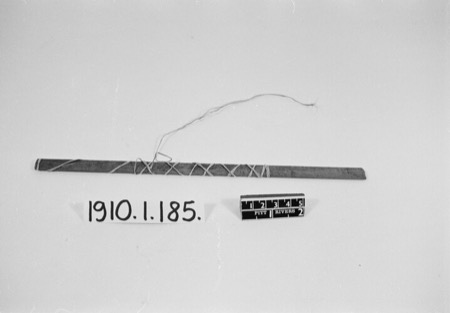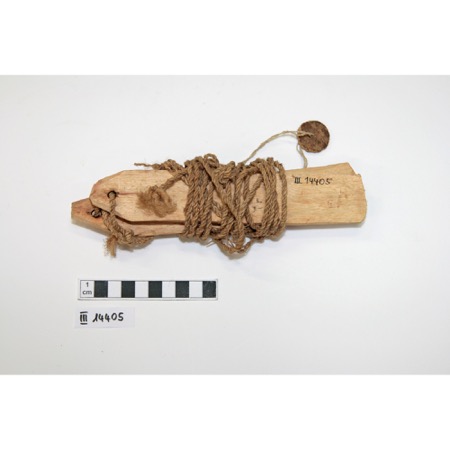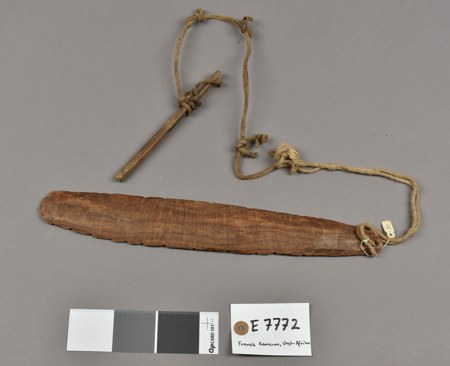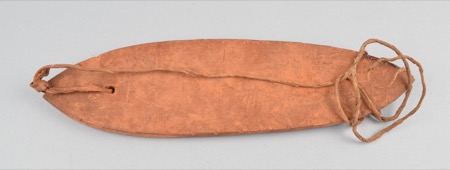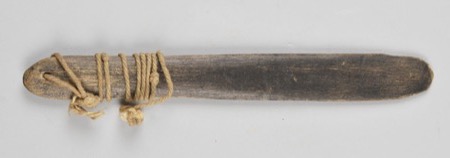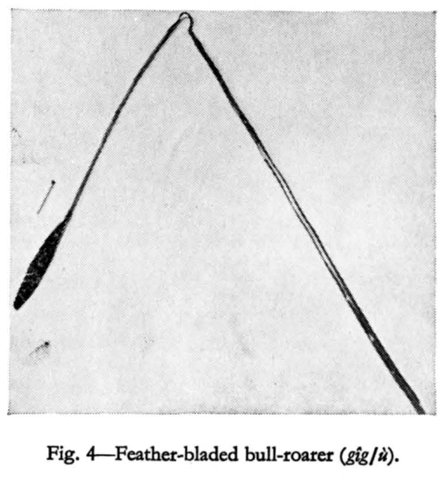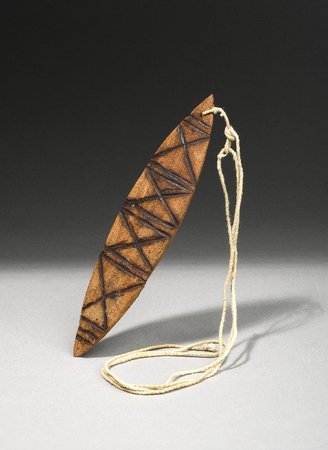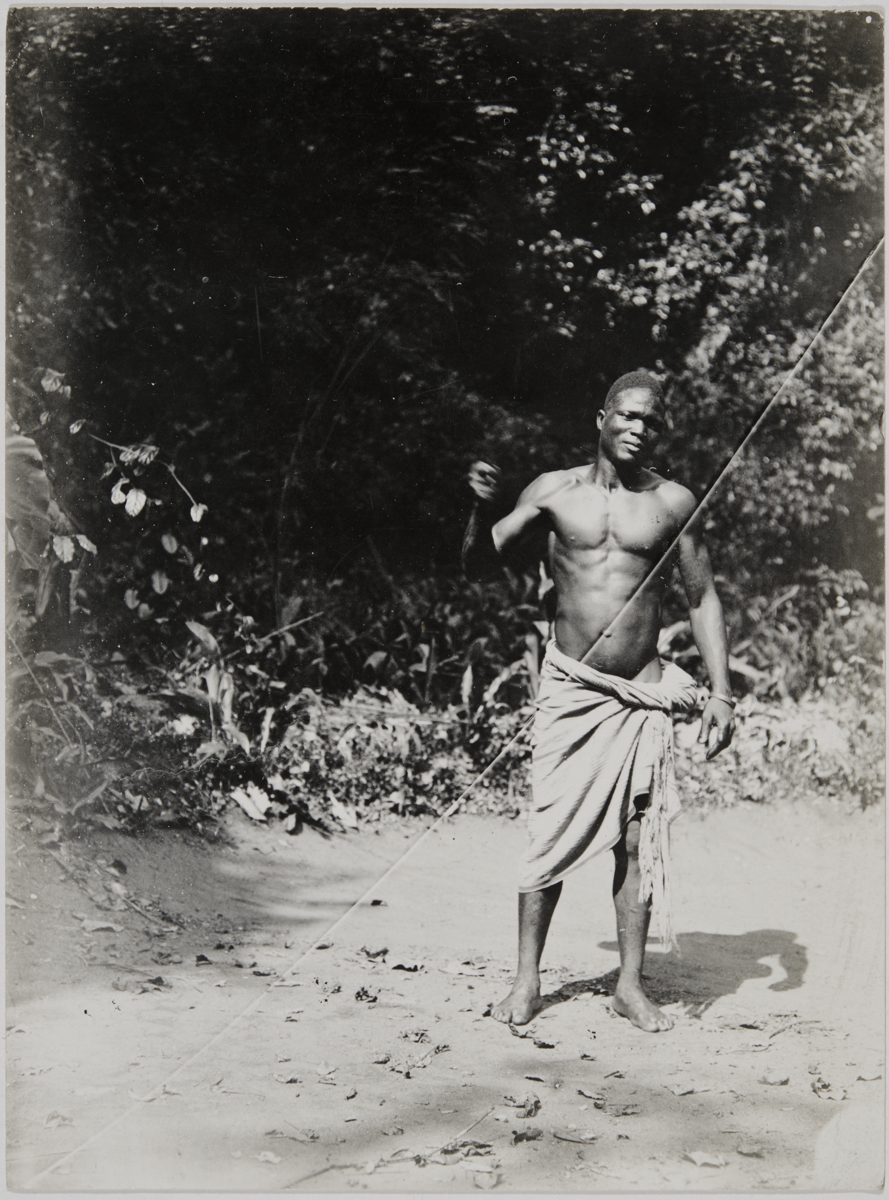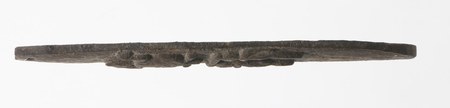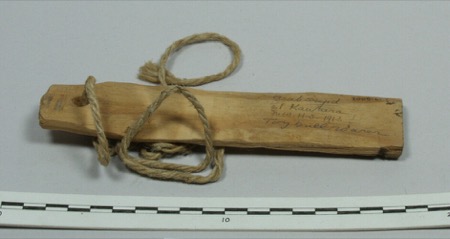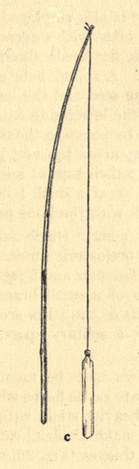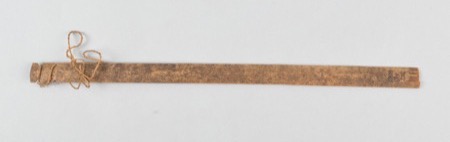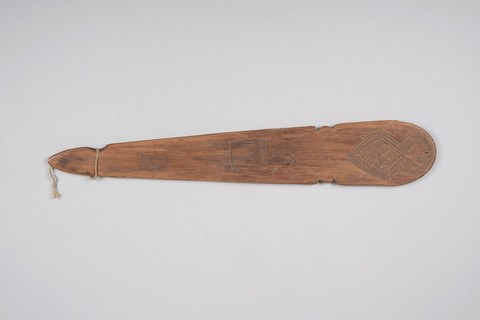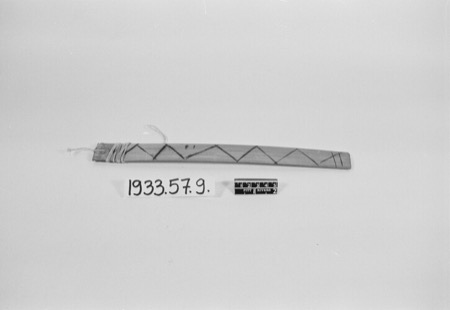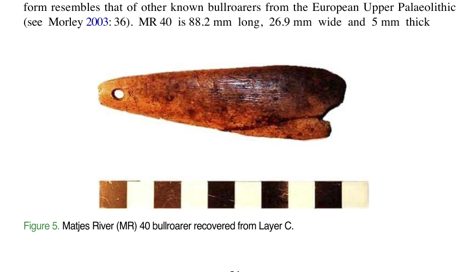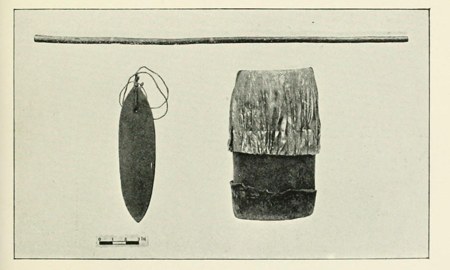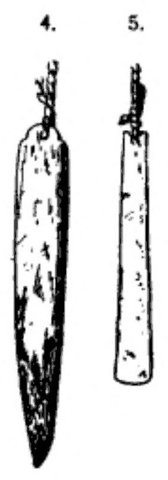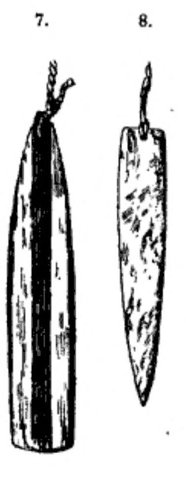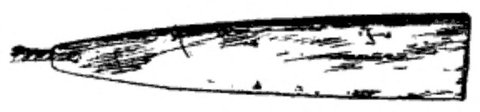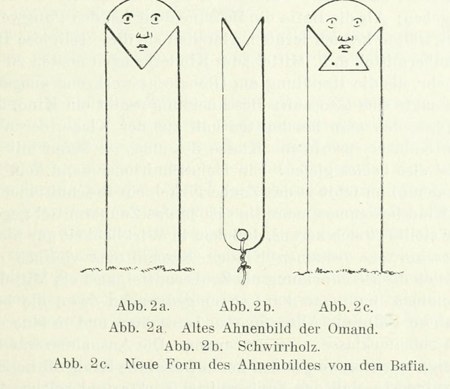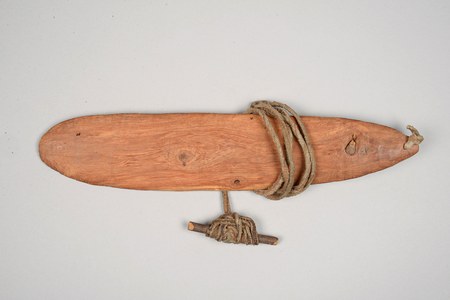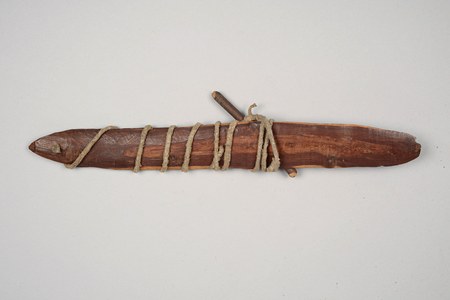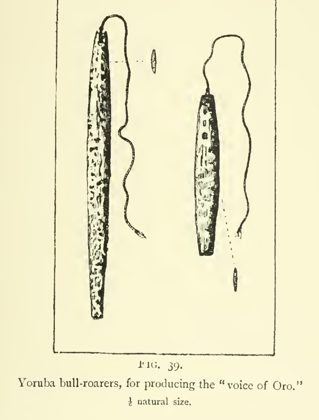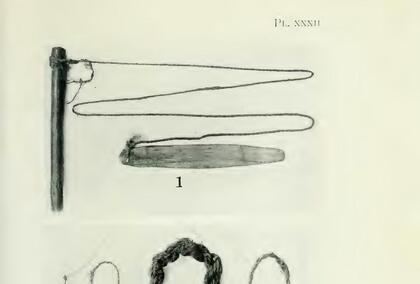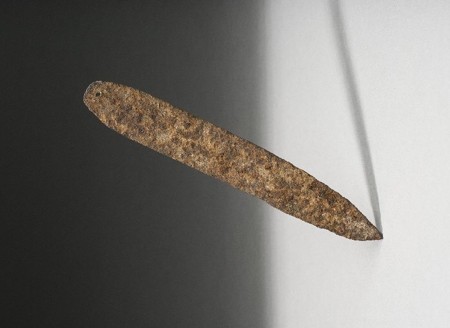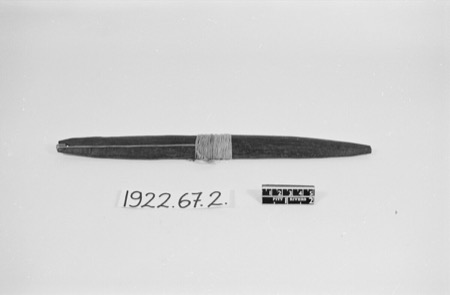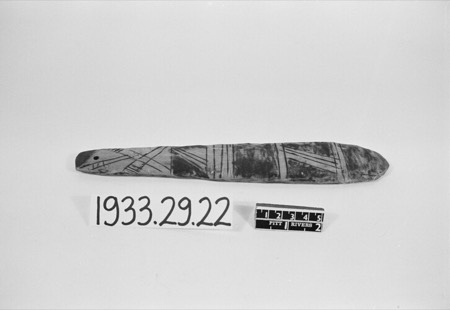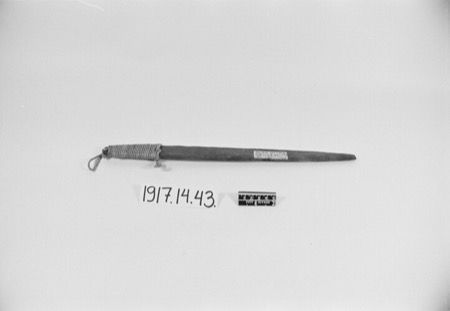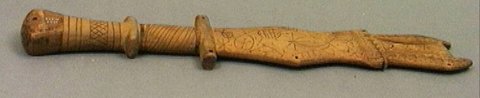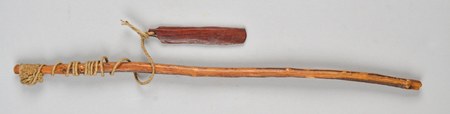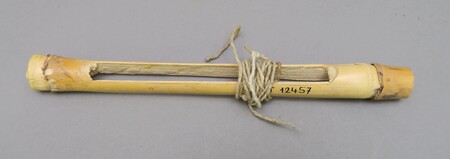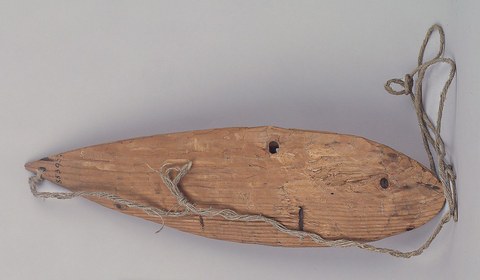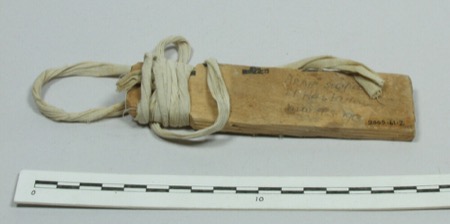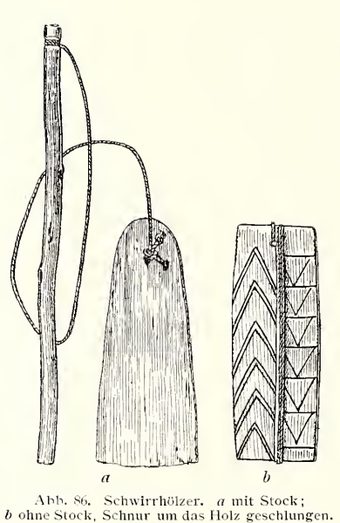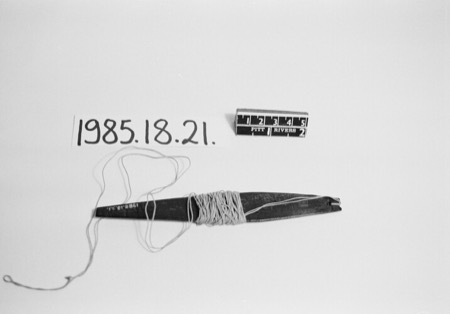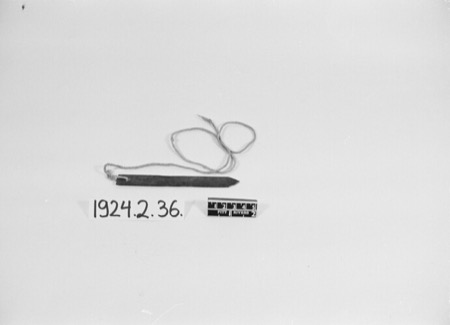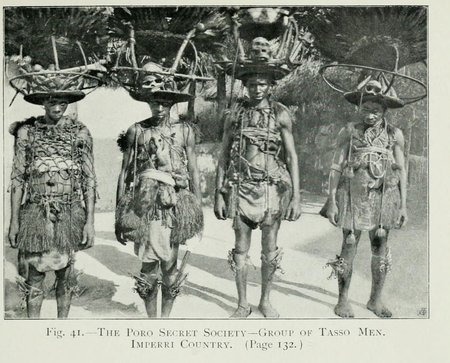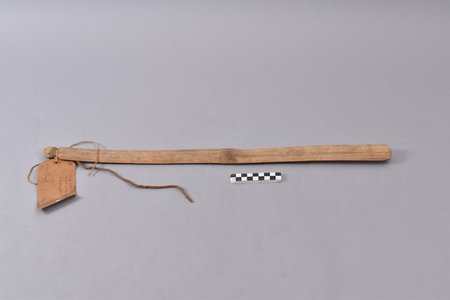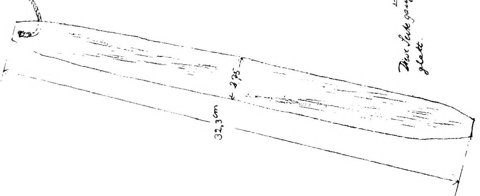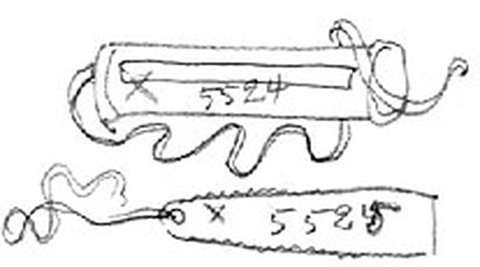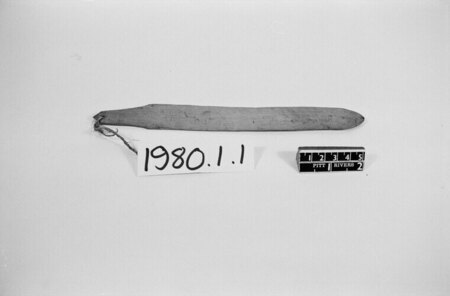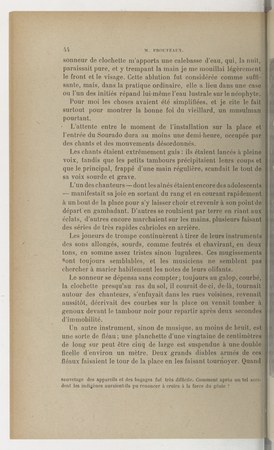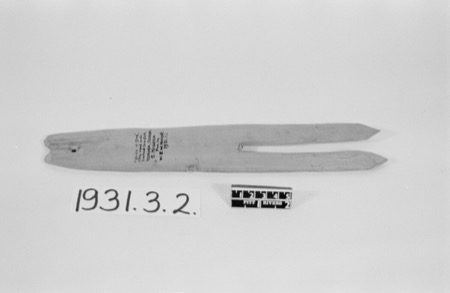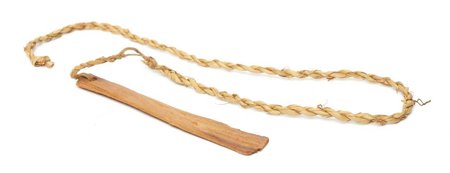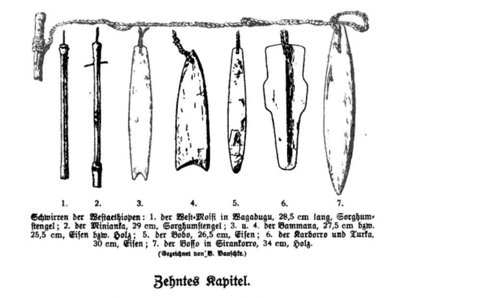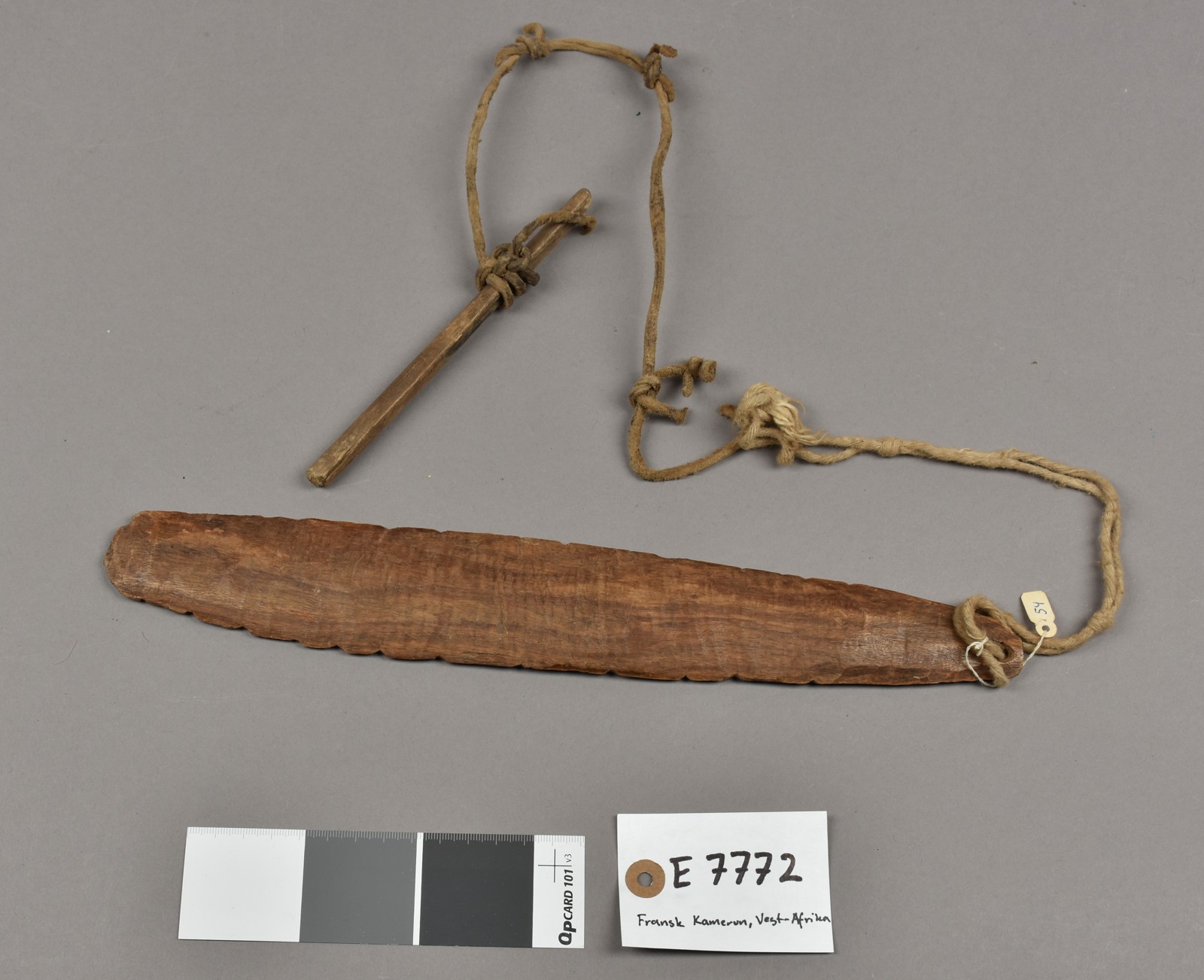
In Liberia, a heavy voice sounds and people clear a path for children hidden in a forest school. In the Congo, Grandfather swings the voice of Tore while elders acquaint the boys with their inherited instruments. In the dry south, a wooden buzz calls up swarming bees and the promise of honey. Across Africa, the roarer’s power repeatedly rests on a relationship: someone gives a being a voice, and listeners know what that presence requires of them. Its sound can reorganize a street, a growing body or the next season’s work. 1, 13, 22
Ge (Dan), Mano-Ge border country, Poro Bush · Balese (Kalimoholo village) · |Xam Bushmen
The sound has a name and an owner
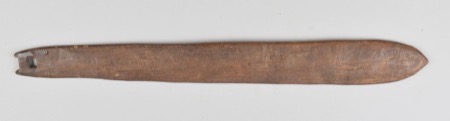
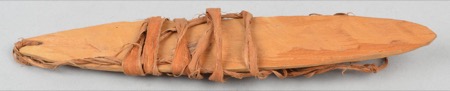
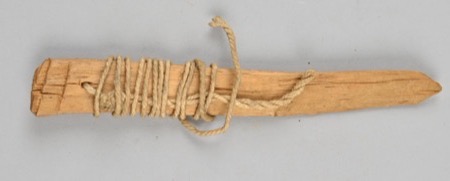
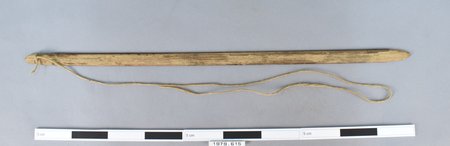
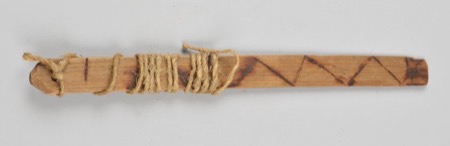
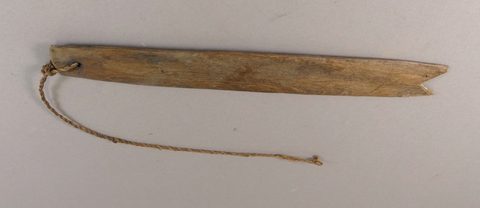
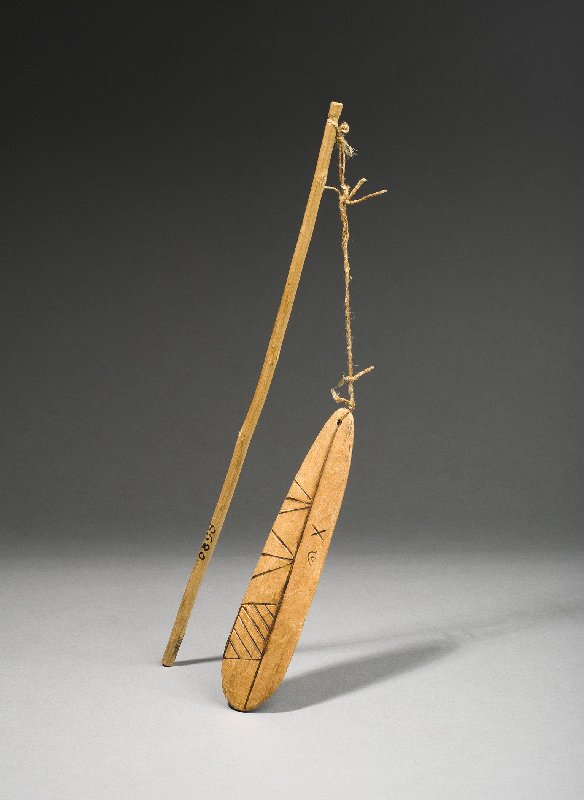
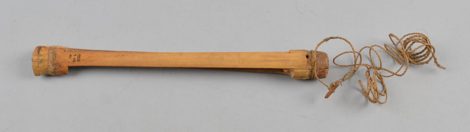
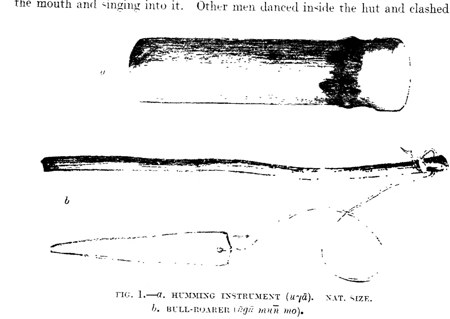
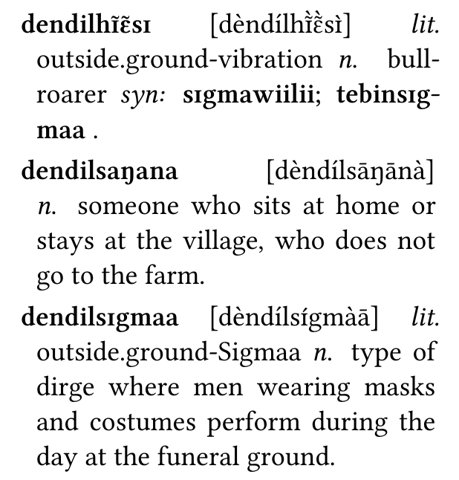
Sometimes the instrument and the being meet in one name. Ge vu ni names the fearsome Poro Bush presence that uses the roarer; Kwanyama edila names the humming instrument and the giant bird believed to swallow initiation boys. Among the Balese, pahudjuhudju speaks as Tore, while the leader who swings it plays Grandfather. A Lendu man, shown a roarer, identifies it as Tore. The object can be a voice, an inherited possession or the being encountered: a named presence bound to a keeper’s hands. 1, 20, 13
Ge (Dan), Mano-Ge border country, Poro Bush · Kwanyama / Owambo · Balese (Kalimoholo village) · Balendu (Lendu) of Kilo
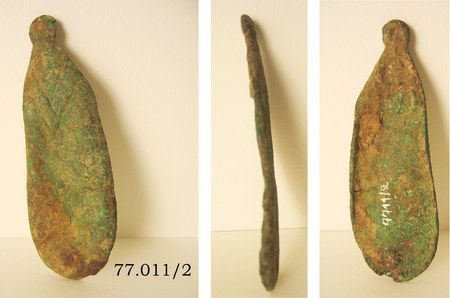
West African iron makes that identity tangible. For the Bwa of San, Capron says the forged blade is Do himself. The priest carries it to the bush altar at the greatest sacrifices and keeps it in a skin pouch between appearances. Gouin novices lie face down beneath the dogo, the face of God. Its keeper stores it at the forge or with the initiation head. A sounding presence therefore has a material life before and after anyone hears it: it can be housed, entrusted, approached and fed. 4, 5
A house can hold a whole voice
Several makers can give a presence its voice. Gbunde Poro’s Big Devil has an escort whose pottery whistles, membrane instruments, horn-and-pot bass and bale wola roarer supply calls and songs. The Big Devil gives his own speaking voice. Relaying teams make the sound seem to fly between villages. In a Babali ordeal, tattooing elder, bird-flute player and Maduali whirler divide the action over a blindfolded novice. A single extraordinary presence can be a coordinated achievement by several people. 1, 12
Gbunde (Schwab's spelling), Poro society · Babali (Bali), Ituri
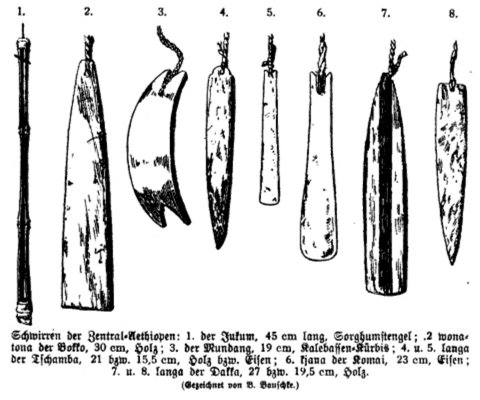
The keepers organize that achievement through places. Verre Do’os has a house for horns, stone, iron implements and baranga roarers; Longmo Uonatonajo wait in a household shrine; Mbum Djerr rest in a mountain cave. Each storage place holds a different local company. The repeat is a relation between custody and emergence: when the instruments leave repose and sound, the authority housed with them reaches fields, a funeral or a camp. The voice makes the institution’s presence larger than its building. 10, 9
Verre / Momi · Longmo (Bokko / Voko; Longto language) · Mboum (Ngan-Ha)
The creature approaches a growing child
The animal voice makes initiation danger audible. Dii rhombes cry as a panther in the bush, where the boys face circumcision knives. Mbum women hear Djerr the leopard or Mbaga the lion among the secluded boys. In the Ndembu lodge, ndumba mwila growls behind the wall while novices and mothers fear a monster. These are beings powerful enough to express an operation hidden from ordinary village sight; their voices announce that the child has entered another company’s jurisdiction. 11, 9, 26
Dii (Duru) / Adamaoua · Mboum (Ngan-Ha) · Ndembu / Wukengi Farm / Nyaluhana vicinage
East Africa gives that arrangement further names and actions. Nandi warriors sound ngetundo, lion, outside the huts to keep circumcised boys indoors at night. At rikset the boys see the instruments and learn to play. Sebei boys confront a lion represented by monkey skin, receive thorn scratches, discover its roaring board and whirl it until exhausted. Goldschmidt describes the sequence; de Wolf sets it within a regional comparison of initiation. Knowing the voice’s source changes who may take a place among its makers. 17, 18
The lesson takes longer than the first hearing
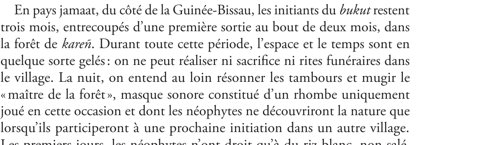
Revelation can be delayed even beyond graduation. Jóola Kujamaat boys hear the master of the forest during their three-month bukut, but learn what makes its sound only when helping another village’s initiation. Ge pupils likewise hear vu ni clear their path before they are permitted to see the being. These sequences distinguish hearing from knowledge and knowledge from responsibility. A voice links generations through the people who maintain it for those who have not yet learned. 2, 1
Jóola Kujamaat (Esana) · Ge (Dan), Mano-Ge border country, Poro Bush
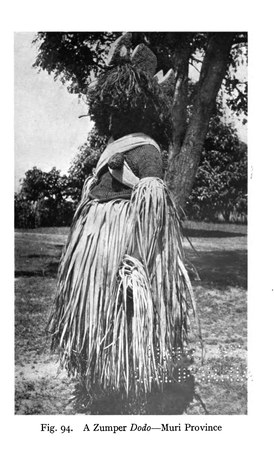
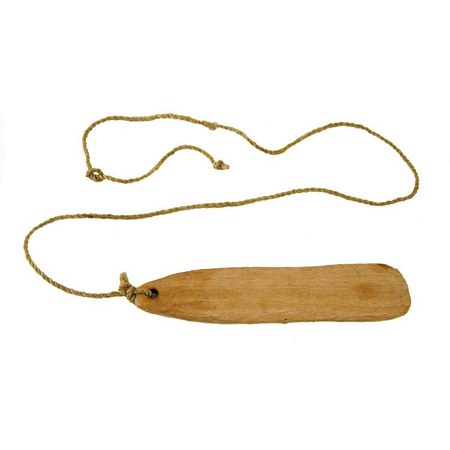
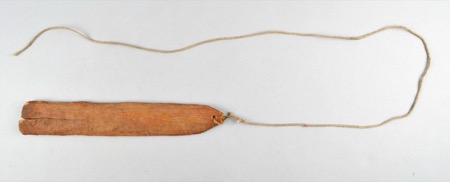
The Bushongo palm-wine tale makes that asymmetry domestic. A son leaves his father none of the day’s wine. The father hides in the wood and swings a strip on a cord until the boy flees and asks forgiveness. The elders adopt the trick to teach respect; at Nkanda they surround the camp with cries and sounding palm strips. The story itself tells adults how the ghost is made. The novice’s alarm and the elder’s knowledgeable humour belong to the same institution of age. 14
The ancestors enter the present tense
Ancestral sounding can call obligations due. Among the Longmo, dead fathers ask for food and tobacco at harvest, circumcision or an old man’s death. Morwa hear spirits crying in the grove as the sign to begin their festival. Kurama makili accompanies rites at ancestral graves, where men make offerings to dead women as well as dead men. In each scene the inherited voice places a demand on living people: feed, gather, perform, remember. 9, 7
Longmo (Bokko / Voko; Longto language) · Morwa / Moro'a (Asholio) · Kurama / Akurmi
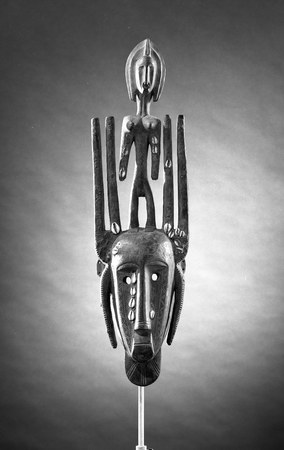
At Dogon Sanga, death sends a man to the village edge to sound the mother of the mask while the initiated men encourage him. In Kwanyama royal mourning, the roarer is sounded on the fourth day inside a crowd that conceals its maker, marking that there is no longer a king. These voices give a change of social condition an audible form. The community can hear the loss and its ceremonial response, while custody of the object remains with those qualified to carry that work. 3, 20
A season answers to a wingbeat or a swarm
The Uukwaluudhi Big Birds move with the agricultural year. King-appointed ekanjo travel at night and greet the east at dawn, whirling their bird voices around sowing time. A later procession meets crops already established, and the people cry for rain while striking their hoes harder into the soil. The Verre night rite similarly makes an action of sound: Do’os takes hunger and throws it into the bush. Voices tied to powerful keepers extend into the growth on which a community depends. 19, 10
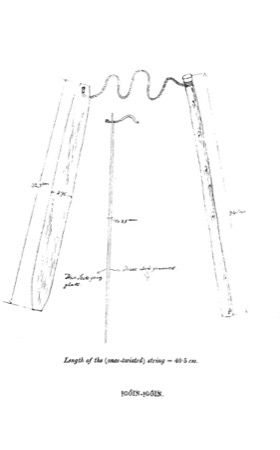
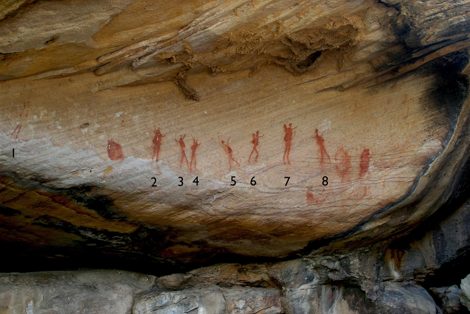
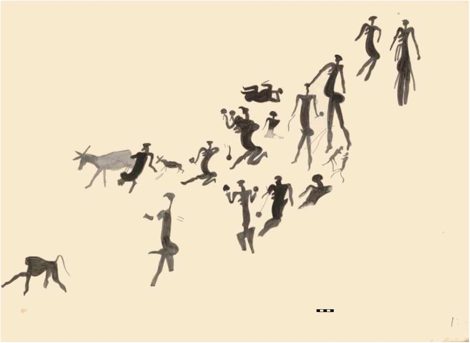
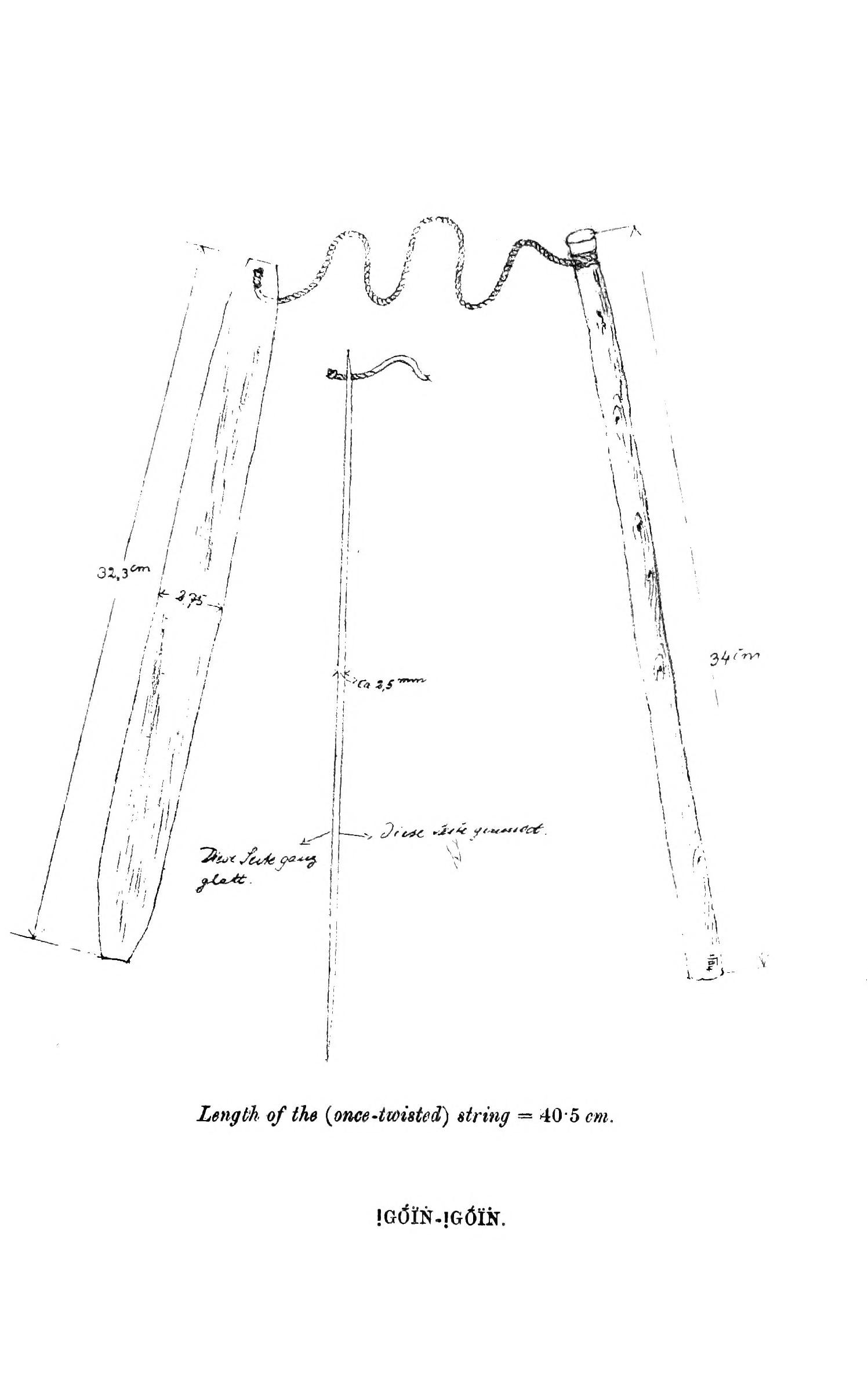
The southern |Xam account seeks abundance through bees. The !goin !goin’s buzz is part of making swarms plentiful so honey can be cut and shared; men dance and women drum and clap. Another |Xam sound opens onto rain: the thong leading !Khwa’s rain-beast is likened to a roarer crossing the sky. Rusch and Wurz use rain testimony and replica sound in their interpretation of the Doring River painting. The proposed ancient scene and the recorded honey work meet in a clear relationship between animal presence, collective action and increase. 22, 23
Presence is something people answer
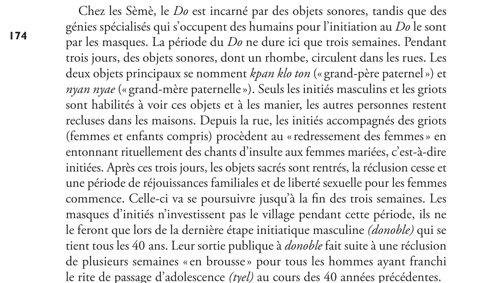
The expected answer need not be fear. At Gouin village fights, the earth priest or eldest smith whirls dogo between the combatants to stop the fighting; the same power receives oaths of reconciliation at the forge. Bwa women enter Do through initiation. Sèmè griot women can accompany sound objects while other women are confined indoors. Authority has a specific social shape: keepers, admitted participants and listeners each have their own means of approaching and answering the presence. 5, 4, 6
Animal listeners give the voice another social reach. Aka hunters make an eagle’s flight audible with a whip and rhombe to frighten monkeys. Their technique supplies a creature’s approach without its body. At a BaAka teenage dance, Sarno records the bullroarer entering men’s and women’s interlocking singing and drawing a cheer. Across ritual, hunting and music, the common action is a voice made in motion; what that voice becomes depends on who recognizes it and how they answer. 15, 16
Aka (BaAka/Bayaka/Babenzele/Mbenzele); Kenga village, Engedi camp, Moboma commune · BaAka (Aka), Kenyé camp
The craft remains in children’s hands
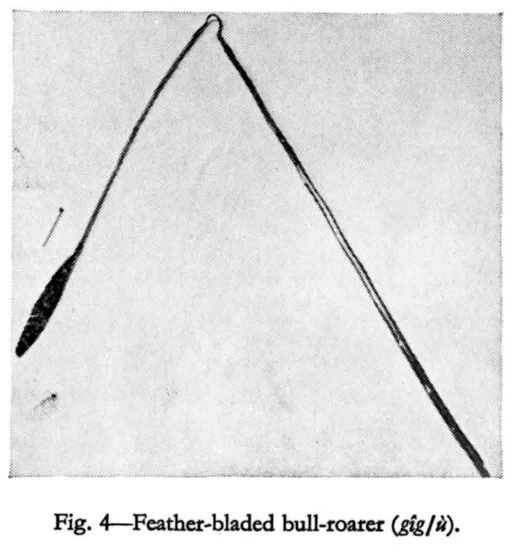
Children share this geography of sounding. Idoma boys make school-ruler ofukufuku beside a living society’s guarded fish-shaped plaque. G/wi and G//ana boys vary a feather rotor’s rhythm for the clapping and humming of a mixed group of children. Sotho children carry sevuruvuru against animals. Toys are part of a broad regional repertoire of learned making, bodily skill and response; the public company of children keeps the craft visible beside the institutions that restrict particular objects. 8, 24, 25
Idoma · Idoma · G/wi and G//ana · Sotho
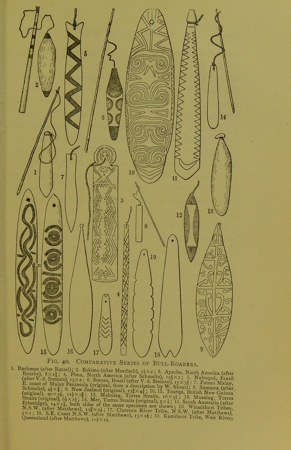
Loeb’s 1929 comparison gave this recurring repertoire a historical argument. He joined spirit voices, bodily marking, death and return, and male initiation, proposing dissemination of a complex from an early centre. He also rejected the claim that every child’s roarer proves a former secret rite. The named African accounts let us see the resemblance directly: a presence is voiced, a keeper maintains it, and listeners acquire obligations toward it. Their shared arrangement is substantive even where a particular historical route has yet to be demonstrated. 21
Names that carry the tradition
| People | Name | Meaning or use |
|---|---|---|
| Ge | vu ni | Devil and sounding voice of the Poro Bush 1 |
| Balese | pahudjuhudju | The voice of Tore 13 |
| Nandi | ngetundo | Lion; initiation roarer 17 |
| Kwanyama | edila | Giant bird and the instrument that hums its presence 20 |
| |Xam | !goin !goin | Swarm-like voice in bee-increase work 22 |