No. STEVENS1976-001Africa
Bachama roarer of Dong, brought from Mbulo
Nigeria · Southern Bachamaland, Numan Division (now Demsa LGA, Adamawa State) · West Africa
Sacred / spirit
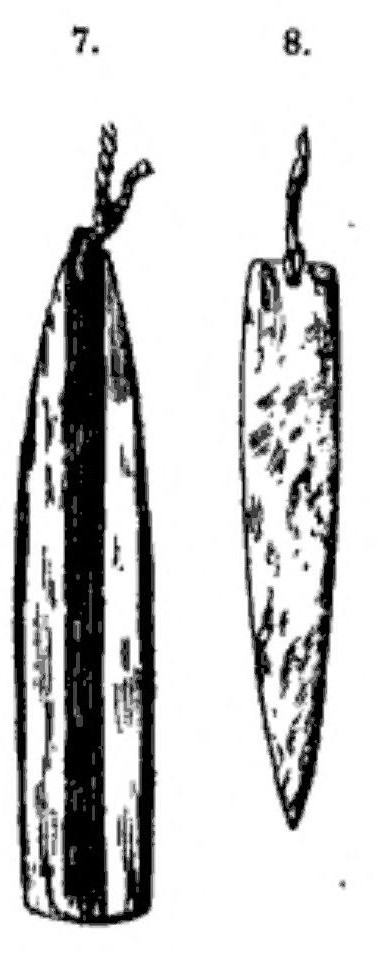
Source term: bull-roarer
Gurumi: the region in Sama (Chamba) country where, for Bachama and Bata, the souls of the dead go. Samba: the Bachama name for the Sama. Mbulo: a community "in Samba area" from which Dong's royal clans claim descent.
The Bachama of the Benue say their dead go to Gurumi, in the country of the Sama, whom they call Samba. The bull-roarer came out of that country too. Dong's royal clans trace their descent to the youngest son of Kuludu, the chiefdom's legendary founder: a boy born of a Samba woman and raised in Mbulo, and the man, they say, who brought the bull-roarer into Dong's ritual. Mbulo, in Samba country, says it had it from the Sama themselves.
In Bachamaland, the bull-roarer is used only in Dong and one other southern village, which also claims to have obtained it from Mbulo.
Stevens 1976:32
Particulars
- Object
- Bull-roarer; not described.
- Function
- Used in the ritual of Dong, a minor Bachama chiefdom, and of one other southern Bachama village; Dong credits its introduction to a son of the chiefdom's founder.
Source
Phillips Stevens Jr., "The Danubi Ancestral Shrine," African Arts 10, no. 1 (October 1976): 30-37, at p. 32
Nearby in the atlas
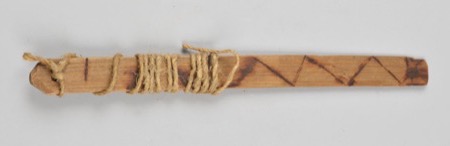 Gwari (Gbagyi) oath riteNigeria · Gbagyi homeland (Niger State / FCT Abuja) · Sacred / spirit
- Kadara aka'a, the whirring of the returning deadNigeria · Kajuru District, Zaria Province (now Kajuru LGA, southern Kaduna State) · Sacred / spirit
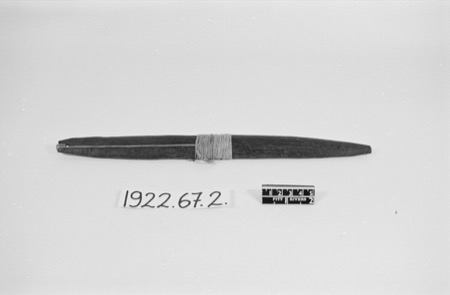 Kurama makili, the bull-roarer at the ancestral gravesNigeria · Zaria Province, Northern Nigeria (now Lere LGA, Kaduna State) · Sacred / spirit
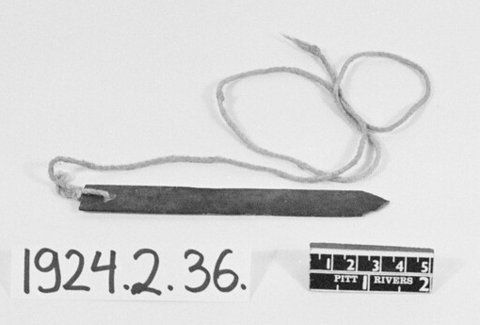 N'Yoro Oekum'Nigeria · Lagos, Nigeria · Sacred / spirit
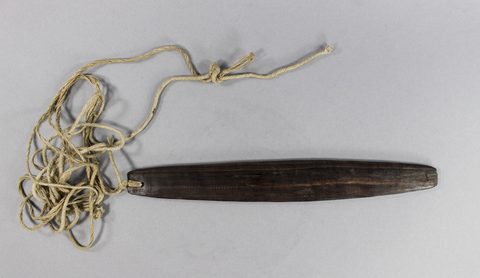 Morwa bull-roarer, the crying in the sacred groveNigeria · Zaria Province, Northern Nigeria (now Kaura LGA, Kaduna State) · Sacred / spirit
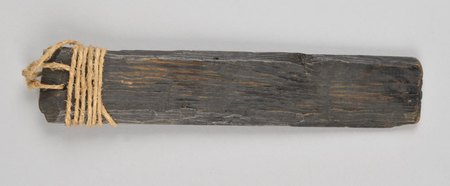 Vugù-vugù, the sorcerers' killing magicNigeria · Northern Nupe country, Niger State · Sacred / spirit