No. BOGE2025-001
Ikorodu’s two Orò festivals
Nigeria · Ikorodu, Lagos State · West Africa
Restricted
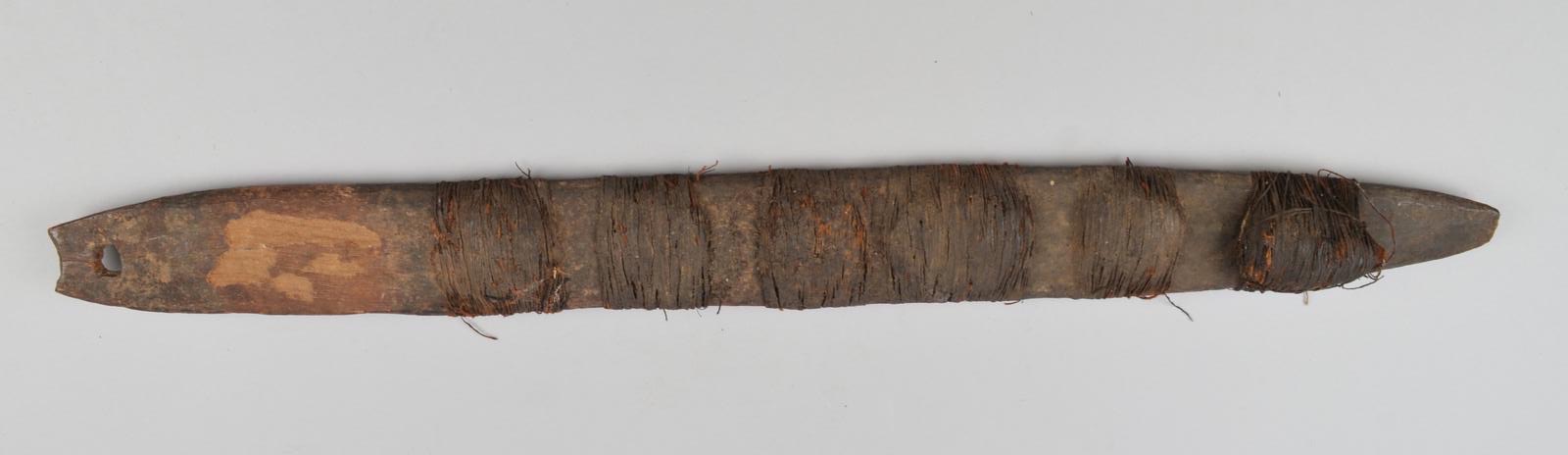
ape
Source term: bullroarer (ape)
ape: the bullroarer. Ojo Iwaye Oro: the day Orò is brought into town. Isemo: the closing seclusion. Magbo, Liwe: Ikorodu’s two principal Orò groups. Alashe, Olumale, Ajana: hereditary Orò offices.
Twice a year Orò is brought into Ikorodu. The town’s two great Orò groups, Magbo and Liwe, each hold a seven-day festival that opens with Ojo Iwaye Oro, the day the spirit arrives, and closes with Isemo, the seclusion, when women may not go out. Orò’s voice is the bullroarer, called ape, and it is credited with cleansing the town of evil spirits, epidemics, the deaths of children and mothers, and the curses that follow abominations. Any woman who glimpses Orò is cursed. Each group remembers another home: Magbo traces its Orò to Igbore in Abeokuta, Liwe to Isheri Olofin. The modern city has fitted its god into a crowded calendar. Isemo may no longer fall on a Friday or a Sunday, on a Muslim or Christian feast, or in Ramadan, and the restrictions now hold only in the old core around the shrines.
Curses are rained on any female who catches a glimpse of Oro.
Faruq Idowu Boge, Crowther Journal of Arts and Humanities 2 (2025), p. 59
Particulars
- Object
- A bullroarer whirled in the air; its form is not described.
- Function
- Invokes the ancestral spirit Orò, credited with cleansing the town of evil spirits, epidemics, child and maternal deaths and curses; sounded at the Magbo and Liwe festivals, each seven days long, from the spirit’s arrival to the closing seclusion when women may not go out.
Source
Faruq Idowu Boge, “Ikorodu: The Evolution and Development of a City,” Crowther Journal of Arts and Humanities 2 (1) (2025): 52-67