No. FULLEBORN1906-001
Unjika highland toy bullroarer
Tanzania · Unjika highland · historic Rukwa district · East Africa
Play / practical
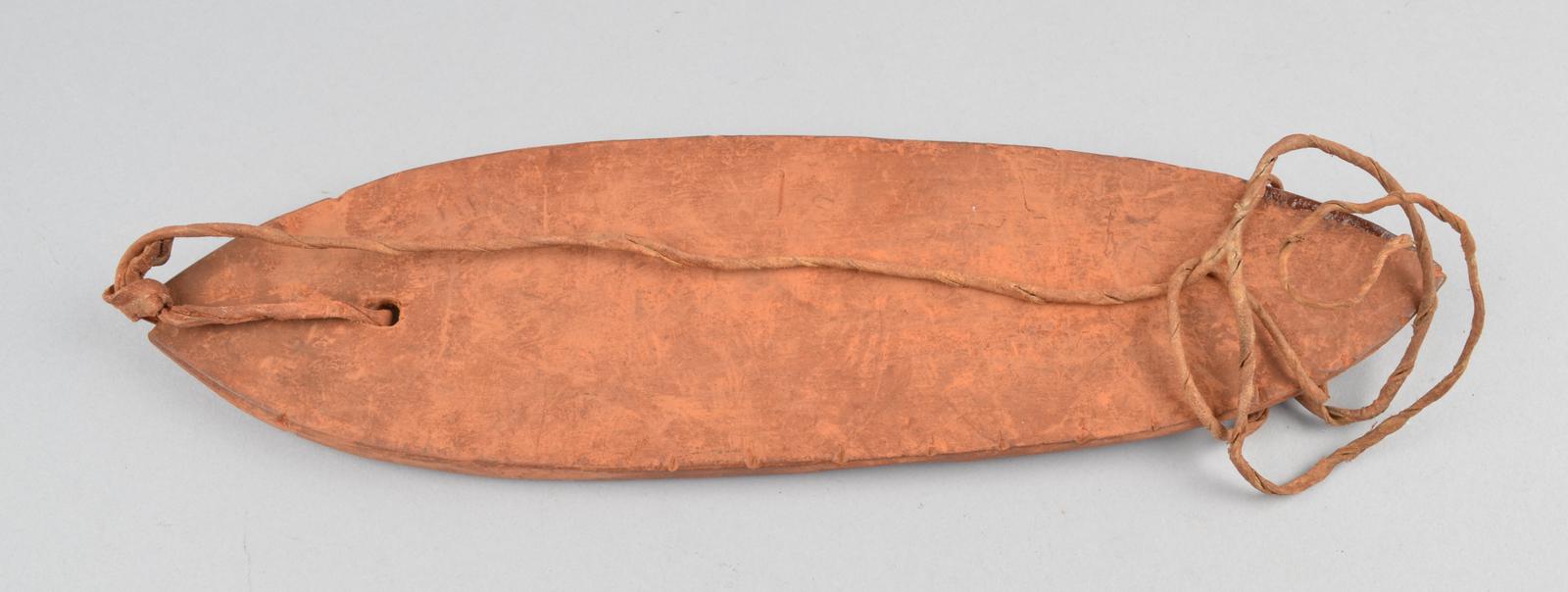
Source term: Schwirr-Instrument
Schwirr-Instrument: 'whirring instrument', Fülleborn's German name for the toy.
In an Unjika hut, a flat piece of wood became a rushing children's noisemaker when it was spun rapidly on its cord—a small household toy whose roar filled the air.
Die primitiven “Schwirr-Instrumente”, die ich ein paarmal antraf, sind wohl nur eine Spielerei für Kinder. So fand ich einmal in einer Hütte in Unjika ein flaches Holzstück, welches, an einer Schnur schnell herumgewirbelt, einen sausenden Ton hören liess.
The primitive 'whirring instruments' I encountered a few times are probably only a children's pastime. Once in a hut in Unjika I found a flat piece of wood which, rapidly whirled on a string, made a rushing sound.
Fülleborn, Das Deutsche Njassa- und Ruwuma-Gebiet (1906), p. 237
Particulars
- Object
- Flat wooden piece on a string, rapidly whirled to make a rushing sound.
- Function
- Children's noise-game object; no ritual use recorded.
Source
Friedrich Fülleborn, Das Deutsche Njassa- und Ruwuma-Gebiet (1906), p. 237, with Atlas, Tafel 50 no. 41 (inventory 8408)