No. SUBSAH-024
Bwa (Bwaba)
San region, Mali (Capron’s cercle de San) · West Africa
Restricted
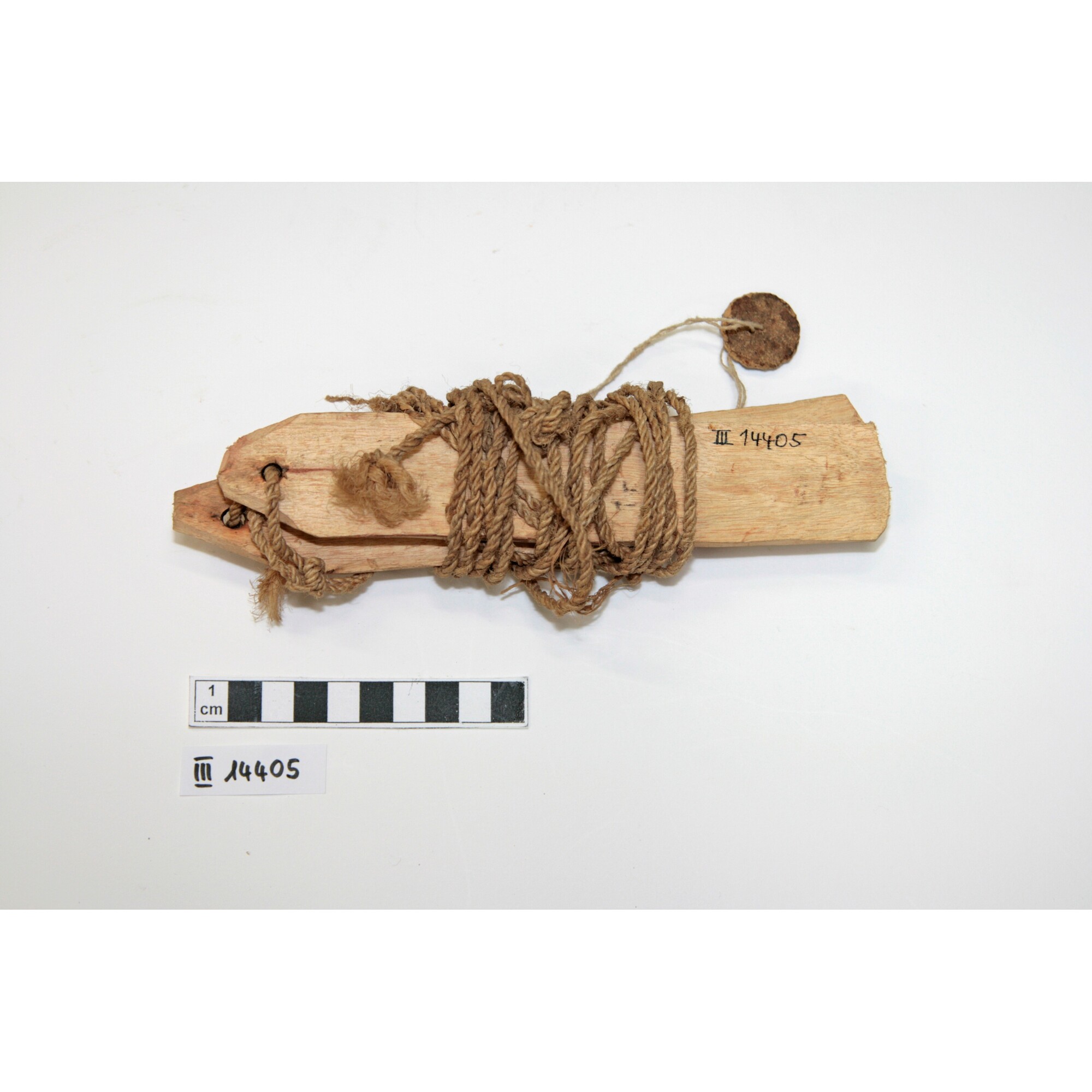
Dwo / aliwe / linisa
Source term: Dwo
Dwo / Do: central Bwa divinity and initiation cult; in Capron's San account the iron rhombe is Do itself and its voice, while the cult includes initiated girls and women as well as men.
At the great sacrifices in Mali's San country, a Bwa priest carries a forged-iron blade out to the bush altar: Do himself, the divinity's own body and voice. Jean Capron called it "the divinity itself." The priest sounds it only rarely; korozo whistles stand in to carry Do's cry through the initiation scenes. Girls as well as boys are initiated into it. The gate closes on the uninitiated child and the stranger.
Les femmes ont toujours acheté le do
Women have always bought Do.
Capron 1957 p. 120
Particulars
- Object
- The supreme hierophany and voice of Do: an elliptical forged-iron plate about 30 x 10 cm on a long cord, stored in sheepskin and sounded overhead by the priest — rarely, with korozo substitutes carrying Do's cry in some initiation scenes.
- Function
- Supreme voice and hierophany of Do, binding the Bwa community; its names mean 'it cries' or 'it makes noise,' and at sacrifice its sound signals Do's acceptance. Girls and women are initiated into Do and serve it, while uninitiated children and outsiders are excluded.
Source
Jean Capron, 'Quelques notes sur la societe du do chez les populations Bwa du cercle de San,' Journal de la Societe des Africanistes 27(1) (1957), pp. 81-129