No. WILLIAMSON2011-001
Okpotú, the lake festival’s roar
Nigeria · Niger Delta: Kolokuma, Wilberforce Island area (Bayelsa State) · Africa
Sacred / spirit
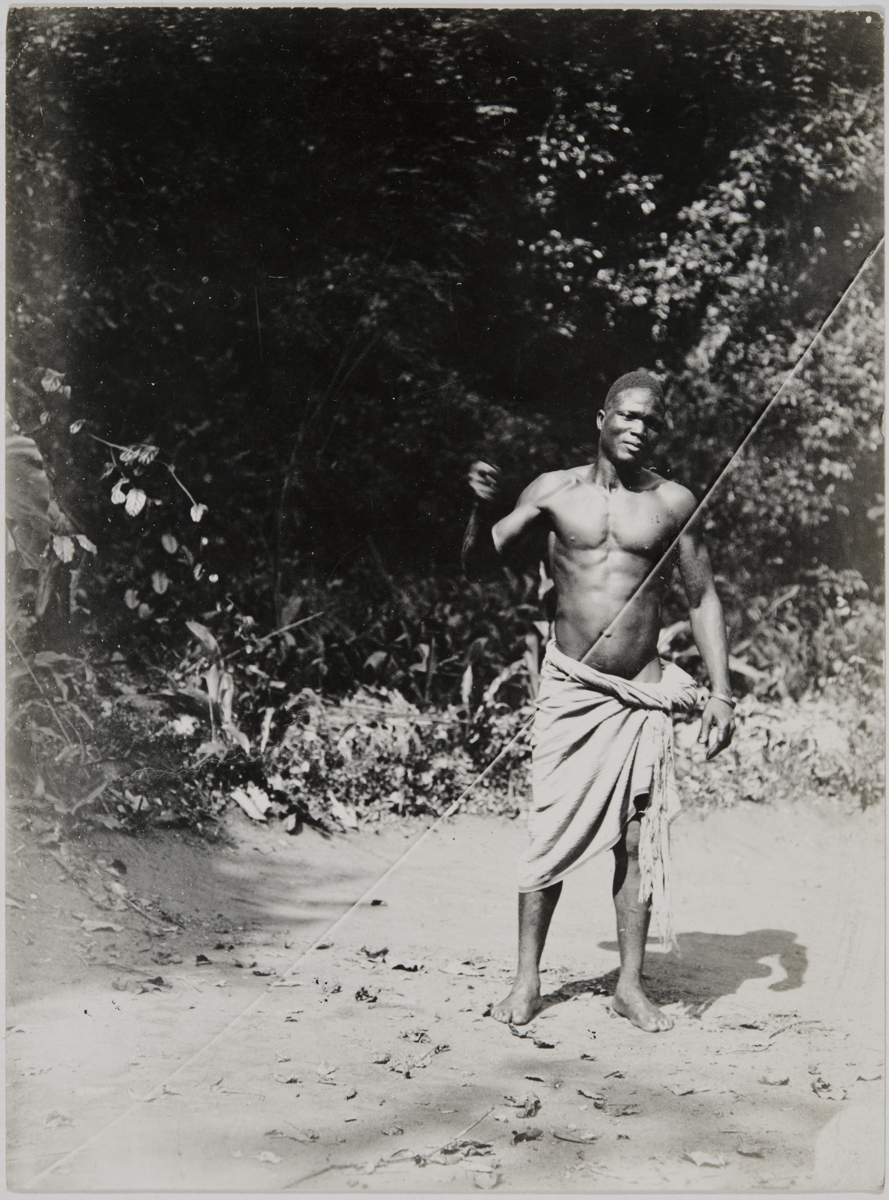
oróro
Source term: bull-roarer
oróro: bull-roarer (oróro fọụn, play the bull-roarer). Okpotú: lake, deity and April festival of Kolokuma.
Every April the Kolokuma Ịżọn keep the festival of Okpotú, a lake at Agadagbabou that belongs to the whole of Kolokuma and is counted among its deities. Swimmers cross the river, and a bullroarer, the oróro, is whirled to make its sound. The young women circumcised the year before come out dressed for the day, in short wrappers worn like shirts, with headties tied on their arms and fancy umbrellas in their hands. Agadagbabou itself is remembered as the old site from which most Kolokuma towns migrated to where they stand now.
Particulars
- Object
- A bullroarer whirled at the Okpotú lake festival; form and material not described.
- Function
- Whirled during the April festival of Okpotú, the lake at Agadagbabou and deity of all Kolokuma, alongside swimming across the river and the appearance of the young women circumcised the year before.
Source
Kay Williamson and Roger Blench, Dictionary of Kolokuma Ịżọn (2011), pp. 3, 118, 168, 172