No. MUS2026-094
Imbakiyam, voice of the Sô emergence
Cameroon · Sa'a, Lekie, Centre Region · Africa
Restricted
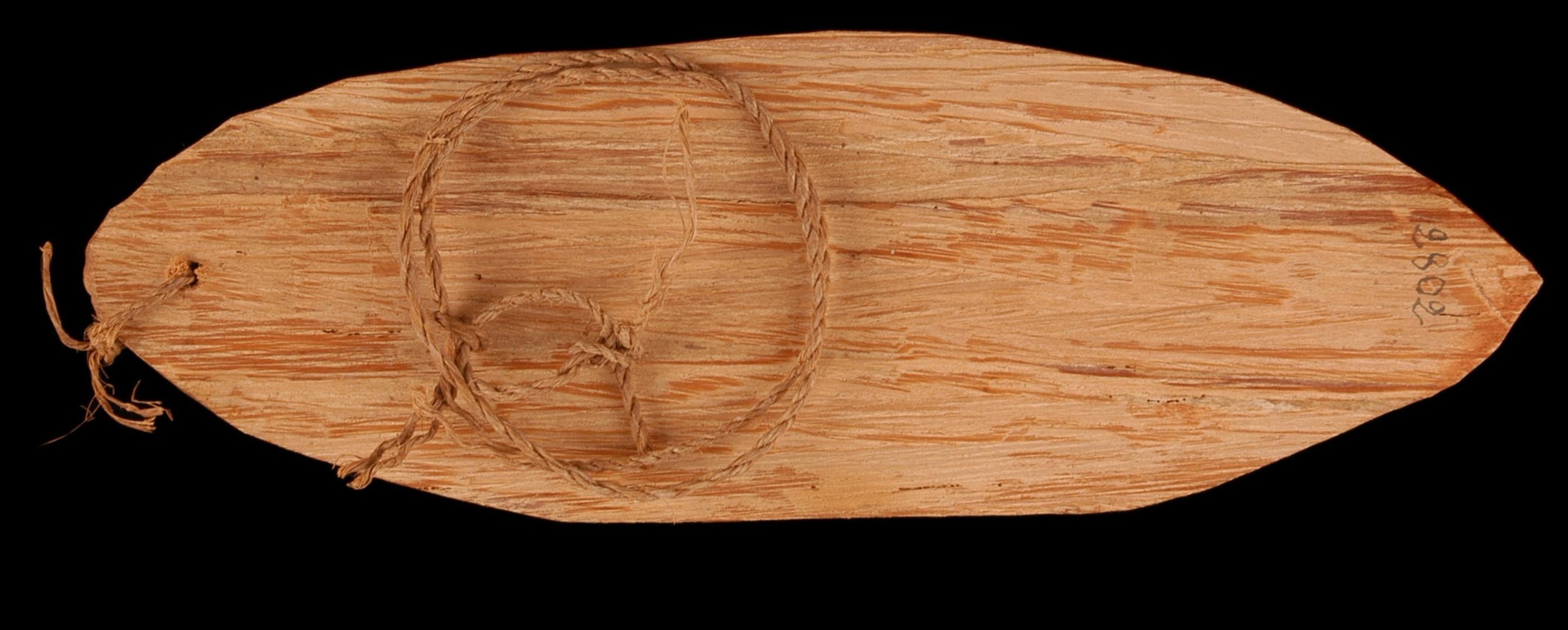
Imbakiyam
Source term: bull-roarer
Swung at the sortie de l'ésanso — the emergence from the esam sô, the initiation lodge — this rhombe, Imbakiyam, voiced the moment a Mangisa boy came back a man. In the great Beti rite of Sô, candidates were driven into a forest sanctuary, beaten, made to crawl through thorns, and ritually "buried"; months later, painted white, they circled home reborn. The roarer's droning cry belonged to that threshold, a men's mystery sealed against women and the uninitiated, from the Lékié forests around Sa'a.
sortie de l'ésanso
exit/emergence from the ésanso
Musée du quai Branly - Jacques Chirac, 71.1931.74.2802
Particulars
- Object
- Mangisa rhombe from Sa'a, local name Imbakiyam (Quai Branly 71.1931.74.2802).
Source
Musée du quai Branly - Jacques Chirac, 71.1931.74.2802 (Mangisa rhombe, Imbakiyam)